

U.S. Adds Fuel to Growth Resilience Narrative amid Q2 Figures
Tuesday, August 18, 2026
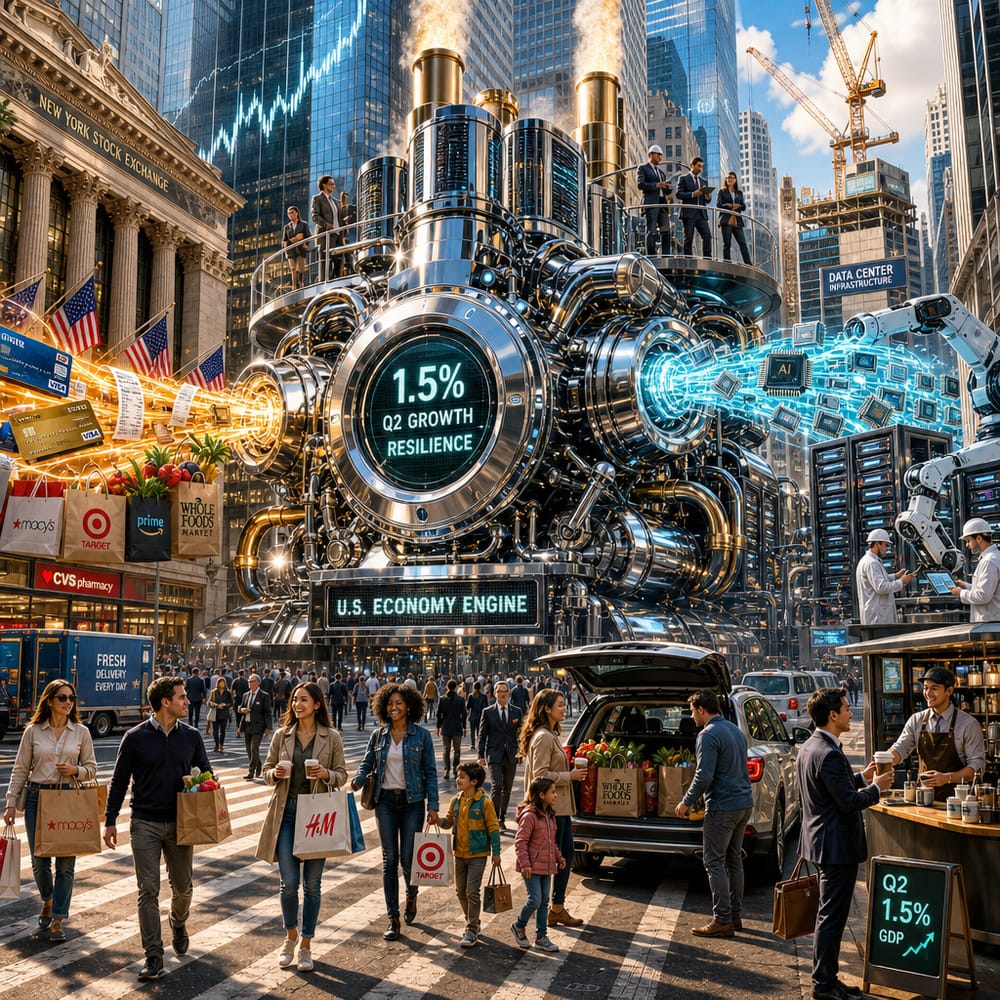
AI is planting its flag in the American economy, and it's waving a banner of resilience that even Wall Street’s skeptics have to acknowledge. The U.S. economy grew at a 1.5% annual rate in the second quarter, defying the headwinds of inflation and the ever-rising costs of oil. The secret sauce? A tech-fueled boom, led by artificial intelligence, that has kept America's economic engine humming like a well-oiled machine.
The AI revolution isn’t just Silicon Valley buzzword bingo anymore—it's a legitimate financial force. AI-driven business investment is becoming the shiny new tool in the economic toolbox, and it's not just about building sexier robots. We're talking real-world applications that are streamlining operations, optimizing logistics, and supercharging productivity across a spectrum of sectors. When Fed Chair Kevin Warsh described the economy’s performance as showcasing "impressive resilience," it was partly a nod to this tech-driven momentum.
Just how significant is this AI boost? Picture this: AI is the guest at the party who not only brings the best dip but also takes over the dance floor with moves that make everyone else look like they’re shuffling their feet. Companies are pouring billions into AI to cut costs, boost efficiency, and open up new lines of business. Industries like healthcare, finance, and manufacturing are swapping out traditional means for AI-driven solutions. It's not just about flashy tech; it's about transforming the mundane into the magnificent.
In healthcare, AI is automating administrative tasks, allowing doctors more time to focus on patient care. Financial firms are using AI for everything from fraud detection to investment strategies, while manufacturers are leveraging AI to optimize supply chains and predict maintenance needs before machinery breaks down. This isn't just tinkering under the hood—it's building a new turbocharger.
Consumer spending is another cornerstone of this growth narrative. Despite inflation lurking like an uninvited guest at a wedding, Americans are still whipping out their credit cards. The middle class, buoyed by job growth and a rising stock market, continues to splurge on vacations, homes, and the latest gadgets from their favorite tech giants.
But here's the million-dollar question: Can this growth spurt keep its legs in a world where inflation is stalking like a predator on the Serengeti? Rising costs could start to gnaw at purchasing power, and if interest rates continue their ascent, borrowing could become less attractive, throwing cold water on investment and consumer spending alike.
Despite these concerns, the AI-led economic narrative offers a counterpoint: Innovation is the kryptonite to stagnation. AI’s role in productivity enhancement could very well offset some inflationary pressures. It’s the ace up the sleeve for businesses looking to cut costs without cutting corners. If history is any guide, technological advancement has a knack for pulling economies through tight spots.
In essence, the U.S. economy is strutting down the runway with an AI-driven spring in its step. This isn't to say the path ahead is without bumps. Global bond yields are reaching for the sky, and geopolitical tensions are ever-present, like a mischievous cat ready to knock precious vases off the table.
Investors have reasons to be both excited and cautious. AI’s promise offers a tantalizing glimpse into a future where growth isn’t just possible but probable, even amidst economic challenges. However, keeping a close eye on the inflation-technology tug-of-war will be crucial.
The message is clear: AI isn’t just a chapter in the growth story; it may very well be writing the book. As we toast to the current economic uptick, the key is to ensure that this isn't a fleeting moment but a sustainable trajectory. After all, in the ever-volatile economic landscape, resilience isn't just a nifty term—it's a survival strategy. And right now, AI is giving the U.S. economy a fighting chance to thrive amidst the chaos.
This article is for informational purposes only and is not investment advice. Always do your own research or consult a licensed financial professional before making investment decisions.
© Copyright 2024. All Rights Reserved.
© Copyright 2024. All Rights Reserved.