

U.S. 10-Year Treasury Yield Hits Fresh 19-Year High
Wednesday, September 23, 2026
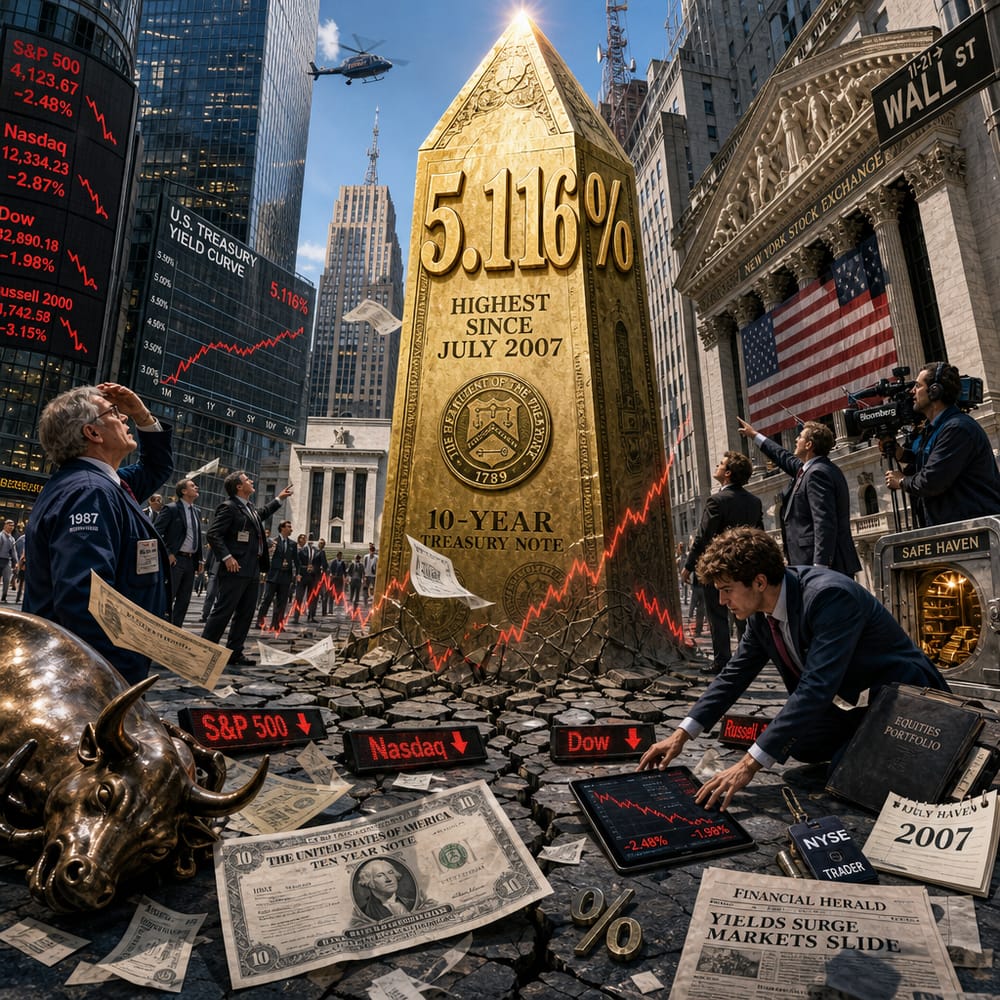
U.S. 10-YEAR TREASURY YIELD HITS FRESH 19-YEAR HIGH
It's like the financial world equivalent of spotting a white whale: the 10-year Treasury yield is making headlines again. This time it’s not just tapping on the ceiling, it’s smashing right through it. Clocking in at a towering 5.116%, we haven’t seen levels like this since the first iPhone launch back in 2007. If you've been tracking the financial landscape, this spike feels like watching your nerdy high school friend suddenly bench pressing three plates — impressive, unexpected, and likely to shake things up.
This yield hike isn't just a number for financial geeks to geek out about — it’s a significant red flag for equity markets. When bond yields rise, they essentially offer a more appealing risk-free return compared to stocks, throwing a wrench into the usual stock market party where equities are the belle of the ball.
SO, WHY DOES THIS MATTER?
Here’s the rundown: higher Treasury yields make borrowing more expensive. Companies that rely on debt start feeling the pinch, which can dampen growth prospects. It also means stock valuations, which often use Treasury yields as a benchmark, are under pressure. Stocks look less attractive next to the chance of a reliable bond return.
For the S&P 500, the Nasdaq, Dow, and Russell 2000, this spells a classic case of “Houston, we have a problem." Investors may start reevaluating their love for risky assets. When those safe, shiny Treasuries start looking like the more promising option, stocks get nervous.
SECTOR SPOTLIGHT: WHO TAKES THE HIT?
While the rising tide of Treasury yields lifts some boats, others might start taking on water. Interest-rate sensitive sectors, like utilities and real estate, are often the first to feel the squeeze. These businesses typically carry higher debt loads and depend on hefty capital investments. Higher yields translate to increased costs and lower profit margins.
On the flip side, financial sectors like banks might just be popping open the champagne. As rates rise, banks can charge more for loans while still paying out peanuts on deposits — a classic win-win in the banking world.
WHAT'S THE SENTIMENT ACROSS MAJOR INDICES?
The U.S. financial landscape is like a drama series with high stakes and higher tensions. As investors anticipate the Federal Reserve might continue to hike rates, the mood across major indices is cautious. The idea of more interest rate hikes is like announcing a second season when the first hasn't yet wrapped — it leaves everyone nervous and on edge.
Equity markets thrive on optimism, but surging yields can shift sentiment from “full steam ahead” to “maybe let’s take a rain check.” The recent hikes in yields are seen as a reflection of robust economic data and a Fed that’s not likely to ease up on the rate hikes anytime soon. This keeps investors clutching their portfolios a bit tighter.
WHAT SHOULD INVESTORS DO?
If you're wondering how to play this yield circus, here’s the thing: diversifying is your friend. While higher yields can sour the taste for equities, jumping ship entirely isn't the only option. Looking into sectors that might benefit, like financials, or considering a mix of both fixed income and equities could be a way to balance out the seesaw of risk and return.
For those glued to their screens watching the S&P 500, Nasdaq, or Dow, it’s crucial to remember that markets are cyclical. Like roller coasters, they have their ups, downs, and heart-stopping moments. But if you’ve got a good grip on your strategy, there’s no need to panic at every twist and turn.
THE BOTTOM LINE
In the world of financial markets, nothing exists in isolation. The surge in 10-year Treasury yields isn’t just an obscure economic blip — it’s a thunderclap reminder that the financial landscape can change in the blink of an eye. As investors navigate these choppy waters, keeping an eye on both bonds and equities with a strategic mindset will be key.
So, are you ready to ride the wave, or would you rather watch safely from the shore? Whatever your choice, remember that understanding the game is half the battle.
This article is for informational purposes only and is not investment advice. Always do your own research or consult a licensed financial professional before making investment decisions.
© Copyright 2024. All Rights Reserved.
© Copyright 2024. All Rights Reserved.