

Tuesday’s Broader Index Decline: Continued Downgrade in Risk Sentiment
Wednesday, August 19, 2026
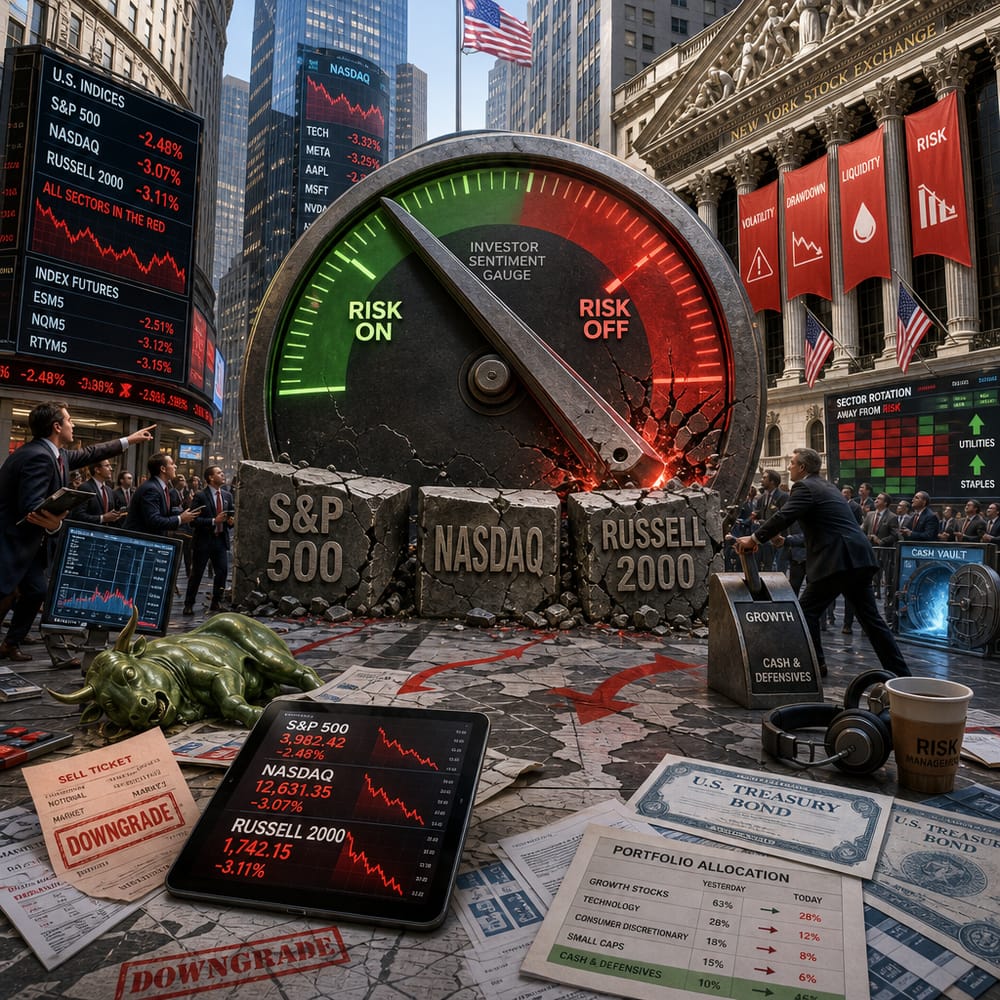
THE SHIFT IN SENTIMENT: WHY INVESTORS ARE HITTING THE BRAKES
Buckle up, folks. The stock market's recent plunge wasn't just a hiccup; it's a deep-seated case of jitters spreading through Wall Street like a viral TikTok dance. On August 18, major indices, namely the S&P 500 and the Nasdaq, took a nosedive, signaling a clear shift in investor sentiment. It seems the mood is moving from the thrill-seeking "YOLO" vibe to something more akin to "better safe than sorry."
So, what's driving this market mood swing?
YIELD CURVES AND ECONOMIC ANXIETIES
First, let's talk about yield curves. For those who don't speak Wall Street fluently, yield curves show the interest rates of bonds over different time periods. Right now, these curves are playing a sinister game of limbo, dropping lower and suggesting that investors are worried about economic growth. When yield curves flatten, investors tend to flee from riskier stocks to safer, more reliable options like government bonds.
Jim Cramer, that familiar face on your stock channel, highlighted this trend when he underscored the Treasury's bond buybacks. The whole move screams, "Look at me, I'm a safe haven!" It’s like Wall Street collectively wants to preserve its stock rally at all costs — even if it means huddling under the safety blanket of government securities.
TRADE TENSIONS AND GLOBAL UNCERTAINTY
Meanwhile, over in the geopolitical corner, President Trump managed to avert new tariffs on Canadian goods — for now. That’s right, a last-minute deal was cast to pause what could have been a disastrous start to trade barriers. This serves as another reminder that global trade instability is lurking around every corner, leaving investors feeling like they’re walking on eggshells.
But what's this got to do with your portfolio? Well, global uncertainty often makes investors wary of high-risk, high-reward sectors like tech, which the Nasdaq is packed with. It pushes them to embrace safer, more stable sectors like utilities and consumer staples, which can weather economic storms better.
SECTOR SHAKE-UPS
Speaking of sectors, how are they faring amid all this sentiment shift? Let's break it down.
Tech stocks are feeling the pinch. Companies like Carvana are already under pressure due to regulatory scrutiny, and when you throw in the broader risk aversion, it’s no wonder volatile tech stocks are being shunned.
On the flip side, energy stocks are having a moment. As the ceasefire between the U.S. and Iran ends, oil prices are climbing. This surge is a sweet serenade for oil-related stocks. Companies like Shell and Suncor Energy are benefiting as investors look to capitalize on rising energy prices.
But if tech isn't your game and oil feels too risky, consider playing it safe with sectors like utilities or consumer staples. These sectors are often seen as defensive plays. Utilities keep the lights on, and consumer staples deal in everyday essentials — they’re the tortoises to tech’s hare in this race.
THE LONG GAME
Let’s step back and look at the broader picture. This shift in sentiment could be more than just a knee-jerk reaction. As economic uncertainty looms, whether through trade wars, interest rate mysteries, or geopolitical sagas, investors are hedging their bets more conservatively.
For the retail investor scrolling through this on the daily commute, the takeaway is simple: Diversify and brace yourself. Look for opportunities that balance risk and reward, and pay attention to global cues that could shake up sectors in unpredictable ways.
In the end, remember that markets are never static. They ebb and flow like the cat videos in your feed. Staying informed and being ready to pivot could be the key to navigating these turbulent times. So keep those trading apps ready and your ear to the ground, because just like your favorite series on Netflix, there’s always a dramatic twist waiting in the next episode.
This article is for informational purposes only and is not investment advice. Always do your own research or consult a licensed financial professional before making investment decisions.
© Copyright 2024. All Rights Reserved.
© Copyright 2024. All Rights Reserved.