

TSMC's $265 Billion U.S. Expansion Amid Trump's Arizona Visit
Thursday, November 26, 2026
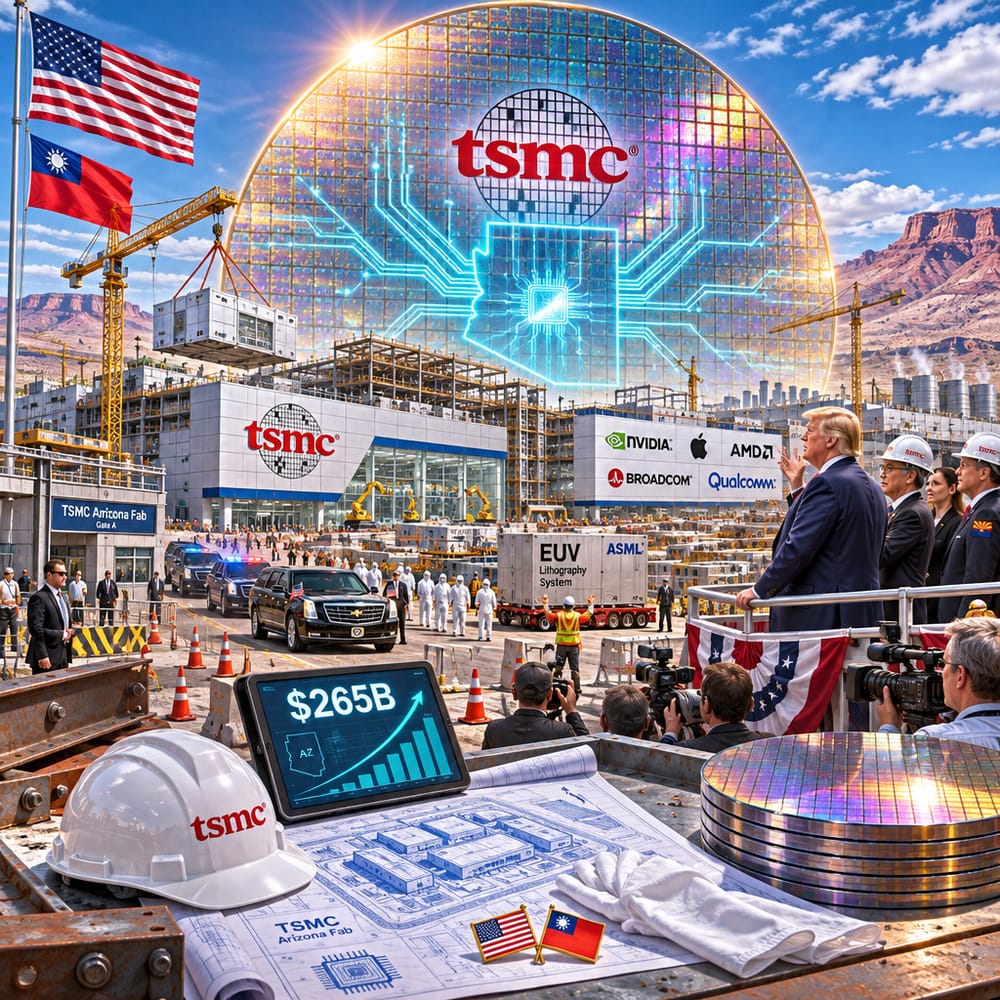
TSMC'S $265 BILLION U.S. BET: A CHIP STRATEGY THAT CUTS THE EDGE
Whoa, move over, Netflix binge-watchers—here comes a drama that has nothing to do with dragons or dystopias but everything to do with chips. No, not the crispy kind, but the silicon kind that make your iPhone smarter and your gaming PC invincible. That's right, the Taiwanese chip titan TSMC just dropped a cool $265 billion on expanding its semiconductor production in the U.S., with its plans rolling out as former President Trump made an eyebrow-raising cameo in Arizona. The only thing more American than apple pie? Chips made in Arizona, baby!
So why should you care? Because this isn’t just about a big company flashing its wallet. It’s about reshaping the semiconductor playground, and yes, it's a global tug-of-war with power moves that would make even chess grandmasters take notes.
THE CHIP GAME-CHANGER
In case you missed the memo: semiconductors are the unsung heroes of the tech world. They power everything from your smartphone to your smart car. And with recent supply chain chaos and geopolitical jitters, there's a new mantra in town—domestic production. Enter TSMC's mega-expansion.
The move to beef up production on American soil is like building an insurance policy against future global supply chain disruptions. But it's also a strategic pivot to lessen dependence on Asian manufacturing, especially when tensions with China seem to bubble like an overcaffeinated espresso machine.
"How's this going to shake up the U.S. semiconductor scene?" you ask. Well, it’s like adding a pinch of jalapeño to your tech salad—it’s going to spice things up! This cash infusion means more jobs, beefier supply chains, and a shiny new reputation for the U.S. as a semiconductor powerhouse. If you’re invested in the tech sector, this is your cue to start paying attention.
GEOPOLITICS: CHESS, NOT CHECKERS
On the geopolitical chessboard, TSMC's U.S. expansion is more than just a business decision—it's a strategic gambit. With Trump recently wagging his finger at Russia from the sunny confines of Arizona, it's clear that global tensions are still on a high simmer. By ramping up chip production stateside, TSMC and, by extension, the U.S. are playing the long game. It’s about reducing vulnerability to potential Asian market volatility and securing a critical piece of tech infrastructure in friendly territory.
And let's not forget the butterfly effect this move could have on the stock prices of tech behemoths like Nvidia, Apple, AMD, Broadcom, and Qualcomm. Companies relying on a steady flow of chips could see more stable supply chains, potentially boosting investor confidence and, consequently, stock prices. So, if you're holding any of these stocks, keep your eyes peeled for market movements.
WHAT’S IN IT FOR THE TECH INDUSTRY?
Tech companies are the eager kids in a candy store here, and for good reason. A steady, reliable supply of semiconductors means less time worrying about bottlenecks and more time focusing on innovation. For companies like Nvidia, which relies heavily on chips for its graphics cards, or Apple, whose gadgets are synonymous with cutting-edge tech, TSMC’s stateside expansion is akin to striking gold.
But here’s the caveat: while there's a lot to be optimistic about, the jury is still out on how quickly this expansion will translate into tangible benefits for these companies. Building and ramping up production capacity is like a good wine—it takes time to mature.
THE FINAL WORD
In an age where the digital world isn’t just a luxury but a necessity, chips are the oil of the 21st century. TSMC's massive U.S. bet isn’t just a headline—it’s a seismic shift in how the global tech game is played. As chips become the new currency of power, this move could very well redefine economic and political alliances.
So, whether you’re a retail investor, a tech buff, or just someone who loves watching history unfold, keep your popcorn ready. Because as chip wars go, this one’s just getting started. And who knew semiconductors could be so darn captivating?
This article is for informational purposes only and is not investment advice. Always do your own research or consult a licensed financial professional before making investment decisions.
© Copyright 2024. All Rights Reserved.
© Copyright 2024. All Rights Reserved.