

TSMC Raises Capex; Foundry Sector Remains Strong
Monday, August 10, 2026
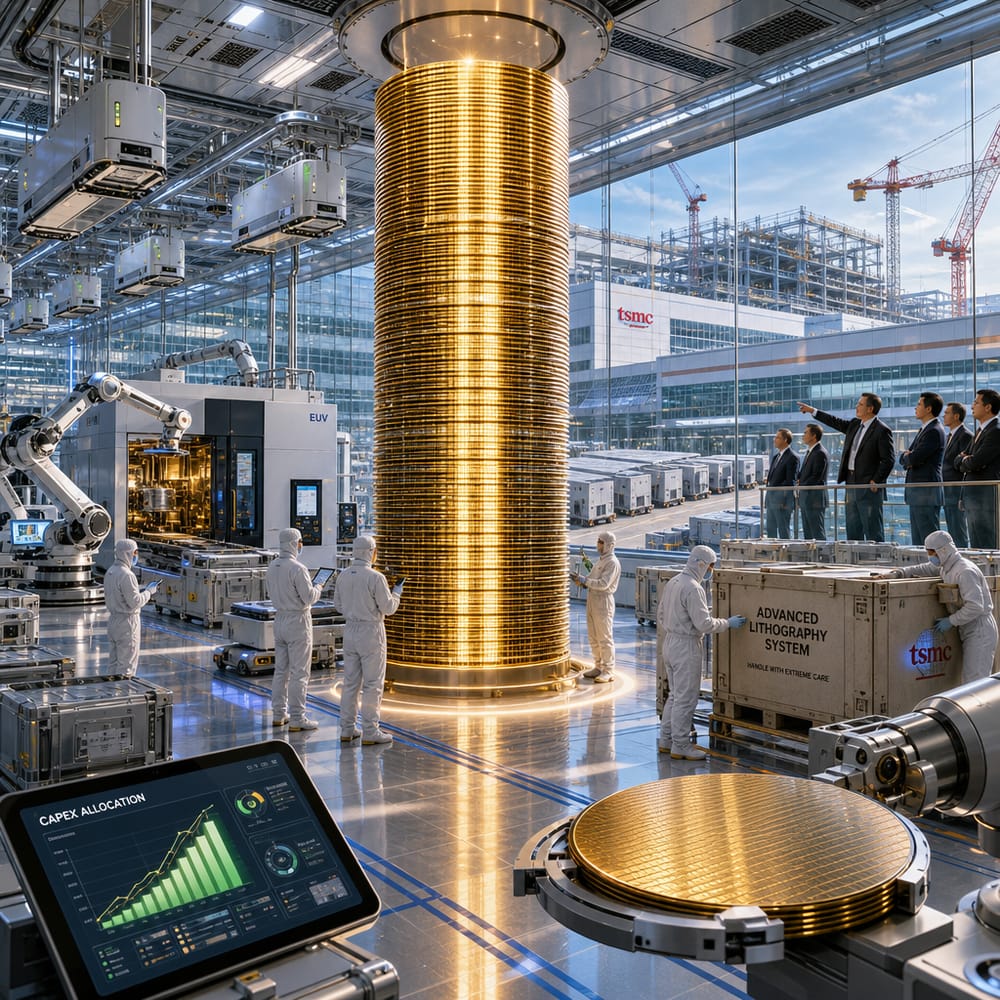
TSMC's Big Bet: Why the Chip Giant is Doubling Down on the Future of AI and Semiconductors
When you find a goldmine, you don't just tiptoe around it—you bring in the heavy machinery and start digging. That's exactly what Taiwan Semiconductor Manufacturing Company (TSMC) is doing. The semiconductor behemoth has decided to crank up its capital expenditure, signaling to the world that demand for semiconductors isn't just alive, but it's doing the cha-cha. If you're wondering how this affects you, your tech gadgets, or that hot AI startup you've been eyeing, buckle up.
WHAT'S THE BIG DEAL?
TSMC, the granddaddy of chip manufacturers, has decided that now is not the time to play it safe. By boosting its capital expenditure, or capex for the cool kids, TSMC is sending a clear message: the demand for chips, particularly those powering artificial intelligence, is sizzling. You see, semiconductors are the silicon hearts beating inside everything from your smartphone to your smart fridge, and TSMC is the top supplier.
THE DEMAND SIGNAL
So what’s driving this chip bonanza? It's the tech renaissance, my dear Watson. As industries from auto to AI scramble to get their mitts on more processing power, TSMC is here to oblige. The company's investment binge implies they're gearing up to manufacture a boatload more chips. Think of it as semiconductor spring cleaning—only instead of dusting off old tech, they're stacking silicon wafers to the ceiling.
WHY YOU SHOULD CARE
This is not just about high-stakes corporate chess. When TSMC doubles down on production, ripples spread across the entire global supply chain. For one, it could alleviate the bottlenecks that have led to tech shortages (anyone still waiting on that new gaming console?). More chips mean more products, potentially at more palatable prices.
But hold your horses. While TSMC's move is a positive sign, it's not a magic wand. Supply chains are still as wobbly as a Jenga tower, thanks to geopolitical tensions, like those involving everyone’s favorite frenemy, China. Until those kinks are ironed out, don't expect your dream gadget lineup to land in your lap overnight.
THE BIG PICTURE FOR AI
Now, let’s chat about AI—the sector that's basically the adrenaline shot to TSMC's heart. As AI models get more sophisticated, they need faster and more efficient chips. Enter TSMC. Their increased capex suggests they're not just meeting demand but anticipating a future where AI is as common as cat videos on the internet.
The potential here is mind-boggling. More powerful chips mean faster data processing, smarter AI, and who knows—maybe even robots that actually do the dishes. This boost in chip production could accelerate AI adoption in everything from healthcare to space exploration, opening doors to advancements we haven't even dreamed of yet.
WHAT'S THE CATCH?
Before we start high-fiving each other, there's a reality check: more production could lead to overcapacity if demand doesn’t keep pace. Think of it as baking 100 pies when only 50 people show up to the party.
But TSMC seems confident, and they wouldn’t raise capex on a whim. They’ve got their eye on long-term growth, betting that the demand for semiconductors, especially in AI, is less a passing fad and more a seismic shift.
THE TAKEAWAY
So, what should you, the savvy investor or tech enthusiast, take from all this? Keep an eye on TSMC and the ripple effects in the tech realm. This capex push could mean more stable prices and a faster roll-out of cutting-edge technology. And if you’re considering investing, tech and AI sectors might be worth a closer look.
In a world where data is the new oil, semiconductors are the refineries, and TSMC is at the center of it all. They're not just betting on the future—they're building it. So whether you're a tech geek or just someone who wants their toaster to finally understand them, watch this space. The semiconductor saga is going to be a wild ride.
This article is for informational purposes only and is not investment advice. Always do your own research or consult a licensed financial professional before making investment decisions.
© Copyright 2024. All Rights Reserved.
© Copyright 2024. All Rights Reserved.