

TSMC Navigates New U.S. Export Controls
Monday, November 23, 2026
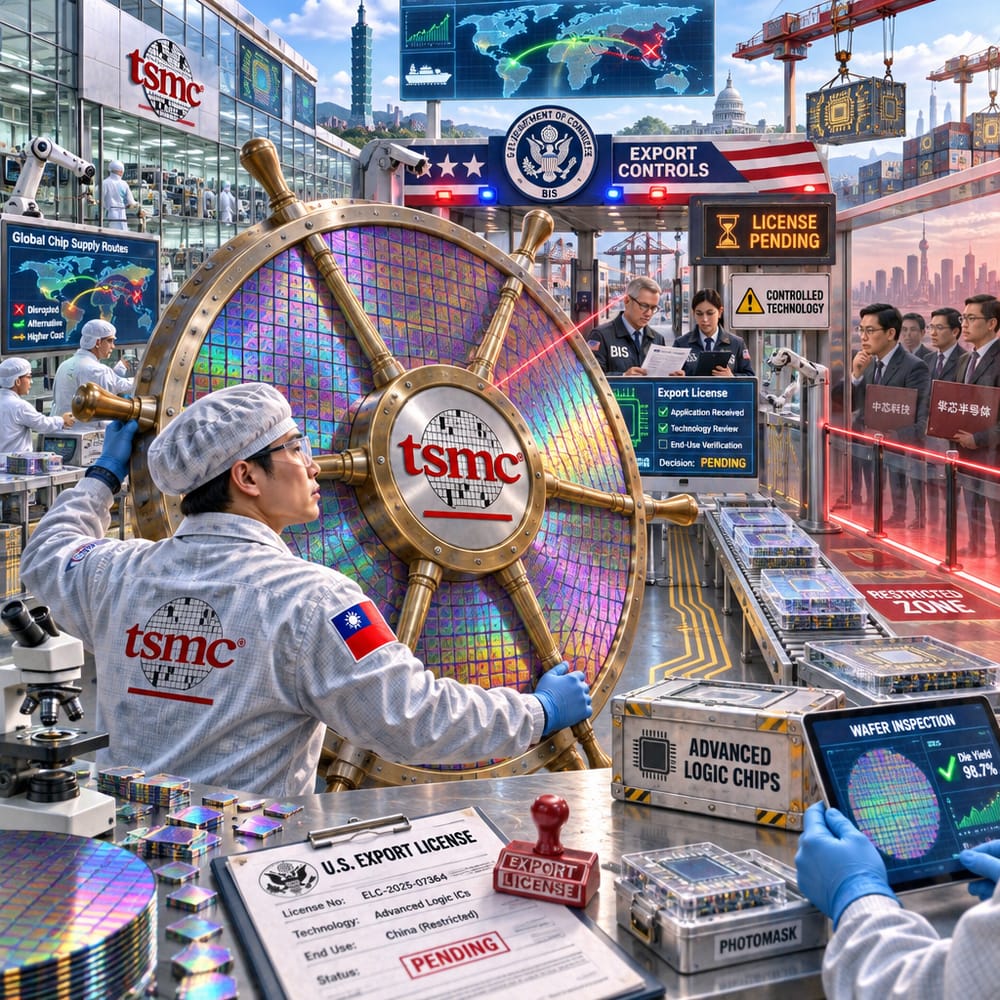
TSMC WALKS THE CHIP TIGHTROPE WITH NEW U.S. EXPORT RULES
If you think threading a needle while juggling flaming swords is tough, try being Taiwan Semiconductor Manufacturing Company (TSMC) right now. The microchip titan, revered for powering your smartphones and laptops, is dancing on a high wire, navigating new U.S. export controls that resemble a geopolitical chess match. The stakes? Oh, just the future of global semiconductor supply chains and their billion-dollar balance sheets.
For those who aren't knee-deep in silicon wafers, TSMC is the world's largest contract chipmaker, essentially the backstage tech wizard behind major brands. But their magic show faces new hurdles as Uncle Sam introduces licensing requirements for advanced logic chips destined for China. What’s the big deal? Well, China happens to be one of TSMC’s biggest clientele. Cue the suspenseful music.
TSMC COMPLIANCE: THE GOOD, THE BAD, AND THE UGLY
Now, why should TSMC care about playing by the U.S. rulebook? Simple: the company uses U.S. technologies to manufacture its chips. With Washington tightening the noose on what tech China can access, TSMC has no choice but to comply — or risk losing access to essential American tech. TSMC is like a kid at a party who's suddenly informed the candy is only for those who play nice with the host.
So how does TSMC's compliance tango affect its business across the Pacific? For starters, any hiccup in licensing could mean delays or even cancellations of orders from Chinese firms. This isn’t your grandma’s backyard pottery business — we're talking billions in potential revenue. And while TSMC isn’t pulling the plug on China just yet, it is a precarious position to be in when you're the lifeline of the global tech ecosystem.
THE WIDER SEMICONDUCTOR STORM
This isn’t just an episode of “TSMC: The Drama Continues” — the ripples spread far and wide. The semiconductor industry, which fuels everything from your phone to your car, could see supply chain reshuffles. If Chinese firms can’t get advanced chips from TSMC, they’ll either have to scale down tech innovation (a tough pill to swallow) or find new suppliers. This is like telling a marathon runner to switch to a tricycle mid-race.
Here’s a curveball: these export controls could accelerate China’s push to bolster its domestic chipmaking industry. Imagine a world where China, instead of being heavily reliant on foreign chips, builds its own tech empire. It sounds like a sci-fi plot, but the race is on, and the implications are massive. A more self-reliant China could eventually shift the power dynamics in the global tech arena.
As the drama unfolds, investors are eyeing TSMC and Chinese chip designers with a hawk’s precision. Nobody wants to miss out on opportunities—or get caught in a downturn. The pressure is on, and the semiconductor world is watching with bated breath.
TSMC'S STRATEGIC DANCE: WHAT'S NEXT?
For TSMC, navigating these choppy waters means mastering the art of adaptation. The company might have to diversify its clientele, which could include doubling down on relationships with non-Chinese tech giants. This strategic pivot could secure revenues and maintain the tech giant’s towering status, even as geopolitical winds shift. It’s all about staying two steps ahead and knowing when to turn the corner before you hit the wall.
Moreover, TSMC’s challenges hint at a broader trend where technology and geopolitics continue to intertwine. The semiconductor space is no longer just a techie’s paradise; it’s a battleground of national interests, trade policies, and economic strategies. TSMC and other players must adapt to this new reality — or risk being sidelined.
As the semiconductor saga continues, one thing is clear: TSMC is not just making chips. It’s crafting strategies, balancing global politics, and shaping the future of technology. Investors and tech enthusiasts alike will want to keep their eyes peeled for every twist and turn in this ongoing story. After all, in the world of semiconductors, the chips are always down — and the stakes, incredibly high.
This article is for informational purposes only and is not investment advice. Always do your own research or consult a licensed financial professional before making investment decisions.
© Copyright 2024. All Rights Reserved.
© Copyright 2024. All Rights Reserved.