

TSMC Halts 14nm/16nm Chip Shipments to China Amid New U.S. Export Controls
Saturday, November 28, 2026
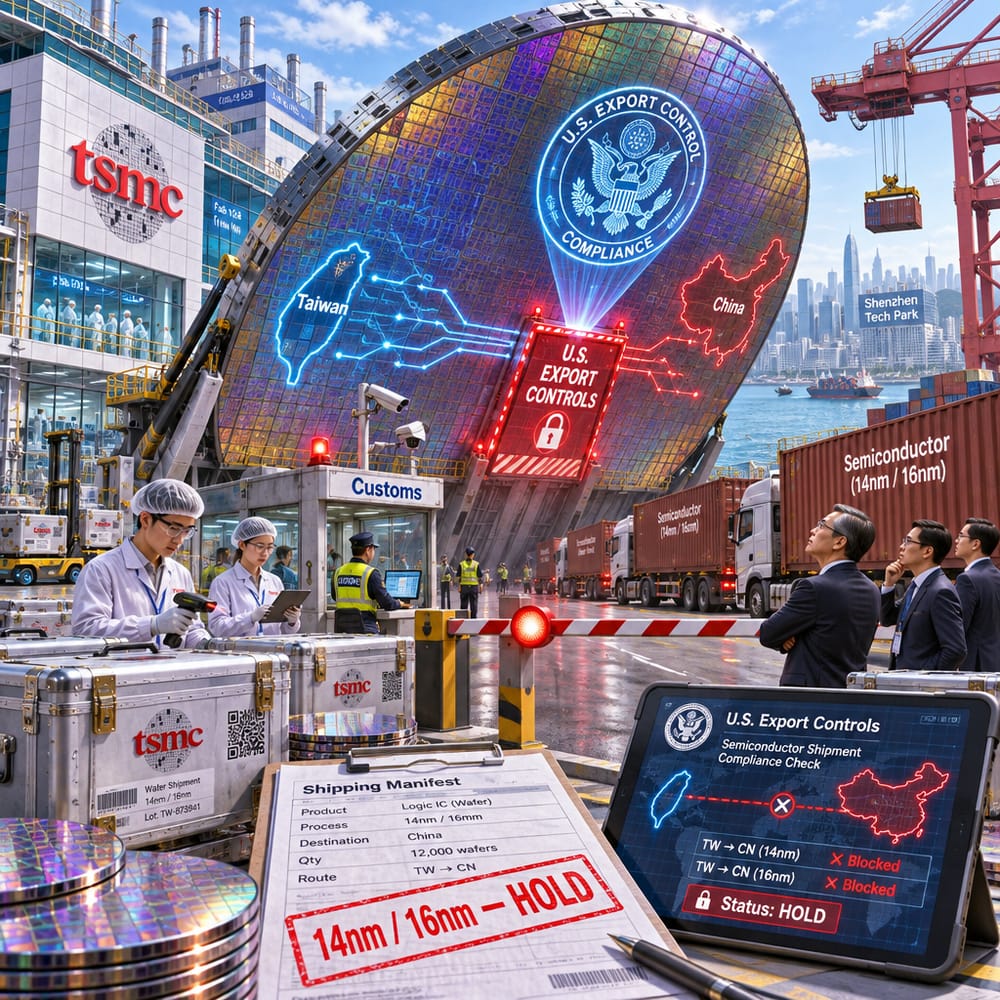
TSMC HALTS SHIPMENTS TO CHINA: THE CHIP WAR HEATS UP
In the latest episode of the silicon saga, Taiwan Semiconductor Manufacturing Co. (TSMC) hit the brakes on shipping its 14nm and 16nm chips to China. Why? Because Uncle Sam decided these tiny tech marvels are now "advanced computing devices," and they've landed on the export control naughty list. So, if you're wondering what this kerfuffle means for the semiconductor world and your tech stocks, grab your popcorn and read on.
WHY CHINA WON'T GET THESE CHIPS
The semiconductor world is like a soap opera, and TSMC seems to have found itself in the middle of the juiciest plotline yet. The U.S. has now tightened its grip on the chip industry by classifying these specific chips as critical tech that shouldn't fall into rival hands—namely, China’s. The U.S. wants to keep the edge in the tech race, and with these new controls, it’s flexing those muscles.
TSMC, caught in the geopolitical crossfire, has had to pause shipments, leaving Chinese tech companies scrambling like a teenager whose Wi-Fi just went out. With the U.S. framing these chips as potentially crucial for military applications, the control measures aim to stymie China’s ascent in the global tech hierarchy.
WHAT'S AT STAKE FOR TSMC?
Picture this: TSMC is the prom queen of the global semiconductor industry, with a lineup of eager suitors. Yet, now it must reconsider its dance card thanks to the new rules. TSMC's decision to halt shipments could mean missing out on revenue from a massive market. That's like a lemonade stand losing its spot at the county fair.
However, the revenue ripples aren't yet tsunamis. These 14nm and 16nm chips aren’t TSMC's cutting-edge products. We're talking mid-range tech here, not the latest and greatest. But in an industry where every dollar and every chip counts, TSMC can't just shrug this off as a minor hiccup.
BROADER WAVES IN THE SEMICONDUCTOR POOL
The global semiconductor supply chain is as delicate as a soufflé, and throwing a wrench into it can leave tech companies and investors feeling queasy. By cutting off their supply, the U.S. has effectively forced Chinese tech companies to scout elsewhere—or double down on homegrown efforts. Either way, we're talking about a shift that could set off aftershocks throughout the semiconductor world.
For semiconductor sector watchers, this means an uptick in volatility. Companies might find themselves paying more for non-Chinese chips, potentially passing those costs along to consumers. In the game of supply and demand, the stakes just got higher.
HOW WILL CHINA RESPOND?
The U.S.-China tech tussle is the gift that keeps on giving—for geopolitical analysts, at least. Chinese tech companies, suddenly without their TSMC lifeline, might bolster investments in domestic chip production. The goal? To lessen reliance on foreign chipmakers who answer to Washington's whims.
Don't be surprised if this accelerates China's push toward self-sufficiency in semiconductors. They've been brewing their own chip strategy for a while, but nothing lights a fire like a good old-fashioned embargo.
THE TAKEAWAY
In this grand chess game between global superpowers, TSMC, and its semiconductor cohorts are crucial pieces. The latest U.S. export controls illustrate just how intertwined technology and geopolitics have become. As TSMC navigates this new landscape, investors should brace for some market turbulence but also keep an eye on potential opportunities. The chips are down, but the game is far from over.
Buckle up, folks—this silicon showdown is just heating up. Whether you're a semiconductor savant or a casual observer, this plot twist is one for the books. And remember, in the world of tech and trade wars, he who holds the chips, holds the power.
This article is for informational purposes only and is not investment advice. Always do your own research or consult a licensed financial professional before making investment decisions.
© Copyright 2024. All Rights Reserved.
© Copyright 2024. All Rights Reserved.