

Trump’s Tariffs Rattle Asian Markets as Japan’s Retail Sales Surge
Friday, February 28, 2025
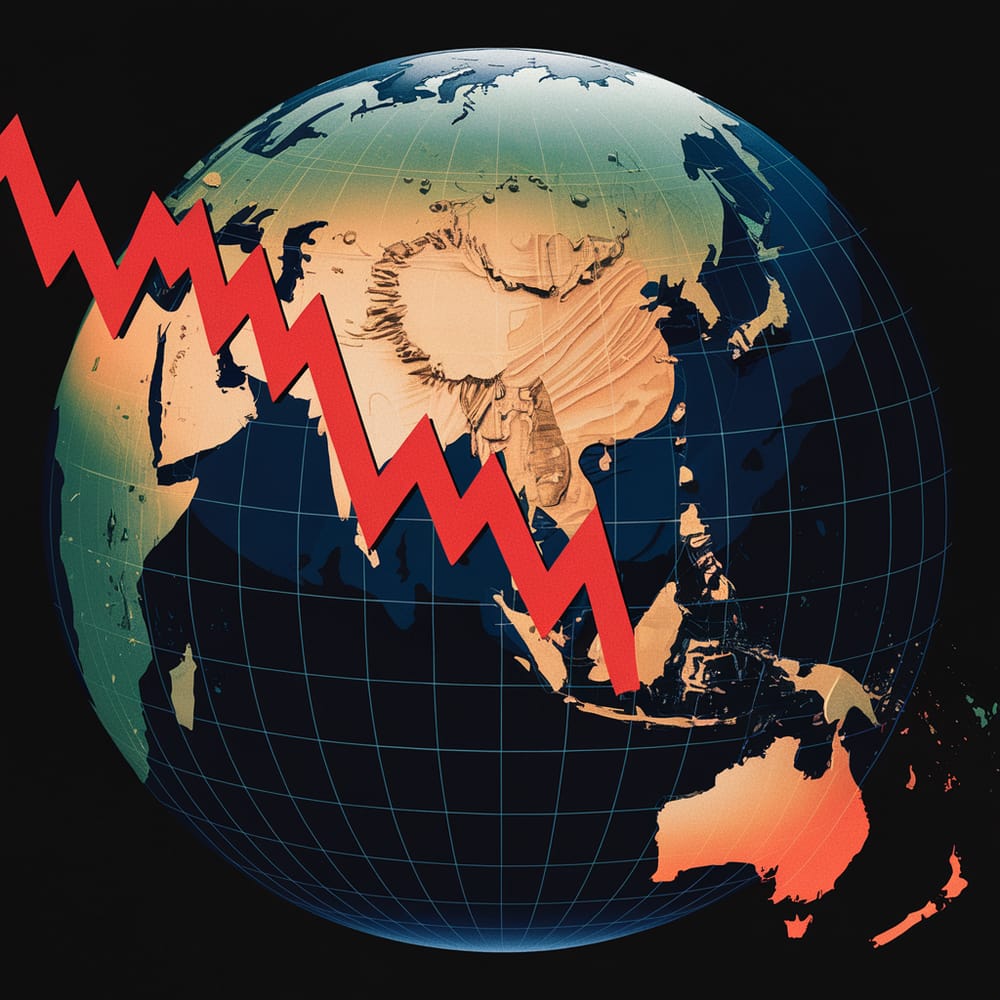
Asian markets took a beating on Friday after Donald Trump confirmed that tariffs on Mexico and Canada will take effect next week, with an extra 10% tariff on Chinese goods also coming into play.
The shockwave hit major indices across the region, while Japan posted its fastest retail sales growth in nearly a year—but even that wasn’t enough to offset the market downturn.
How Markets Reacted to Trump’s Tariff Bombshell
📉 Nikkei 225 dropped 2.88%—its worst daily loss in weeks.
📉 Hang Seng Index plunged 3.55%, with Chinese markets also seeing sharp losses.
📉 South Korea’s Kospi tumbled 3.39%, while Australia’s S&P/ASX 200 slipped 1.16%.
📉 Bitcoin also fell 1.79%, continuing its rough month after a 25% drop from January highs.
Investors scrambled for safe-haven assets, pushing the U.S. dollar higher while sending Asian currencies lower. The Indonesian rupiah and South Korean won hit multi-year lows.
Japan’s Retail Sales Are Booming—But Will It Last?
Amid the market chaos, Japan’s retail sales climbed 3.9% year-over-year in January, marking the fastest growth in nearly a year.
• Fuel sales surged 8.7%, leading the charge.
• Overall sales beat December’s 3.5% increase but fell just short of the 4% analyst forecast.
Meanwhile, inflation in Tokyo slowed, but it still remains above the Bank of Japan’s 2% target, meaning interest rate hikes could still be on the table.
What’s Next?
💡 Trump’s tariffs are already shaking global trade, with China vowing to retaliate.
💡 Japan’s economic momentum is strong, but if markets stay volatile, will consumer spending hold up?
💡 Asian stocks are at risk of further declines, as investors brace for more uncertainty in global trade.
For now, the battle between markets and tariffs is just heating up.
© Copyright 2024. All Rights Reserved.
© Copyright 2024. All Rights Reserved.