

Trump’s Megabill: What It Means for Taxes, Energy, and Healthcare
Wednesday, July 02, 2025
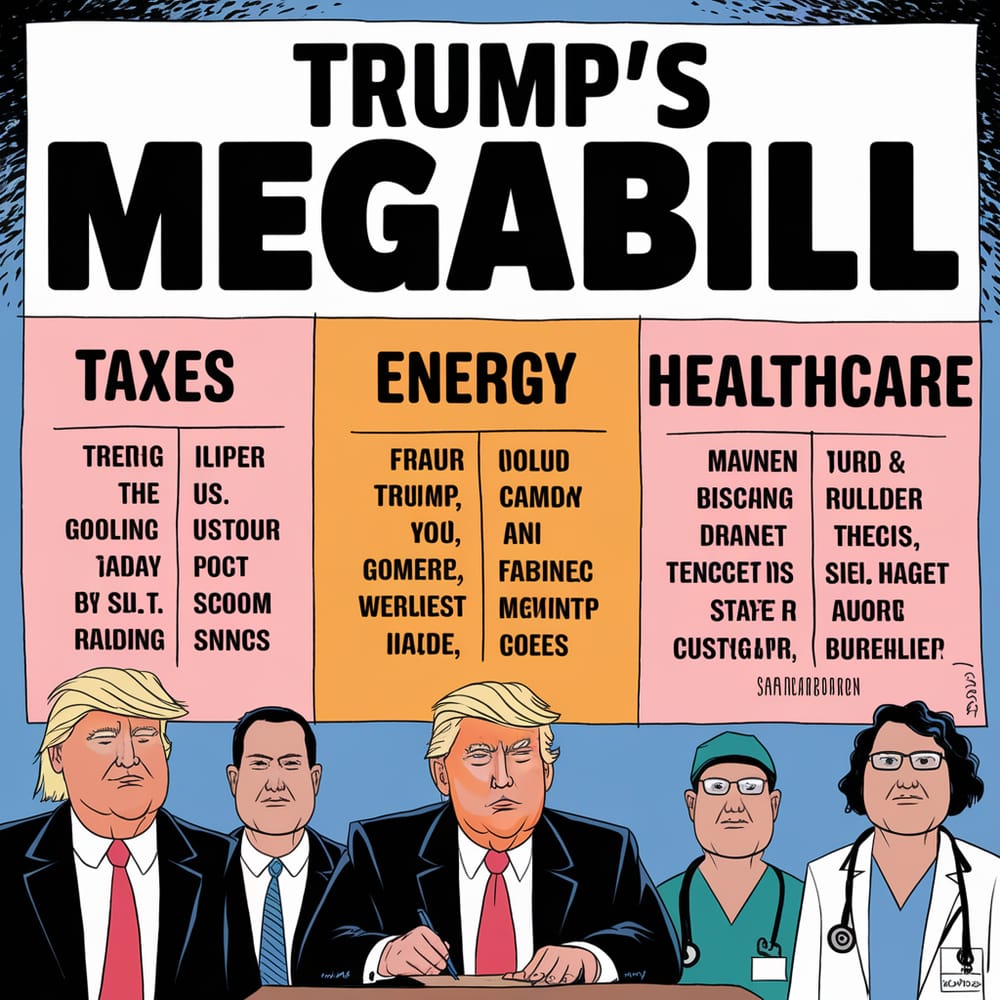
President Trump’s so-called “One Big Beautiful Bill” just edged closer to becoming law—and it’s poised to reshape the American economy in ways that businesses, investors, and everyday consumers can’t afford to ignore.
Despite three Republican defections, a 50-50 Senate split was broken by Vice President JD Vance’s tie-breaking vote, advancing the nearly 900-page bill toward final passage. While the legislation touches everything from military spending to border enforcement, its most seismic impacts land squarely in three areas: taxes, energy, and healthcare.
1. Taxes: Big Cuts, Big Red Ink
At the heart of the bill is a permanent extension of the 2017 Trump tax cuts, locking in a top marginal rate of 37% for high earners and introducing new deductions for tips, overtime, and car loan interest. Seniors get a boost too, with an expanded standard deduction. Businesses are cheering the return of long-term incentives for capital investments, R&D, and factory construction, all of which had previously been temporary.
The Senate version also cements the 20% pass-through deduction for small businesses and adds sweeteners like increased SALT deductions, “opportunity zone” perks, and the rollout of MAGA retirement accounts.
But there’s a catch: the bill adds $2.9 trillion in new deficit spending, according to the Congressional Budget Office, even before factoring in the $5 trillion debt ceiling hike it includes.
2. Energy: EVs and Solar Get Burned
The energy provisions represent a sharp pivot away from clean energy. The bill phases out Biden-era tax credits for electric vehicles and solar much faster than expected, with EV credits set to vanish by September 30. A controversial excise tax targeting wind and solar projects sourced from China was scrapped at the last minute—but not before rattling the sector.
Instead, fossil fuels get a major upgrade. The bill reclassifies coal as a “critical mineral,” making it eligible for manufacturing tax credits. Trump himself praised the shift, bashing solar projects as “ugly as hell” and promising renewed coal dominance.
Tesla CEO Elon Musk—once a backer of Trump—called the bill’s clean energy stance a disaster for the grid and warned of rising utility costs.
3. Healthcare: Millions Could Lose Coverage
The most contentious piece? A dramatic overhaul of Medicaid. The bill slashes $900 billion in Medicaid funding over the next decade. That, along with other healthcare changes, would leave an estimated 11.8 million more Americans uninsured by 2034, including millions of citizens—not just undocumented immigrants, as some Republicans claim.
Rural hospitals, nursing homes, and low-income families are expected to bear the brunt. Senator Susan Collins voted no, citing the disproportionate harm to her state’s vulnerable populations.
The Political Fallout
While Trump hails the bill as “the greatest ever passed,” public support is shaky. Even a Fox News poll showed 59% opposed versus just 38% in favor. Still, business groups like the Business Roundtable are backing it hard, saying it sends a strong signal to global investors.
The bill now heads to the House of Representatives, where GOP leadership hopes to pass it by July 4. But with internal party divisions still simmering, final passage isn’t guaranteed.
Bottom line: Whether you’re a business owner, energy exec, or everyday taxpayer, Trump’s megabill is no ordinary piece of legislation. It’s a reshuffling of the country’s economic priorities—and a lightning rod in the battle over who wins, who loses, and what the future looks like.
© Copyright 2024. All Rights Reserved.
© Copyright 2024. All Rights Reserved.