

Trump’s $2,000 “Dividend” May Arrive Through Tax Cuts, Says Treasury Chief
Monday, November 10, 2025
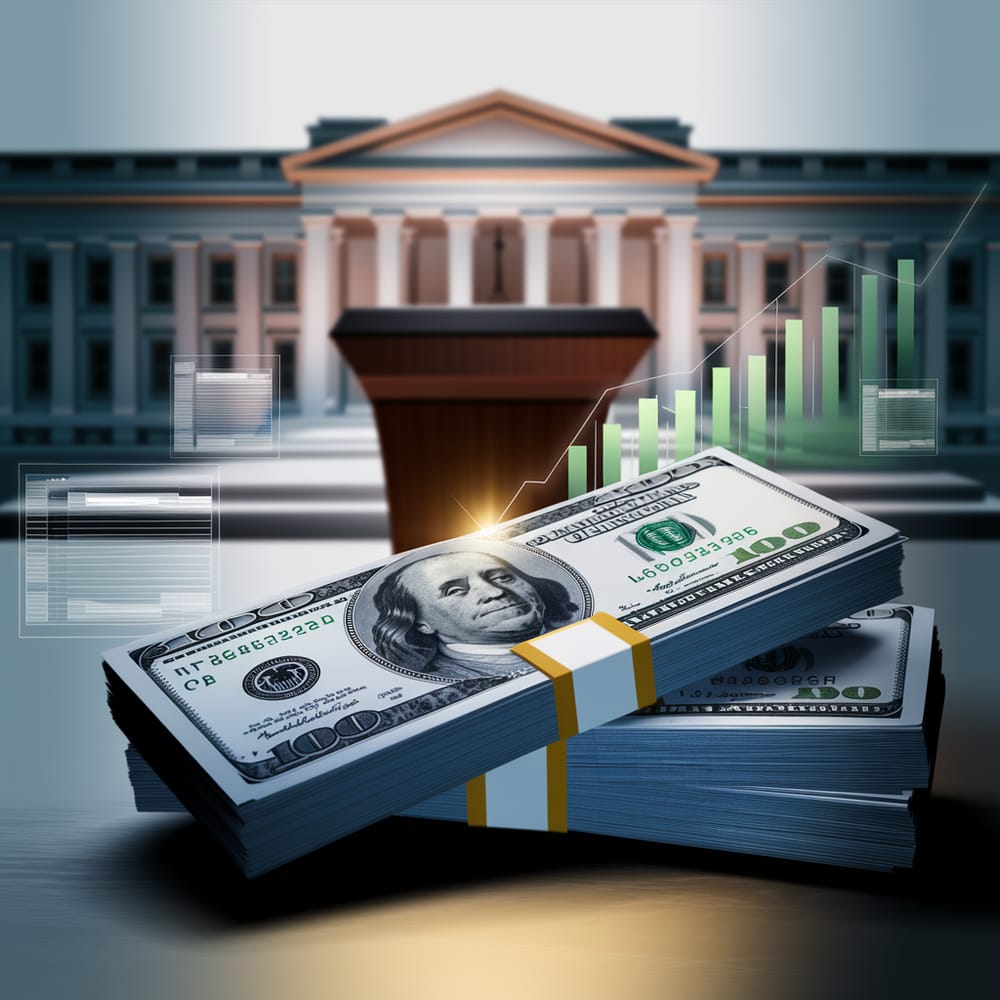
The Promise of a “Tariff Dividend”
Treasury Secretary Scott Bessent has offered new clarity on President Donald Trump’s surprise promise of a $2,000 “dividend” for Americans. The payment, Bessent suggested, may not come in the form of a check — but rather through tax cuts already embedded in the administration’s economic agenda.
Appearing on ABC’s This Week, Bessent was pressed about Trump’s weekend social media post, in which the president blasted critics of tariffs and claimed that a “dividend of at least $2,000 a person (not including high-income people!) will be paid to everyone.”
Bessent said the so-called dividend could appear in “many forms,” hinting that it might reflect lower taxes on overtime pay, Social Security, and tips, as well as new deductions on auto loans.
A Policy Wrapped in Politics
The remarks come as Trump defends his sweeping tariff regime, a central pillar of his second-term economic policy. The plan has come under fire following Supreme Court hearings that could potentially dismantle parts of it. Several justices signaled skepticism over the legal basis of the tariffs, raising the risk that more than $100 billion in duties might have to be refunded if the Court rules against the administration.
Trump warned that striking down the tariffs would be a “disaster” for the U.S., calling them essential to fixing America’s trade imbalance.
The Mechanics Behind the $2,000 Windfall
While the president has framed the $2,000 dividend as a direct benefit from tariffs, Bessent hinted it may ultimately come through tax policy adjustments rather than tariff revenues themselves. “It could be just the tax decreases we are seeing on the president’s agenda,” he said.
Those include the administration’s latest tax bill, which eliminates taxes on tips and overtime, cuts Social Security levies, and restores deductions for auto loan interest. Together, those breaks could put thousands of dollars back into workers’ pockets — effectively functioning as a “tariff dividend” without a new payout program.
Tariffs, Taxes, and the Legal Tightrope
The Supreme Court’s deliberations have reignited debate over whether tariffs count as de facto taxes, a power traditionally reserved for Congress. Chief Justice John Roberts noted that taxation has “always been the core power of Congress,” casting doubt on the White House’s unilateral use of tariffs to generate revenue.
Trump, meanwhile, has doubled down, claiming the U.S. is “taking in trillions of dollars” from tariffs and will “soon begin paying down our ENORMOUS DEBT, $37 trillion.”
Bessent echoed that optimism, saying the U.S. could collect “trillions” over the next few years, but insisted that tariffs aren’t just about cash. “The real goal of tariffs,” he said, “is to rebalance trade and make it fair.”
The Bottom Line
Trump’s “$2,000 dividend” may not arrive as a check in the mail — but as lower taxes and new deductions that flow through paychecks over time.
Still, with the Supreme Court weighing the legality of his tariffs, Trump’s broader economic experiment faces a defining moment. Whether through tariffs or tax breaks, the administration is betting that its policy mix can deliver both relief to Americans and a reset to global trade — without tipping over the system that funds it.
© Copyright 2024. All Rights Reserved.
© Copyright 2024. All Rights Reserved.