

Trump Demands Investigation into Revised Q3 U.S. GDP Figures
Thursday, November 26, 2026
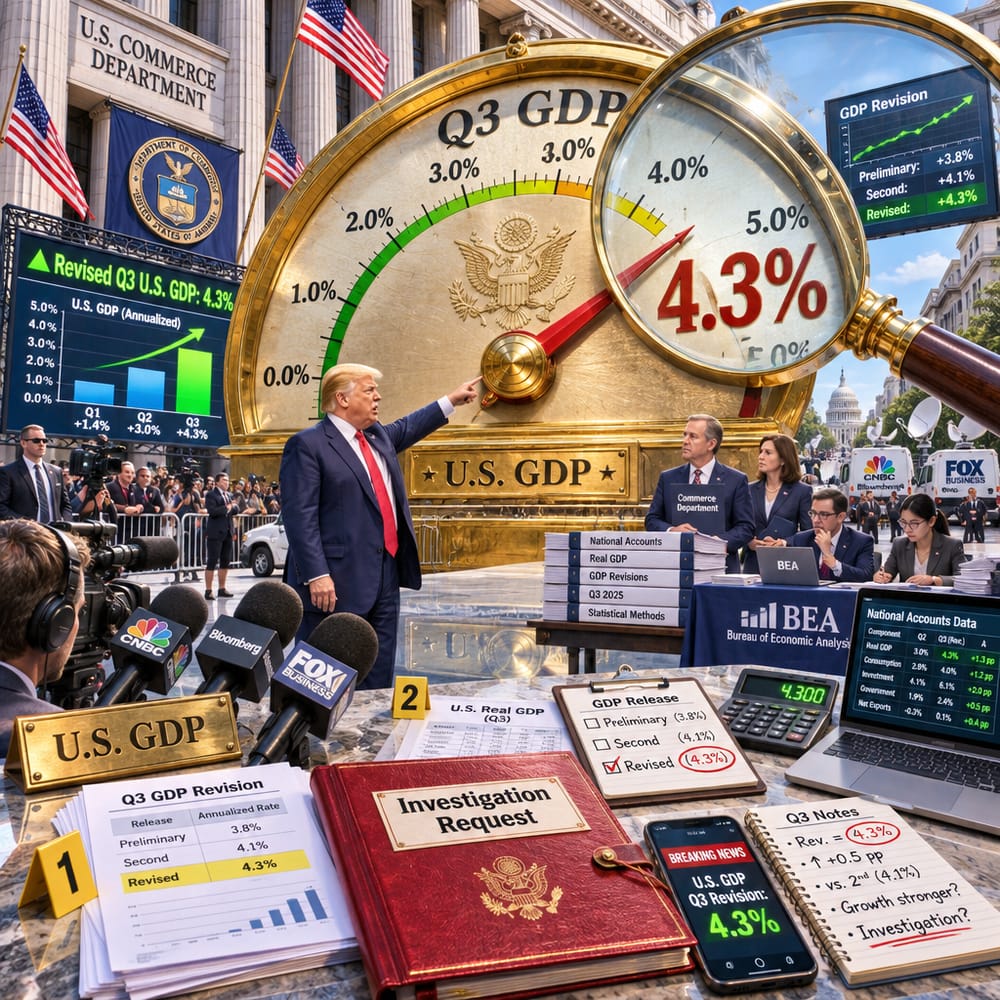
TRUMP CALLS FOR GDP INVESTIGATION: A POLITICAL STORM BREWING OVER ECONOMIC DATA?
In the world of high-stakes economics, where numbers are the lifeblood of market moves and investor decisions, the latest drama is sizzling hotter than a Wall Street trading floor on a caffeine binge. The Bureau of Economic Analysis just cranked up the heat by revising the U.S. Q3 GDP to a sizzling 4.3% annualized rate. That’s like discovering your plain coffee is actually a triple espresso. But wait, there’s more: Former President Donald Trump is demanding a full-blown investigation into this economic plot twist.
If you're wondering why Trump is suddenly donning his detective hat, it's because these numbers were released with both impeccable and suspicious timing—just before the midterm elections. Who said economics was boring?
ECONOMIC DATA UNDER THE MICROSCOPE
Let's take a step back into the murky waters of history. Presidential scrutiny of economic data is not exactly a new sport. Remember President Richard Nixon's administration? Back in the 1970s, Nixon allegedly pressured the Bureau of Labor Statistics to fudge unemployment figures. Though this was before the days of instant tweets and 24/7 news cycles, the whispers were loud enough to remind us that politics and statistics have danced before.
Fast forward to the present, and Trump's call for an investigation adds a new chapter to the tale. But this isn’t just about number-crunching. It's about the potential ripple effects on investor confidence and market stability. Because when politics bulldoze into economics, the markets can become as jittery as a cat on a hot tin roof.
THE MARKET’S NERVOUS SYSTEM
Political interventions can send tremors through the market's nervous system. Investors detest unpredictability as much as a foodie detests a soggy sandwich. If the investigation into GDP figures morphs into a full-blown political saga, it could raise doubts about the credibility of economic data.
Imagine being an investor trying to make decisions based on numbers that might have a political spin. It’s like navigating a maze blindfolded—possible, but fraught with peril. And let's not forget, an unpredictable market can mean increased volatility, which is a fancy way of saying prices could swing wildly. That’s not usually the kind of excitement investors are looking for.
WHAT’S REALLY AT STAKE?
Frankly, the stakes are higher than a skyscraper. U.S. GDP is a cornerstone of economic health, a bellwether for everything from job creation to consumer confidence. If uncertainty creeps in due to political meddling, it could delay investment decisions and muddy the waters of economic forecasting. It’s like trying to drive through fog with your high beams on—risky and potentially disastrous.
Moreover, any prolonged investigation might distract from more pressing economic challenges, such as addressing inflation or bolstering global competitiveness. The Commerce Department might find itself in the crosshairs, balancing the need to maintain data integrity with the political pressures of the day.
FINAL THOUGHTS
So, what should you, the everyday retail investor, do with this whirlwind of headlines? Keep your cool and your eyes on the long game. Political storms, like the recent one brewing over GDP data, tend to be intense but not everlasting. Savvy investors know to stay informed and not make rash decisions based on short-term noise.
While Trump’s demand for an investigation adds an unexpected twist to the narrative, it’s vital to remember that the U.S. economy is a complex behemoth. It’s resilient, and while political theatrics may introduce volatility, they rarely have the power to derail the underlying fundamentals.
In the meantime, grab your popcorn and watch as this saga unfolds. Just don’t forget to keep one eye on your portfolio—because whether it’s political drama or economic data, the market never sleeps.
This article is for informational purposes only and is not investment advice. Always do your own research or consult a licensed financial professional before making investment decisions.
© Copyright 2024. All Rights Reserved.
© Copyright 2024. All Rights Reserved.