

Treasury Yields and the Stock Market: Why the 10-Year Still Controls Growth-Stock Valuations
Monday, June 29, 2026
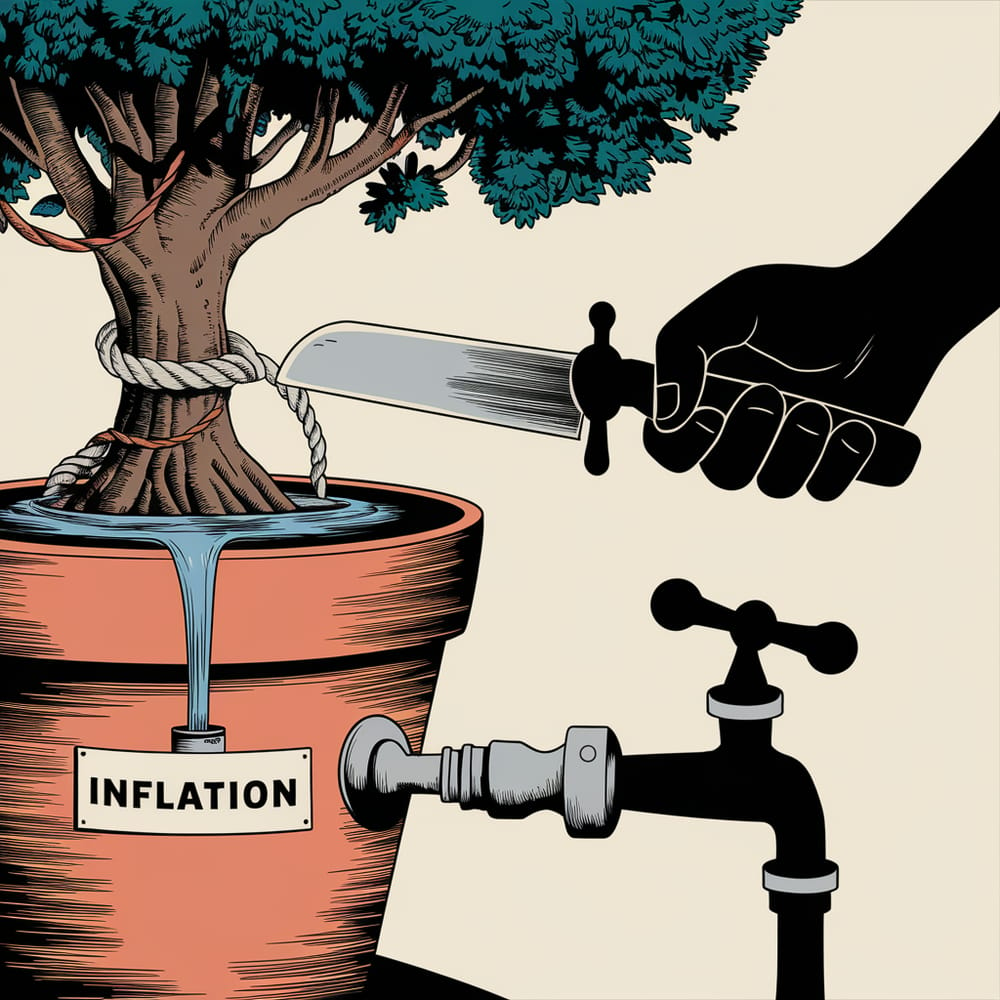
It is the number every growth-stock investor pretends not to watch — until it starts moving.
The 10-year Treasury yield was back around the mid-4% range Monday, climbing as safe-haven demand cooled after the U.S. and Iran agreed to pause fighting and resume negotiations over shipping through the Strait of Hormuz. Barron’s reported the 10-year yield at roughly 4.39%, up from 4.372% on Friday, while the 2-year yield rose to about 4.119% from 4.087%.
On the surface, that sounds like a small move. A few basis points here, a few basis points there. But for Wall Street, the 10-year is not just another bond-market quote. It is the gravity level for the entire valuation system.
When the 10-year rises, the math changes for tech stocks, long-duration growth companies, homebuilders, banks, bond ETFs, and anything priced on future cash flows. That is why traders keep coming back to the same question: at what point do Treasury yields stop being background noise and start becoming a real problem for stocks?
The Yield Math
The reason higher yields hurt growth stocks is not complicated. It is just uncomfortable.
A stock is worth the present value of its future cash flows. The farther those cash flows sit in the future, the more sensitive they are to the discount rate used to value them. High-growth tech companies often trade on earnings expected many years from now. That makes them “long-duration” assets, almost like long-dated bonds with equity risk attached.
When the 10-year Treasury yield rises, investors can earn more from a relatively safe asset. That raises the hurdle rate for owning riskier assets. A future dollar of earnings becomes worth less today, and valuation multiples compress.
That is the cleanest explanation for why QQQ, Nvidia, software stocks, speculative AI names, and other growth assets can suddenly become vulnerable when yields move higher. The business may not have changed. The denominator did.
The market’s valuation starting point matters too. FactSet’s latest Earnings Insight report showed the S&P 500 trading at a 20.1x forward 12-month P/E, above both its 5-year average of 19.9x and its 10-year average of 19.0x. Barron’s market data showed the Nasdaq 100 at a much richer 34.05x trailing P/E and 26.34x estimated forward P/E as of Friday, June 26.
That is why the 10-year matters so much now. High valuations can survive higher yields if earnings growth is explosive. But they become much harder to defend when the risk-free rate is near 4.4% instead of 1.5% or 2%.
The 4.5% Line in the Sand
There is no magic yield level where tech automatically breaks. Markets do not work that cleanly.
But traders tend to treat the 4.5% to 4.75% zone on the 10-year as the danger area for growth stocks. Below that range, investors can often rationalize higher valuations if earnings revisions are strong, inflation is cooling, and the Fed is not threatening more hikes. Above that range, the conversation usually changes.
At 4.5%, investors start asking whether they are being paid enough to own expensive equities. At 4.75%, long-duration assets usually face more serious multiple pressure. Near 5%, the 10-year becomes a direct competitor to stocks, especially if earnings momentum is not broadening beyond AI and mega-cap tech.
That is the key point: the market does not just care where yields are. It cares why they are rising.
If yields rise because growth is improving, corporate earnings are accelerating, and inflation is stable, stocks can absorb it. If yields rise because inflation risk, oil shocks, fiscal deficits, or Fed hawkishness are pushing bond investors to demand more compensation, that is a much tougher setup.
Right now, the signal is mixed. The Federal Reserve held its target range at 3.50% to 3.75% on June 17, but the bond market is still pricing a higher-for-longer backdrop, especially after geopolitical volatility around Iran and oil.
The Curve Is Not Screaming Recession
The 2-year Treasury tells traders what the market thinks about Fed policy. The 10-year tells them more about long-term growth, inflation, and term premium.
The relationship between the two is the yield curve. And right now, the curve is sending a more balanced signal than it did during the deeply inverted period of 2022 through 2024.
FRED data showed the 10-year minus 2-year spread at +0.31 percentage point on June 26, meaning the curve was modestly upward-sloping. That matters because an inverted curve — where the 2-year yields more than the 10-year — has historically been viewed as a recession warning. A positive curve does not guarantee strong growth, but it suggests the market is no longer pricing the same extreme policy-tightening stress that defined the prior cycle.
Still, this is not a roaring-growth curve. A spread of roughly 30 basis points is positive, but not steep. It says the market sees some growth and inflation risk, but not enough to declare a clean expansionary boom.
For traders, that creates a tricky middle ground. The curve is not bearish enough to scream recession, but yields are high enough to pressure valuation math.
Why Banks Are Different
Higher yields do not hit every sector the same way.
For banks, the impact depends on the shape of the curve and the behavior of deposits. In theory, banks benefit when they can borrow short and lend long. A steeper curve can help net interest margins because loan yields rise faster than funding costs.
That is why financials can sometimes rally when long-term yields rise. In Monday’s market, XLF was modestly higher while homebuilders were lower, showing the classic split between sectors that may benefit from higher rates and sectors that are hurt by them.
But the bank story is not as simple as “higher yields are good.” If rates rise too far, loan demand weakens, credit risk increases, and bond portfolios can take mark-to-market hits. The St. Louis Fed recently noted that the banking industry’s net interest margin fell to 3.22% in the first quarter of 2026 from 3.30% in the fourth quarter of 2025 because of declining asset yields, although margins remained robust compared with 2021 and early 2022 levels.
So higher yields help banks only under the right conditions: a healthy economy, stable credit, manageable deposit costs, and a curve that steepens for growth reasons rather than stress reasons.
If the 10-year rises because investors expect stronger nominal growth, banks can benefit. If it rises because investors are demanding more compensation for inflation, deficits, or geopolitical risk, the benefit becomes much less certain.
Homebuilders Feel the Other Side
Homebuilders sit on the opposite side of the rate trade.
The 10-year Treasury is a key benchmark for mortgage rates, and mortgage rates remain one of the biggest pressure points in housing affordability. Freddie Mac reported that the 30-year fixed mortgage rate averaged 6.49% as of June 25, up from 6.47% the prior week, while AP noted that mortgage rates have stayed near 6.5% for several weeks.
That is why homebuilder stocks can struggle when the 10-year pushes higher. Even a small move in mortgage rates can reduce buyer purchasing power, slow traffic, and force builders to offer incentives.
The homebuilding trade therefore depends heavily on whether the 10-year can drift lower. If the 10-year falls toward 4% and mortgage rates move closer to 6%, builders can catch a bid. If the 10-year pushes toward 4.75% and mortgage rates move back toward 7%, the affordability problem gets worse.
Are Bonds Finally Competing With Stocks?
This is the biggest portfolio question.
For much of the post-2008 era, there was no real alternative to stocks. Treasury yields were too low. Cash paid almost nothing. Investors were pushed out the risk curve.
That world is gone.
A 10-year Treasury yield around 4.4% gives investors a real baseline return. TLT, the long-duration Treasury ETF, becomes more interesting when investors believe yields are peaking, because long bonds can rally sharply if rates fall. But TLT also carries duration risk: if the 10-year keeps rising, long-bond prices can keep falling. In Monday’s market, TLT was roughly flat, reflecting a bond market that is still waiting for clearer direction.
Stocks can still win, especially if earnings growth remains strong. FactSet expects S&P 500 earnings growth of 23.1% for Q2 2026 and 24.0% for calendar 2026. That is a powerful equity argument.
But the hurdle is higher now. At a 20x forward P/E, the S&P 500 has an earnings yield of roughly 5%. When the 10-year Treasury is around 4.4%, the extra compensation for owning stocks is not huge. That does not mean stocks must fall. It means earnings have to do more of the work.
The Takeaway for Investors
The 10-year Treasury still controls the stock market because it controls the valuation math.
For growth stocks, higher yields raise the discount rate and make future earnings less valuable today. For banks, higher long-term rates can help if the curve steepens and credit stays healthy. For homebuilders, higher yields usually hurt because mortgage rates follow the same gravitational pull. For bonds, higher yields make income more attractive, but long-duration ETFs like TLT still carry price risk if rates keep climbing.
The market can probably live with the 10-year in the low-to-mid 4% range as long as earnings growth remains strong and the Fed does not turn more aggressive. The danger zone begins if yields break toward 4.75% or 5% for the wrong reasons — inflation, fiscal stress, oil shocks, or a hawkish Fed.
That is when the story changes from “rates are rising because growth is fine” to “rates are rising because investors are demanding more compensation.” Growth stocks can survive the first version. They usually struggle with the second.
For now, the 10-year is not just a bond yield. It is the market’s valuation referee. And every time it moves higher, Wall Street has to reprice the same question: how much should investors really pay today for profits that arrive tomorrow?
This article is for informational purposes only and is not investment advice. Always do your own research or consult a licensed financial professional before making investment decisions.
© Copyright 2024. All Rights Reserved.
© Copyright 2024. All Rights Reserved.