

Treasury Yields Tick Up—Are Bonds Becoming Less Attractive?
Wednesday, July 01, 2026
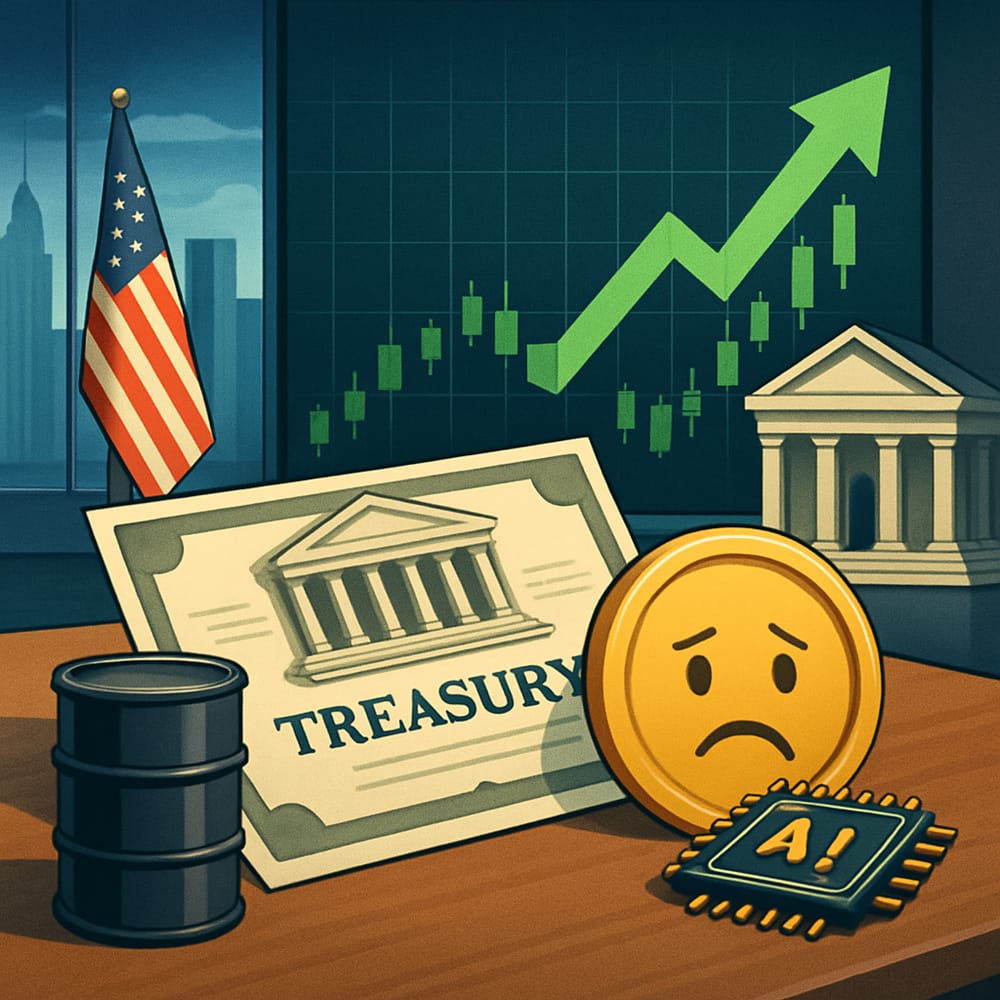
ARE BONDS ON SALE OR A LIQUIDATION?
Hold onto your hats, folks, because there's a new twist in the rollercoaster of financial markets: Treasury yields are on the upswing, and they're making the bond market look like a clearance rack at a department store. But before you dash out to buy yourself some bonds, let's take a closer look at what this means for your portfolio.
YIELD OPPORTUNITY OR TRAP?
The 10-year Treasury yield is flirting with levels we haven't seen in a while, and that's got everyone from Wall Street wizards to retail investors buzzing. Yields are like the interest rate you get paid for lending your cash to Uncle Sam; when they rise, it means investors are demanding more bang for their buck. Naturally, this uptick is catching everyone's attention. But is it a golden opportunity or a cleverly camouflaged trap?
Here's the skinny: higher yields can mean lower bond prices. When yields rise, existing bonds with lower interest rates lose their appeal, pushing their prices down. So if you're holding bonds in your portfolio, you might feel like you're on a sinking ship. But fear not—there's a silver lining. For those looking to buy new bonds, higher yields signal a potential opportunity for better returns.
FEDERATION OF MYSTERY
Now, why is this happening? Enter the Federal Reserve, the grand puppet master of interest rates, and Kevin Warsh, the enigmatic Fed Chair. While Mr. Warsh has been tight-lipped about what the Fed might do next, he's been quite chatty about how inflation is still too darn high. The notion of impending hikes in interest rates looms large, and that has the smart money recalibrating their expectations.
So, what's the game plan here? The Fed could tighten up credit conditions, which might put a squeeze on the economy. If rates rise to combat inflation, yields might keep climbing, making bonds less attractive compared to stocks, real estate, and other investment avenues.
STOCKS ON THE MOVE
Naturally, this bond yield see-saw impacts the stock market as well. Higher yields can be a siren call, luring money away from stocks back into the bond market, especially for those investors who favor a safer haven. As a result, equities might face headwinds, especially those high-dividend-paying stocks that suddenly seem less appealing as yields rise.
On the flip side, not all stocks are created equal. Companies with strong growth prospects might laugh in the face of rising yields, while cash-rich firms might weather the storm by deploying their treasure troves for strategic acquisitions or stock buybacks.
THE LOOMING EQUITY FALLOUT
But what about credit markets? Rising yields could lead to higher borrowing costs for companies that rely heavily on debt. With credit markets potentially tightening, businesses might find their financial flexibility hampered. The credit landscape could become a battlefield where only the strong, the liquid, and the financially savvy survive.
The current environment calls for a careful strategy. How high could yields go? That's the million-dollar question, isn't it? While no crystal ball can offer exact predictions, some analysts whisper about yields reaching levels that would cause most investors to lose sleep. If inflation persists and the Fed tightens the screws, brace for yields to edge higher.
BOTTOM LINE: STRATEGY CHECK
So, what's a retail investor to do? First, take a deep breath. Rising yields are a double-edged sword. They can be great for new bond buyers looking for better returns, but they might also destabilize equity and credit markets.
Your best bet is to stay informed and flexible. Diversify your portfolio, consider the balance between stocks and bonds, and keep an eye on Fed announcements. Remember, the financial markets are like a soap opera—full of drama, cliffhangers, and plot twists. So, stay tuned and be ready to pivot when the next twist comes your way.
In this bond market saga, the key is to be both the detective and the hero of your own investment story. Keep an eye on those yields, because whether they're going up or down, they'll always have a part to play in your financial future.
This article is for informational purposes only and is not investment advice. Always do your own research or consult a licensed financial professional before making investment decisions.
© Copyright 2024. All Rights Reserved.
© Copyright 2024. All Rights Reserved.