

Treasury Yields Surge to Two-Decade High—What It Means for Borrowing Costs
Monday, August 17, 2026
TREASURY YIELDS SURGE TO TWO-DECADE HIGH—WHAT IT MEANS FOR BORROWING COSTS
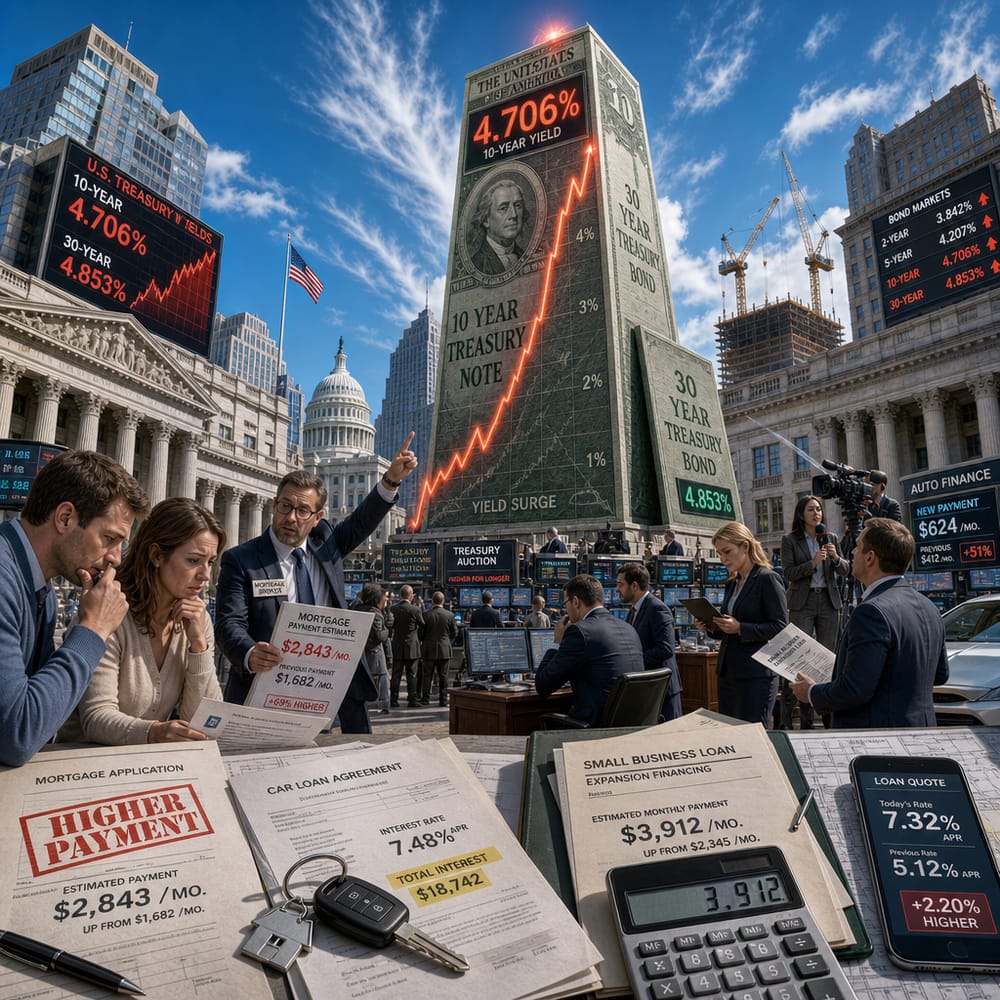
Brace yourselves, folks, because your wallet might start feeling a little lighter soon. The yield on the 10-Year U.S. Treasury note just hit 4.706%, a level we haven't seen in about 20 years. Think of it as the financial world's version of a 20-year flood event—rare, disruptive, and impossible to ignore.
But why should you care about some number on a government bond? Let's break it down. Treasury yields are like the backbone of U.S. borrowing. When they go up, it’s like gravity gets turned up on borrowing costs across the board. Mortgages, auto loans, credit card rates—you name it—all get pricier. And if you're not watching, your dream of buying that sweet new ride or upgrading to a house with an actual backyard might slip out of reach faster than you can say "interest rate hike."
The high Treasury yield doesn't just freak out potential homeowners and car buyers. Companies feel the squeeze too. Corporates rely on borrowing to fuel all kinds of growth, from opening new stores to launching that fancy new product line. But when borrowing gets more expensive, they might think twice about splurging on these big-ticket plans. So while Wall Street might be dancing to the beat of rising yields, Main Street could find the music a bit too fast-paced.
Wondering how all this plays into the bigger economic picture? Well, high borrowing costs can slow down spending and investment. And less spending and investment can lead to a slowdown in growth. It’s like when a party gets a little too wild, and someone dims the lights to bring things back to a manageable level. That’s essentially the economy pulling back the reigns to avoid overheating. But if the lights get too dim, you're left with a room full of sleepy guests wondering why they came in the first place.
Let's not forget the corporate credit markets. Companies need cheap credit to keep things humming, but when Treasury yields rise, the cost of doing business shoots up. It’s like trying to run a marathon with a backpack full of bricks. Not exactly conducive to a record-breaking performance. Companies may start cutting costs or halting expansion plans, potentially leading to a drag on economic growth. And that could mean fewer jobs or even layoffs, which is a pretty big deal when you're trying to keep the economy chugging along.
Now, I know what you're thinking—how did we get here? Well, a mix of inflation worries, Fed moves, and global economic uncertainty set the stage for this yield jump. Investors are demanding higher returns for their money, and that means the government has to pony up more to entice them to buy its debt. But hey, at least someone’s making money, right?
So what’s next? Keep an eye on the Federal Reserve. If they decide to pump the brakes on rate hikes, we could see yields stabilize or even fall. But if the Fed keeps its foot on the gas, brace yourself for a bumpy ride. They’ve been using rate hikes as their go-to tool to keep inflation in check, but those hikes have a funny way of cascading through the economy.
In summary, high Treasury yields are like a financial tremor rippling through the economy. For you, the retail investor, it means higher borrowing costs and potentially tougher times ahead for companies. So, keep those budgets tight, and maybe hold off on buying that island getaway. And remember, just like that 20-year flood, these high yields won’t last forever. But until then, watch your step and hold onto your hats—it's going to be a wild ride.
This article is for informational purposes only and is not investment advice. Always do your own research or consult a licensed financial professional before making investment decisions.
© Copyright 2024. All Rights Reserved.
© Copyright 2024. All Rights Reserved.