

Treasury Yields Surge to Multi-Decade Highs Before Reversing
Sunday, October 04, 2026
Treasury Yields Surge to Multi-Decade Highs Before Reversing
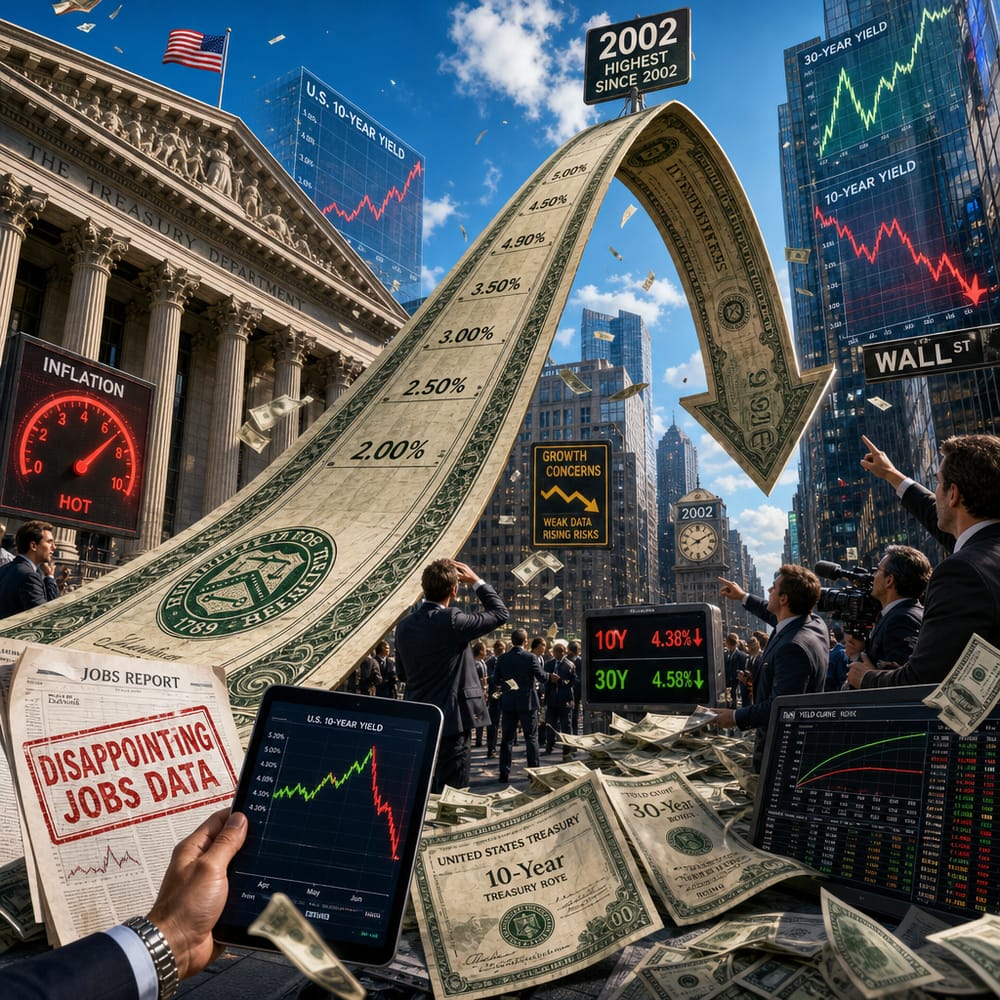
Blink and you might have missed it, but the financial world just experienced a rollercoaster ride courtesy of U.S. Treasury yields. Imagine finding an old mixtape in your drawer and discovering it’s making a comeback on every playlist. That’s what’s happening with Treasury yields, which recently hit levels not seen since 2002. But just like your once-favorite boy band, they're now pulling a swift U-turn. Let’s dig into what this means for your portfolio and why it matters.
The 10-year and 30-year Treasury bonds, those stalwarts of every retiree’s and institutional investor's heart, have been doing a jig up to the 4% range, driven by inflation fears and whispers of economic growth outshining expectations. You see, when yields go up, bond prices go down, and that’s a big deal for investors. It's as if your cozy, don’t-worry-about-it savings bond suddenly went all wild and unpredictable on you.
But wait, because here’s where it gets interesting. Just as folks were bracing for more sky-high yields, in came the latest jobs report with less-than-stellar numbers. The economy added a mere 29,000 jobs last month, and unemployment ticked up to 4.2%. For a minute, it was like watching someone pull a fire alarm in a high-stakes poker game. Yields did an about-face, and the bond market turned on its heel, reminding everyone of its sensitivity to economic tea leaves.
Now, why should you care about this financial rollercoaster? High yields are like that overzealous sibling who runs into the room and flips the light switch on. They affect borrowing costs and financial conditions, setting off ripple effects across markets. When yields climb, everything from your mortgage rate to your credit card APR can get more expensive. Ouch.
SECTORS IN THE CROSSHAIRS
So, who’s feeling the heat the most? Picture this: The real estate sector is looking a bit uneasy right now. Rising yields can put the brakes on new home purchases and construction as borrowing costs rise. It’s a bit like trying to dance in quicksand—possible, but not pretty.
Tech stocks, often seen as high-growth darlings, also get jittery with rising rates. Higher yields can lead to higher discount rates on future earnings, making those juicy tech stock valuations look a little less enticing.
And let’s not forget about utilities. With their business models heavily reliant on debt, they tend to sweat it out when borrowing costs rise. Think of them as the marathoners suddenly asked to sprint in loafers.
THE FED’S DILEMMA
This brings us to the big kahuna of questions: What does all this yield yo-yoing mean for the Federal Reserve? Well, the Fed is like the chaperone at a high school dance, trying to keep things smooth and balanced. Rising yields often signal inflation fears, and the Fed usually responds by hiking interest rates to cool things down. But softer job numbers might make them think twice—could a rate pause be in the cards?
Market participants, the savvy investors that they are, are now recalibrating their Fed forecasts. If job growth continues to wane, the Fed may feel pressure to hold off on tightening monetary policy, keeping rates lower for longer. This dance of expectations is as tricky as predicting your favorite team’s playoff chances in April.
WHAT’S AN INVESTOR TO DO?
With all this activity, you might be wondering how to play it. Diversification remains your best friend. Consider mixing in bonds with varying maturities to spread the risk. Keep an eye on sectors sensitive to rate changes, like those we mentioned, and be prepared for some volatility.
Ultimately, while the bond market’s recent antics might have seemed like a wild ride, they serve as a reminder that in investing, the only constant is change. Yields have reversed for now, but keep your eyes peeled and your portfolio agile—because if history’s taught us anything, it’s that this dance is far from over.
This article is for informational purposes only and is not investment advice. Always do your own research or consult a licensed financial professional before making investment decisions.
© Copyright 2024. All Rights Reserved.
© Copyright 2024. All Rights Reserved.