

Treasury Yields Surge to Multi-Decade Highs Amid Oil Price-Fueled Selloff
Friday, October 09, 2026
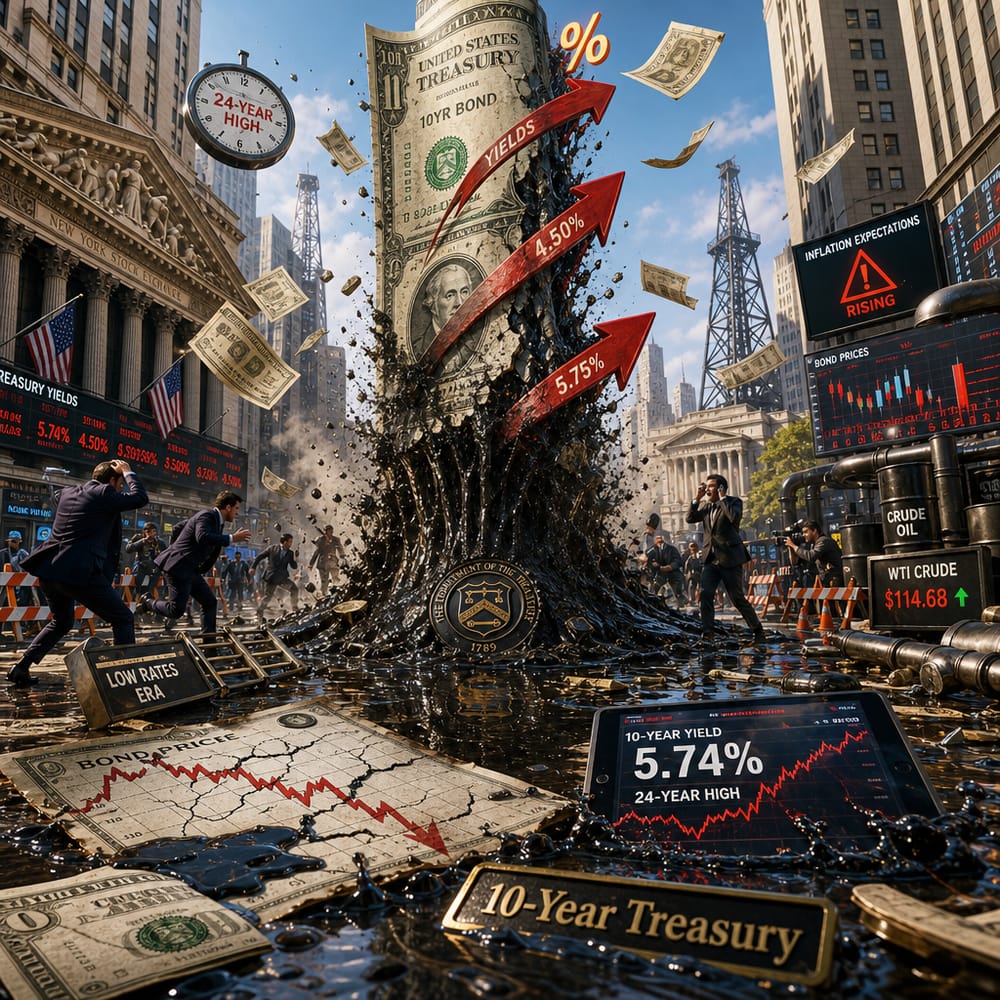
TREASURY YIELDS SURGE TO MULTI-DECADE HIGHS AMID OIL PRICE-FUELED SELLOFF
It’s not every day that you wake up to find U.S. 10-year Treasury yields doing their best impression of a 1990s boy band — hitting highs not seen since 1999. But that’s exactly the show markets are putting on this week. Cue the confetti and dancing because we’re taking a stroll down memory lane, whether we like it or not. Rising oil prices have thrown a wrench into the calm waters of the bond market, and investors are feeling the heat.
So, what’s the deal with these yields? Why does it matter if they're sky-high, and what’s oil got to do with it anyway? Buckle up, because we're diving straight into the heart of this financial thriller.
First things first: Treasury yields and inflation have an intimate relationship. When investors suspect inflation’s ugly head is about to rear up, they tend to demand higher yields to compensate for the eroding value of future returns. And nothing screams “inflation alert” quite like a spike in oil prices. As crude costs climb, they trickle down into everything from fuel to food, shipping to shopping. It’s a cascade effect that has investors gripping their seats and bracing for impact.
And what a cascade it is. Oil prices have been on a tear, leaving companies like Delta Air Lines scrambling to revise earnings forecasts due to soaring fuel costs. Despite Delta’s attempts to pass these expenses onto passengers, the turbulence is real. It’s a telltale sign that when oil coughs, the economy catches a cold.
But it’s not just airlines feeling the squeeze. Rising Treasury yields are like a financial shockwave, impacting everything from mortgage rates to corporate loans. For the average Joe, it means borrowing could get a whole lot pricier. Want to buy a house? Expect your mortgage rate to climb. Need a car loan? You might find yourself shelling out more in interest payments. As borrowing costs rise, consumer spending — the lifeblood of the economy — could take a hit, and that’s bad news for everyone.
This brings us to the Federal Reserve, the pompous orchestra conductor for our economic symphony. How will the Fed respond to this cacophony of rising yields and inflation fears? The upcoming Federal Open Market Committee (FOMC) meeting could be a nail-biter. The Fed might be faced with the unenviable task of choosing between curbing inflation or supporting economic growth. They have to decide whether to tap the breaks on rate hikes or risk overshooting, potentially stifling the current economic momentum.
A key player in this drama is the market’s inflation expectations. With oil prices jetting to the moon, there’s a growing concern the Fed will lean more hawkish — think more interest rate hikes to cool things down. But let’s not put the cart before the horse. The Fed is walking a tightrope, balancing the precarious act of driving inflation down without driving the economy into a ditch.
So, where does this leave us? There’s a lot at play. Oil prices are on the rise, pushing inflation expectations higher, which in turn are sending Treasury yields to the heights of yesteryear. The ripple effect could mean higher borrowing costs for consumers and businesses alike, putting the Fed on the spot to craft a strategy that dodges economic Cinderella’s pumpkin moment.
What makes this saga spine-tingling is its unpredictability. Will the Fed stick to its guns, or will they pivot course? Will oil prices continue their upward march, or is this a temporary spike? No crystal balls here, folks, just a complex web of economic forces unfolding before our eyes.
In the meantime, investors and everyday folks alike will be watching the markets as if it were a live sports event. Keep your eyes peeled, because in this game of yields and prices, every move counts, and every play impacts the financial world in ways that are anything but predictable.
So, here we are, living through an economic flashback with Treasury yields and oil prices holding hands, leading us on this wild ride. Hang tight, because even after the dust settles, the echoes of today’s market moves will be heard in the borrowing costs of tomorrow.
This article is for informational purposes only and is not investment advice. Always do your own research or consult a licensed financial professional before making investment decisions.
© Copyright 2024. All Rights Reserved.
© Copyright 2024. All Rights Reserved.