

Treasury Yields Spike to 20-Year Highs
Tuesday, August 18, 2026
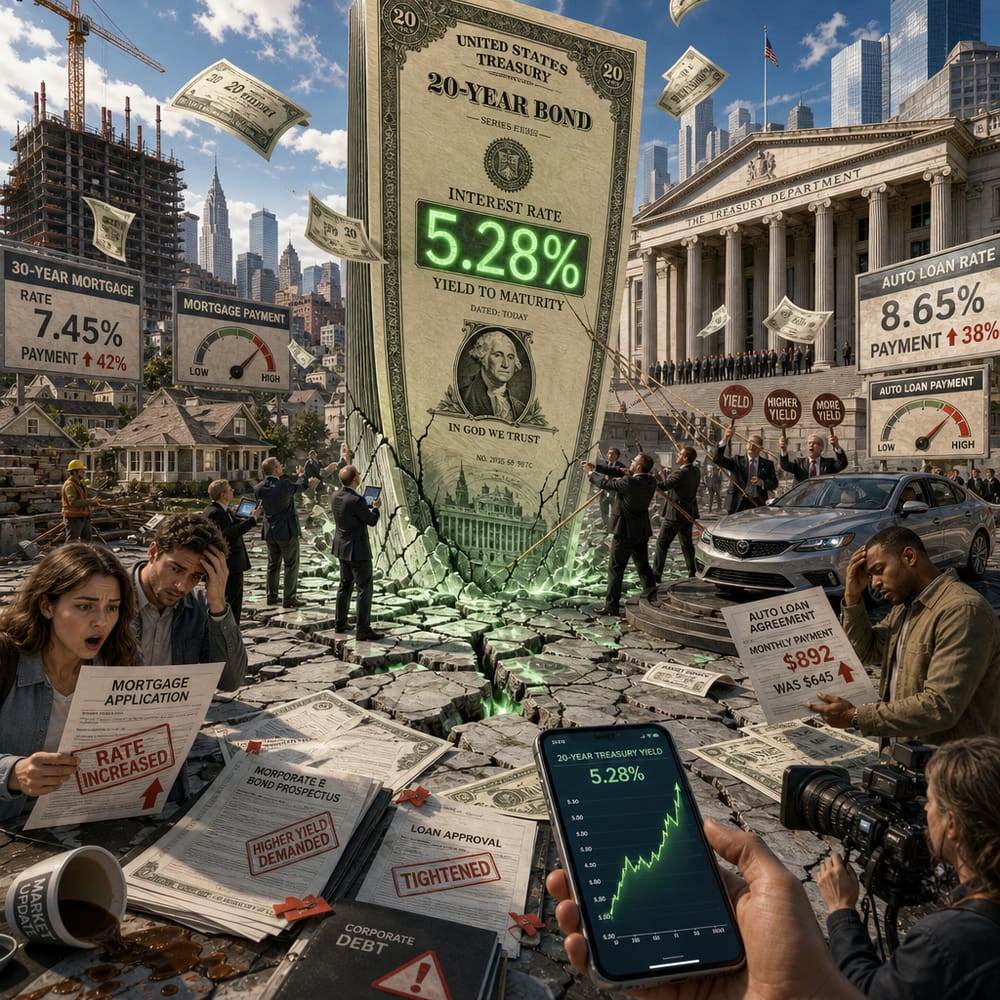
TREASURY YIELDS SPIKE TO 20-YEAR HIGHS: WHY YOU SHOULD CARE
Crack open the history books and dust off your Y2K nostalgia, because something we haven’t seen since the days of flip phones and TRL is making a comeback — and, no, it’s not your old CD collection. It’s Treasury yields, and they’re reaching heights not seen in two decades. But before you start digging through your attic for hidden treasures to sell, let’s unpack why this matters.
So, what's driving this yield spike? Put simply: investors are demanding higher returns to park their cash in the safety of Uncle Sam’s vault. Picture it as if you’re a contestant on a game show; to win that plush prize, you expect a decent payoff for your time. Similarly, investors are expecting a bigger reward due to rising inflation, among other factors. Inflation eats away at the purchasing power of your greenbacks, so investors want more bang for their buck.
But wait, there’s more! The Federal Reserve has been playing a complex game of monetary chess, raising interest rates to cool down that inflation inferno. Every time the Fed hints at more rate hikes, it's like adding a shot of espresso to Treasury yields. The higher the expected rates, the higher the yields investors demand.
Let's zoom out from the Wall Street lingo and see how this might hit your wallet. Rising Treasury yields often mean higher borrowing costs across the board — we’re talking mortgages, auto loans, you name it. If you’re dreaming about that house with the white picket fence or that shiny new car smell, it might cost more to turn those dreams into reality. Increased costs tend to put the brakes on consumer spending and business investments.
When borrowing becomes pricier, folks are less likely to splurge, and businesses might think twice before greenlighting new projects or expansions. Tightening up the purse strings is great for your savings account but could slow down economic growth. It’s the financial equivalent of trading your morning latte for instant coffee — good for your budget, but a drag on your spirits.
And then there’s the Fed, the maestro in this economic symphony. Rising yields add a layer of complication to their already complex score. If yields climb too high, the Fed might decide to cool it on interest rate hikes to avoid throwing a wet blanket over the economy. However, if inflation keeps burning like an August heatwave, they might have to crank up those rates regardless. It’s a tightrope walk, and one false step could lead to a tumble.
So, what should you do as a savvy retail investor scrolling through your phone right now? Keep an eye on those Treasury yields. They’re like the canary in the coal mine, signaling shifts in the broader economic landscape. Consider how rising borrowing costs might impact your financial decisions and investments.
This isn’t a call to panic, but a nudge to stay informed. Remember, where there’s risk, there’s also opportunity. Higher yields could spell more attractive returns for fixed-income investors, like those eyeing bonds.
In the meantime, stay nimble and keep your ear to the ground. The financial world is a dance; sometimes you lead, and sometimes you follow. Just make sure to keep your eyes open and your feet moving.
In the grand scheme of things, Treasury yields might seem like a dry topic — but they’re the ripples that can create waves across the entire economic sea. So, next time someone mentions Treasury yields at a dinner party, you can nod sagely and perhaps even impress them with your newfound knowledge. And if that conversation leads to a debate about whether or not to bring back TRL, well, you’re on your own.
This article is for informational purposes only and is not investment advice. Always do your own research or consult a licensed financial professional before making investment decisions.
© Copyright 2024. All Rights Reserved.
© Copyright 2024. All Rights Reserved.