

Treasury Yields Shift Ahead of FOMC Minutes
Monday, August 17, 2026
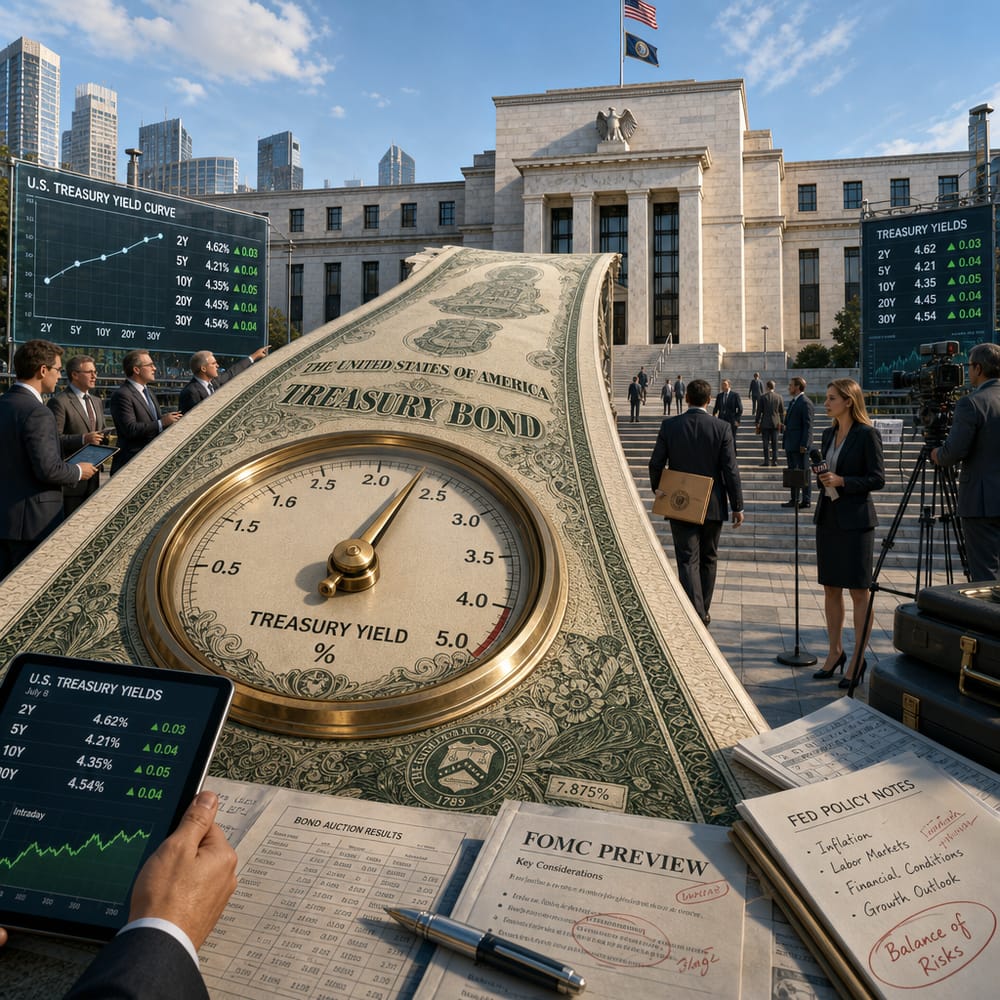
Taming the Treasury: What Rising Yields and FOMC Minutes Mean for Your Wallet
Hold onto your hats, folks! Just when you thought the dog days of summer would deliver nothing but reruns, Treasury yields are spicing things up. As July's Federal Open Market Committee (FOMC) minutes loom, investors are on tenterhooks, trying to decipher the cryptic tea leaves of future Federal Reserve policy. So, what's the scoop, and why should you care? Allow me to break it down.
First off, let’s talk about the rising Treasury yields that are currently strutting their stuff on the financial catwalk. The 10-year Treasury note, which is basically the index that gives us a wink about long-term interest rates, has gone up more than 1 basis point to 4.714%. Meanwhile, the 2-year note is also showing some sass, climbing over 1 basis point to 4.182%. In Wall Street lingo, a basis point is just fancy speak for 0.01%. So, what do these numbers whisper about investors’ deepest desires? Well, it seems they’re betting the Fed might play coy with further interest rate hikes.
Now, why do these numbers matter to you, dear reader? Think of Treasury yields as the heart rate monitor of the economy. When yields rise, the cost to borrow does too, from the mortgage on your dream home to the interest on your swanky new credit card. If you're planning to dive into the housing market or refinance that auto loan, this is your cue to step up the pace.
As everyone waits on tenterhooks for the FOMC minutes to drop, you might be wondering: Why are these minutes such a hot commodity? It's because they're pretty much the Fed's diary where they spill the beans on their economic musings and future policy moves. Investors, like nosy neighbors, are itching to see if the Fed will keep playing hard to get with interest rates or if they'll throw us a curveball.
There's a spicy blend of calm and chaos in the air. Wall Street's "fear gauge," officially known as the Volatility Index (or VIX if you're in the know), has hit a record low for 2026. While this might suggest that traders are lounging on their metaphorical beach chairs without a care, seasoned strategists warn that it might be the calm before the storm. Geopolitical tensions are simmering beneath the surface, and this period from mid-August to mid-October is historically a wild ride.
So, what scenarios could unfold when the FOMC minutes are unveiled? If the Fed hints at maintaining or even hiking interest rates, brace yourself for more volatility. Stock markets might take a dip, but safe havens like Treasury bonds could see a surge in demand. On the flip side, if the Fed signals a softer approach, expect investors to breathe a sigh of relief and the stock market to do a little happy dance.
But let's not forget the elephant in the room: geopolitical dramas. With former President Trump’s eyebrow-raising comments about Oman and the simmering tensions with Iran, markets are on edge. Such geopolitical risks often send investors flocking to safe assets like Treasury bonds, which might just keep yields in check despite potential Fed moves.
Long story short: Keep your eyes peeled. The coming days could be more entertaining than any summer blockbuster. Whether you're a market newbie or a seasoned investor, the FOMC minutes and the subsequent unraveling in Treasury yields could have echoes in your financial life. If nothing else, it’s a perfect excuse to sound savvy at your next dinner party. After all, who doesn’t want to casually drop a line about basis points and Treasury yields into casual conversation?
So, will the FOMC minutes deliver a plot twist worthy of a thriller, or are we in for another episode of "As the Economy Turns"? Only time will tell. In the meantime, keep your smartphone charged and your financial antennas up. This could be the most riveting finance story of the summer.
This article is for informational purposes only and is not investment advice. Always do your own research or consult a licensed financial professional before making investment decisions.
© Copyright 2024. All Rights Reserved.
© Copyright 2024. All Rights Reserved.