

Treasury Yields Rise Post-FOMC Meeting
Thursday, July 30, 2026
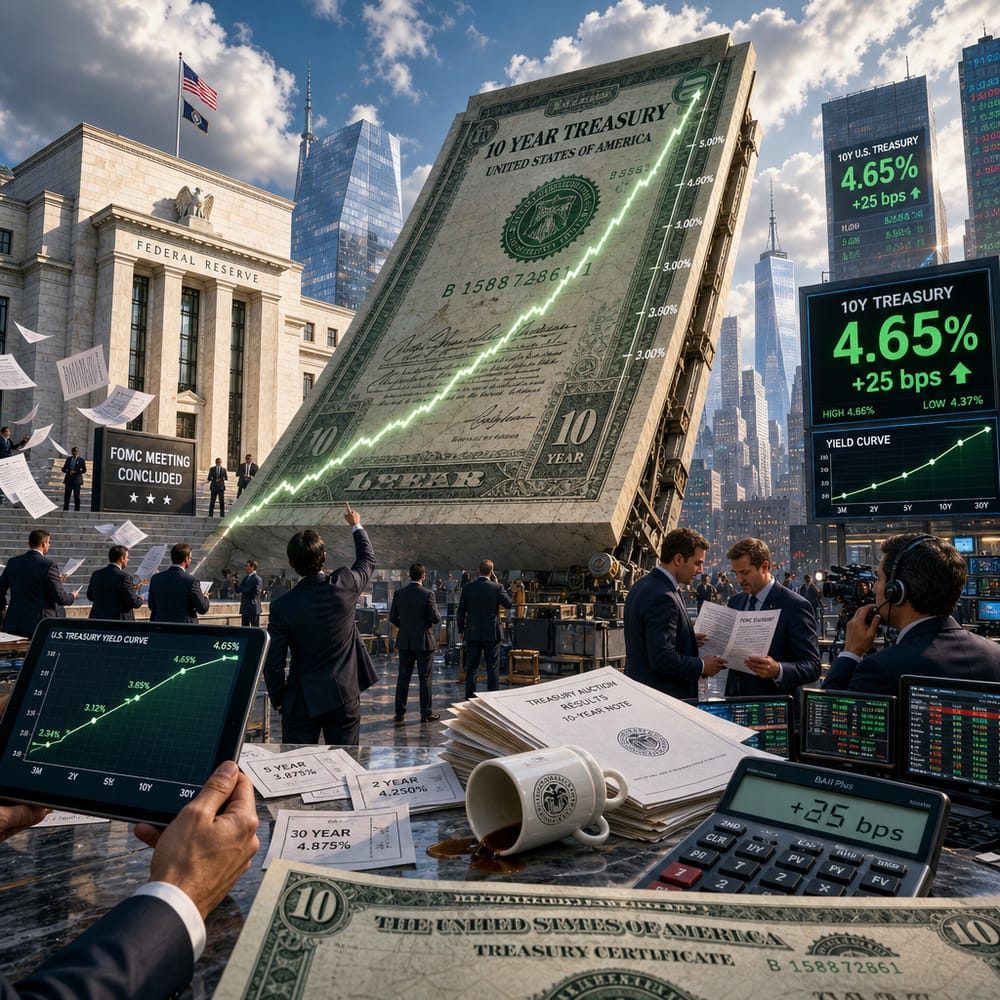
THE AFTERMATH OF THE FOMC MEETING: TREASURY YIELDS HAVE A FIELD DAY
If you thought the Federal Reserve's tea party of holding rates steady would be a snooze-fest, think again! The Treasury yields have thrown a little soirée of their own, especially the 10-year yield, which sashayed up a full 25 basis points to strut about at a glamorous 4.65%. Yep, that’s right—your favorite benchmark for borrowing costs is stealing the spotlight, and it's not just here to mingle. It's here to shake things up, baby.
So, why the sudden spike, you might ask? Well, let's take a little dive into the wonderland of numbers and interest rates, shall we?
A CLASH OF EXPECTATIONS
The recent Federal Open Market Committee (FOMC) meeting was a bit like an awkward family gathering—there were dissenting opinions flying around, leading to a divided camp. The Fed decided to hold its interest rates steady, but behind the scenes, the debate was fiery enough to roast marshmallows. This inner turmoil suggests that while the Fed may be riding the brakes on rate hikes, it's not ready to pull over just yet. Investors, craving any hint of forward momentum, have interpreted these mixed signals as a cue to adjust their positions. Cue: rising Treasury yields.
Another tantalizing factor at play here is the persistent inflation whispers. The bond market, ever the gossip, is anticipating that the Fed might have to roll up its sleeves and get more hands-on with rate adjustments to curb inflation. This prospect of future hikes has prompted investors to demand higher yields as compensation for potential rate risks down the road. In simple terms? The market’s nervous, and it wants to be paid for its jitters.
TREASURY YIELDS AND YOU: THE RIPPLE EFFECT
Now, what does an uptick in Treasury yields mean for the average Jane or Joe? Think of Treasury yields as the cool kids of the financial playground. When they rise, they tend to lift borrowing costs across the board. We’re talking everything from mortgages to car loans getting a little pricier. So, if you’re looking to finance that dream home or shiny new car, you might want to buckle up for some higher interest rates.
Higher yields also have a knack for throwing a wet blanket on consumer spending. When borrowing costs increase, the everyday consumer might think twice before swiping that credit card or signing on for a new loan. It's like an automatic nudge to tighten the proverbial purse strings, which can cascade into a slowdown in overall economic growth. It’s a classic case of economic cause and effect—kind of like how too many cookies lead to a sugar crash.
INVESTMENT SHUFFLE IN THE BOND MARKET
This jump in yields doesn’t just shuffle the deck for consumers; the bond market itself is doing a little cha-cha. When yields spike, the prices of existing bonds, which pay lower interest, tend to fall. Investors are less interested in yesterday’s rates when tomorrow promises more juicy returns. This seesaw effect can cause some portfolio headaches for those holding fixed-income assets. On the flip side, for those looking to park new cash in the bond market, higher yields are a siren song, promising better returns than we've seen in quite some time.
However, the broader stock market might not be as thrilled. As yields rise, suddenly the risk-free appeal of government bonds becomes a worthy adversary to riskier equities, possibly prompting some investors to shift their portfolios toward bonds and away from stocks—a move akin to preferring a night in with a comforting book over a wild party that's getting a bit too loud.
THE BIGGER PICTURE
In the grand tapestry of the economy, rising Treasury yields are a thread that can unravel or reinforce the broader narrative. They influence everything from how much it costs to build a new apartment complex to the calculations behind expanding a small business. As these yields climb, they serve as a reminder that while the Fed might be holding rates steady for now, the broader market is already bridging the gap, preparing for its next act.
In sum, the Treasury yield saga is more than just a number on a screen; it's a ripple that starts in the bond market and spreads to every corner of the economy. As we watch these yields dance, both consumers and investors must stay nimble, ready to adjust their moves to the ever-changing rhythm of the economic music.
This article is for informational purposes only and is not investment advice. Always do your own research or consult a licensed financial professional before making investment decisions.
© Copyright 2024. All Rights Reserved.
© Copyright 2024. All Rights Reserved.