

Treasury Yields Retreat Ahead of FOMC Minutes
Wednesday, August 19, 2026
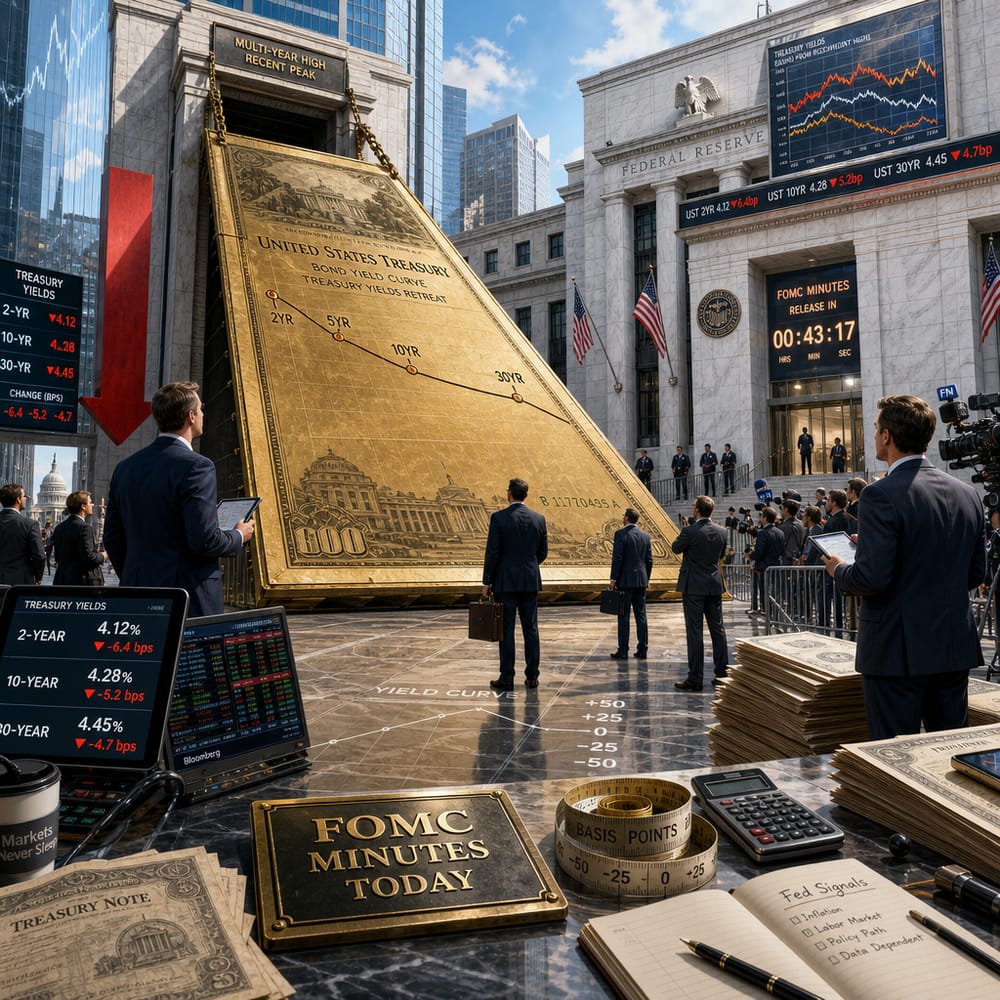
TREASURY YIELDS RETREAT AHEAD OF FOMC MINUTES
If there’s one thing that gets investors’ hearts racing and palms sweating, it's the mysterious allure of the Federal Open Market Committee (FOMC) minutes. As the curtain draws back on Uncle Sam's most recent economic deliberations, everyone from Wall Street tycoons to your Uncle Joe with his DIY portfolio is eagerly waiting to decipher the Fed's cryptic language. And right now, these whispers from the economic oracle are causing yields on U.S. Treasury notes to take a slight step back from their dizzying multi-year heights.
What's behind this roller coaster of bond yields, you ask? It’s a sign of the times, my friend—a delicate dance between market expectations and economic realities. Just yesterday, yields were scaling record highs, putting pressure on everything from government coffers to mortgage rates. Yet today, a different tune: yields retreated more than a basis point. For the uninitiated, a basis point is finance-speak for 0.01%—the kind of detail you’d impress your in-laws with at dinner.
So, what’s the buzz around the FOMC minutes? Investors are hoping to glean insights into the Fed’s future moves, like a financial Magic 8-Ball that guides their next big play. Will the Fed pivot its stance on interest rates? Are they feeling hawkish, ready to tighten the screws by raising rates further? Or perhaps dovish, eyeing a easing policy to let the economy catch its breath? The bond market's reaction suggests that investors are feeling a tinge of hesitation, pondering the Fed's next act like a cliffhanger finale of their favorite drama series.
These FOMC minutes are a goldmine of information. They're the minutes that matter, folks—not the kind that drag on in endless Monday morning meetings. When the Fed speaks, markets listen. And what they hear could mean the difference between a bullish rally or a bearish retreat on Wall Street.
So why should you care if you’re not sipping espresso in a Wall Street penthouse? Well, Treasury yields are the bedrock of financial markets. They're the North Star guiding everything from the interest you pay on your mortgage to the value of the dollar in your pocket. When these yields move, they send ripples across every pond of the financial ecosystem.
But here’s the kicker. Changes in Treasury yields can impact other asset classes like stocks, real estate, and even commodities. Imagine this: rising yields make bonds more attractive, like a siren's call drawing investors away from riskier arenas such as stocks. This could send tech giants and high-flying growth stocks into a tailspin faster than you can say "Silicon Valley."
And then there's the side effect on the dollar. Higher yields tend to attract foreign investors, propping up the greenback. But, if the Fed signals a dovish future, expect the dollar to wobble, potentially making U.S. exports cheaper—good news for American manufacturers, though it might have you paying more for those imported goods.
Now, let’s not forget our bond market heroes—the U.S. Treasury notes. These are no ordinary IOUs. They’re the U.S. government's promise to pay, backed by the full faith and credit of a nation. As yields pull back slightly, it tempers the cost of borrowing for Uncle Sam, which has implications for everything from federal spending to how tax dollars are allocated.
As we approach the release of the FOMC minutes, the financial world holds its collective breath—waiting, watching, and ready to react. Will it be more of the same, or is there a plot twist on the horizon? No matter the outcome, savvy investors will be poised to pivot, making moves that could define portfolios for months to come.
So, keep your eyes peeled and your ears tuned. This isn't just about the numbers—it's about understanding the narrative, the power plays, and the economic chess game that unfolds every time the Fed meets.
Until then, enjoy the spectacle, retail investors. Just remember, in the world of finance, knowledge isn’t just power—it’s profit.
This article is for informational purposes only and is not investment advice. Always do your own research or consult a licensed financial professional before making investment decisions.
© Copyright 2024. All Rights Reserved.
© Copyright 2024. All Rights Reserved.