

Treasury Yields Reaccelerate as U.S. Markets Close September on Cautionary Note
Wednesday, September 30, 2026
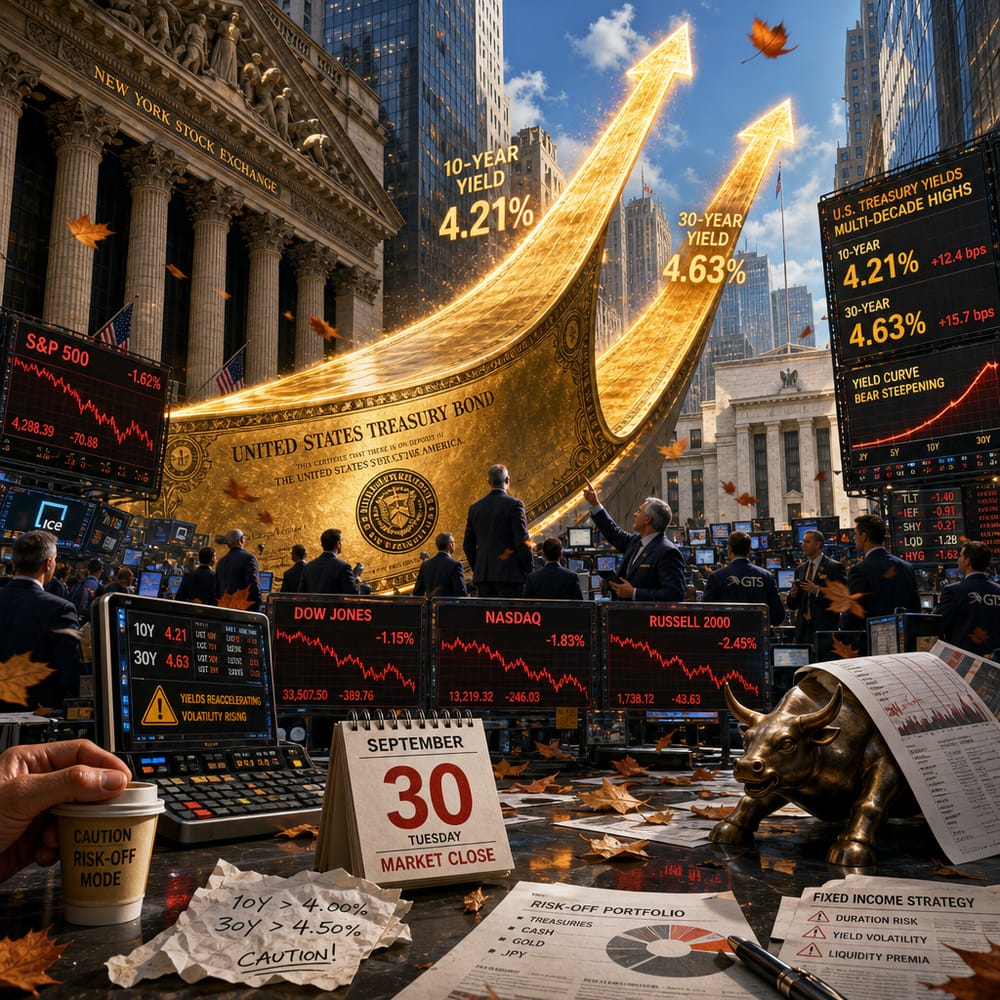
TREASURY YIELDS REACCELERATE AS U.S. MARKETS CLOSE SEPTEMBER ON CAUTIONARY NOTE
If you felt a chill down your spine as September closed, it wasn’t the weather turning. It was the markets, spooked by climbing Treasury yields that seem to have drunk an extra shot of caffeine. As bond yields reached their highest levels in nearly two decades, the U.S. equity markets ended the month with a stern reminder: risk is making a comeback.
Here’s the crux of the matter: higher bond yields can act like kryptonite for stocks, especially those high-flying growth stocks that investors adore. With the 10-year Treasury yield—think of it as the granddaddy of interest rates—flirting with numbers we haven’t seen since your iPod was cool, investors are shifting their attention away from equities. And who can blame them? When bonds promise better returns with less drama, stocks lose some of their shine.
The S&P 500, Dow, Nasdaq, and Russell 2000 all felt the heat, mirroring the jittery sentiment that’s creeping into investors’ minds. Higher yields are not just a number on a screen; they signal an environment where borrowing costs can rise. That’s bad news for companies and consumers alike. Essentially, it puts a leash on economic growth and can strangle consumer spending—neither of which bode well for stocks.
The immediate ripple? A migration from growth stocks, which are like a finicky houseplant needing just the right conditions to thrive, to safer, dividend-yielding stocks that are more like succulents—reliable and resilient. Tech stocks, in particular, with their pie-in-the-sky valuations, get the cold shoulder as higher rates make their future profits less dazzling when discounted to today’s dollars.
But before you start cashing out your 401(k), it’s worth examining the undercurrents. Investors are now battling with two opposing forces: the allure of high yields and the fear of a market correction. This cocktail of uncertainty is making everyone a bit queasy.
Rising bond yields are more than just a temporary storm cloud; they can be a harbinger of bigger, stormier weather on the horizon. That’s because as yields rise, so do expectations for inflation and interest rates, which could lead the Federal Reserve to keep interest rates higher for longer. The Fed, often seen as the party planner of economic stability, might eventually have to take away the punch bowl to keep inflation in check.
For investors, this presents a bit of a conundrum. Do you chase the seemingly safer yields of Treasuries, or do you stick it out with equities, hoping that the economic fundamentals will keep the bull market alive? Spoiler alert: there’s no easy answer. The market’s current maneuverings are less about panic and more about reassessment. Investors are recalibrating their portfolios to prepare for what could be a new normal of higher rates.
So, what does all this mean for your portfolio and future market movements? Strap in for a landscape where cautious optimism becomes your best friend. This isn’t the time to go all in on speculative plays, but neither is it the moment to abandon ship. It’s about balance—keeping an eye on the yield curve while still seeking opportunities in sectors that can weather interest rate hikes, like utilities or consumer staples.
As September’s chapter closes, many are left wondering: will October be a 'trick' or a 'treat' for investors? The path isn’t clear, but one thing is certain—those Treasury yields, like the unwelcome houseguest, aren’t leaving the spotlight anytime soon. Navigating this terrain calls for a blend of strategy, patience, and maybe a splash of humor to get through the unpredictability.
In this saucy tango between stocks and bonds, keeping your wits about you and an eye on the broader economic indicators will be crucial. So, stay sharp, stay informed, and don’t be afraid to dance to a different tune if that’s what the markets demand.
This article is for informational purposes only and is not investment advice. Always do your own research or consult a licensed financial professional before making investment decisions.
© Copyright 2024. All Rights Reserved.
© Copyright 2024. All Rights Reserved.