

Treasury Yields Near Multi-Year Highs: Bond Market Implications
Friday, August 21, 2026
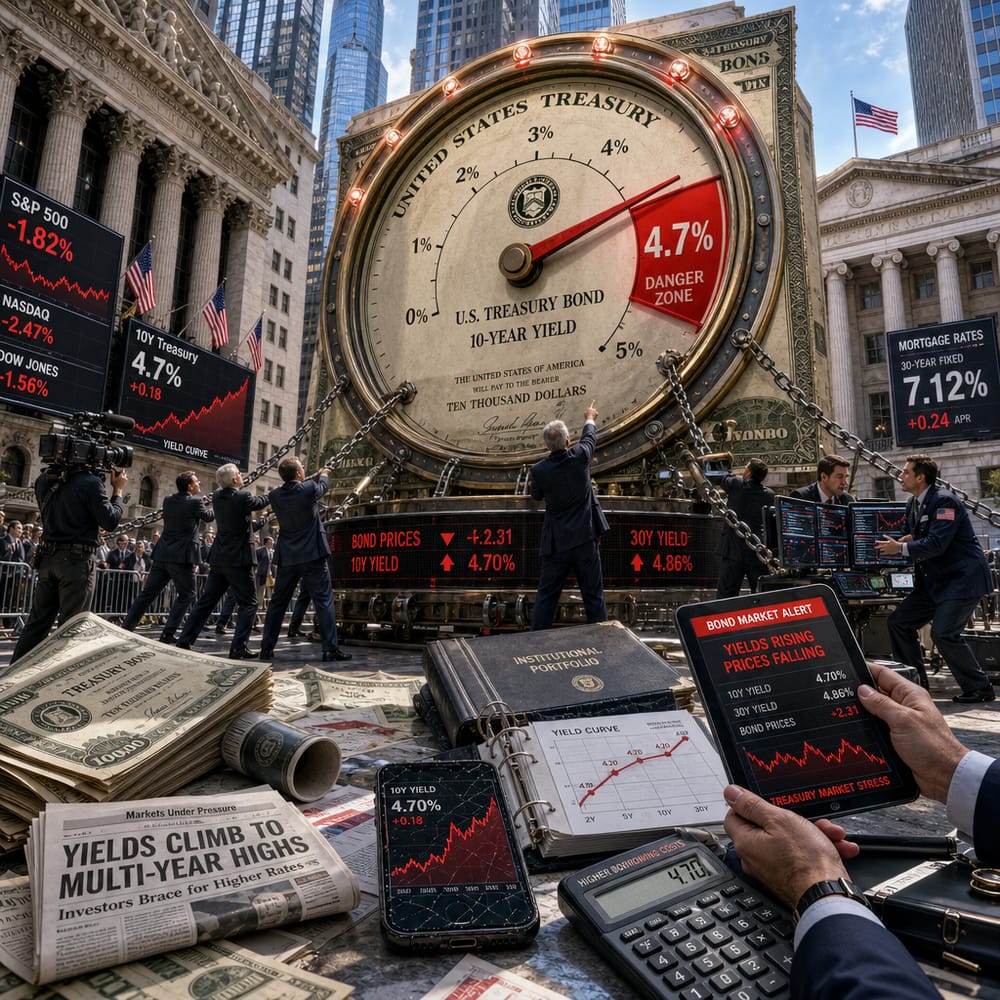
The bond market is caught in a classic game of tug-of-war, and right now, it’s the yields on U.S. Treasury bonds that are flexing their muscles. The 10-year Treasury yield has hit a striking 4.7%, and no, that’s not just a random number—it’s a significant high note that echoes through the economy louder than a rock band at a music festival. Let’s unpack why these numbers matter to you, your wallet, and the broader financial landscape.
WHY ARE TREASURY YIELDS HIGH?
First things first, why are these yields as high as they’ve been in years? A few key players are at the heart of this: inflation expectations, Federal Reserve actions, and global economic dynamics. Inflation, that pesky little gremlin nibbling away at purchasing power, has been more persistent than many expected. When investors think inflation will stay high, they are less likely to hold onto long-term bonds because they fear their returns will erode. Higher yields become necessary to entice investors back into the fold.
Then we have the Federal Reserve, whose interest rate hikes have sent ripples across financial markets. By raising rates, the Fed indirectly pushes up Treasury yields as well. Think of it as setting the tone for the entire bond concert. If the central bank’s metronome speeds up, the whole orchestra follows suit.
But wait, there’s more. The global stage is also adding its own dramatic flair. With geopolitical tensions like the ongoing skirmishes in Ukraine and economic uncertainties from places like China, investors are on edge. When the going gets tough, the tough often hunker down in what they consider safe assets, driving up demand and yields for U.S. Treasuries.
HOW DO HIGH YIELDS AFFECT YOU?
Alright, so high Treasury yields aren’t just about Wall Street fat cats in tailored suits rubbing their hands together in glee. They have real-world implications for every single one of us mere mortals. The bond market and the economy are like dance partners; they move in sync whether we notice or not.
First, let’s talk about consumer borrowing. When Treasury yields climb, it’s a red flag that borrowing costs could follow suit. Your mortgage rates, car loans, and even credit card interest rates might see a spike. It’s like when your favorite band becomes super popular and suddenly, their concert tickets cost twice as much.
Higher yields also make it pricier for companies to borrow money. Corporations often issue bonds to fund expansions or new projects. If the cost to borrow jumps, businesses might think twice before diving into new ventures, potentially slowing down economic growth. It’s a domino effect—less corporate spending can mean fewer jobs, lower wage growth, and an overall economic slowdown.
MARKET IMPLICATIONS AND YOUR INVESTMENT STRATEGY
Now, if you’re an investor, you might be wondering what this means for your portfolio. Should you be worried? Or excited? Maybe a bit of both. High yields present a double-edged sword. On one hand, they offer more attractive returns for those willing to park their cash in bonds. On the other, higher yields can weigh down stocks as investors shuffle their money into safer, income-generating assets.
Stocks have been jittery in recent times, as seen in the recent pullbacks in major indexes like the S&P 500 and Nasdaq. Higher yields make bonds a more attractive alternative, potentially leading to a rotation out of stocks. But remember, markets are nothing if not dynamic. Long-term investors should keep calm and carry on, perhaps considering a diversified strategy that balances both stocks and bonds—and maybe a few extra sips of coffee to ride out the volatility.
THE BOTTOM LINE
High Treasury yields are like the bassline in a song—setting the tone for everything else in the financial mix. Yes, they can be a sign of inflationary pressures and economic challenges, but they also offer opportunities for savvy investors and signal crucial shifts in borrowing costs.
In this unfolding drama, stay informed and don’t let the noise drown out your strategy. Keep tabs on inflation data, Federal Reserve signals, and global events. And if you’re ever in doubt, just remember—markets are like the weather: unpredictable, sometimes stormy, but always clearing up eventually.
This article is for informational purposes only and is not investment advice. Always do your own research or consult a licensed financial professional before making investment decisions.
© Copyright 2024. All Rights Reserved.
© Copyright 2024. All Rights Reserved.