

Treasury Yields Hover Near Multi-Decade Highs Amid Deficit and Policy Uncertainty
Wednesday, August 19, 2026
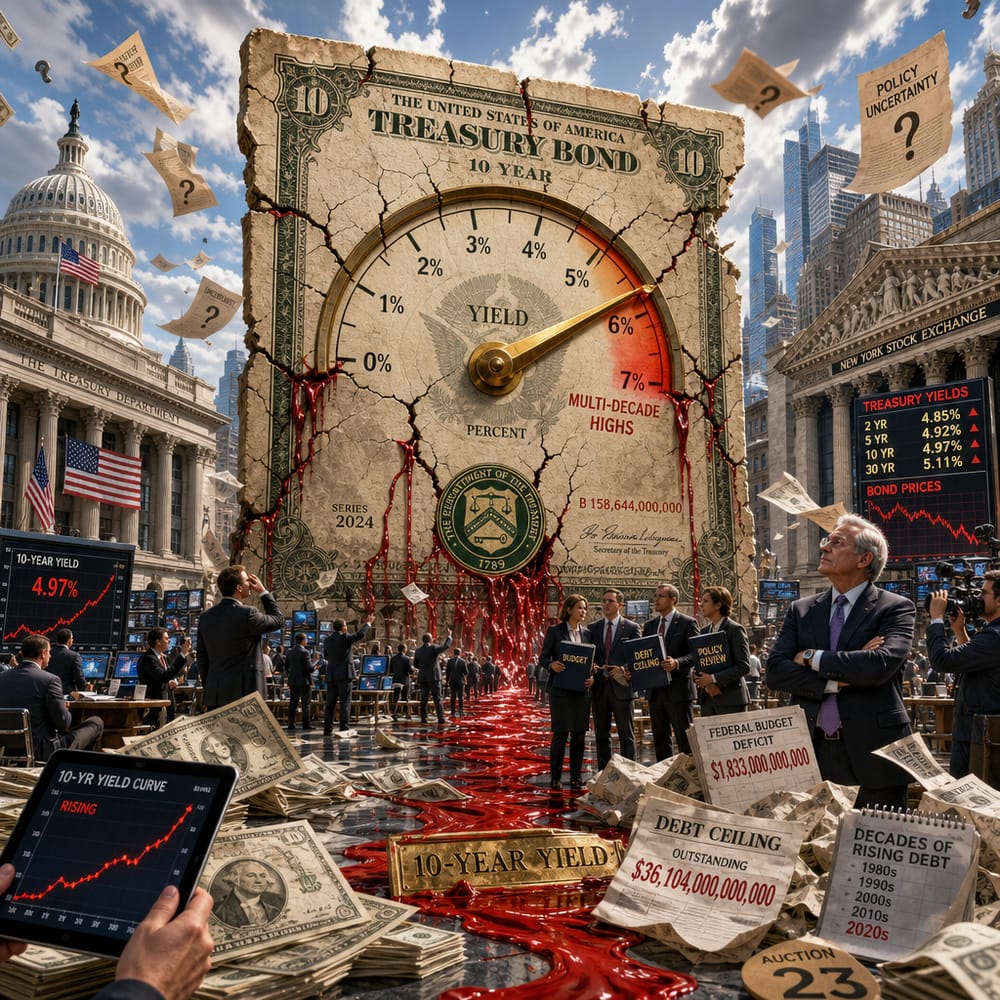
HIGH-STAKES YIELDS: THE TREASURY ROLLERCOASTER AND YOUR WALLET
Imagine you're at a carnival, and there's an enormous rollercoaster ahead. It looms large, stretches precariously high, and you're both excited and terrified at what lies ahead. Welcome to today's U.S. Treasury market, where yields have hit levels not seen since the days when flip phones were still a thing. What's driving this high-wire act, and more importantly, what does it mean for Uncle Sam and your wallet?
THE TOWERING TREASURY YIELDS
These yields are the interest rates the U.S. government pays to borrow money. Elevate those rates, and suddenly borrowing becomes a costly affair—not just for the government but for everyone from corporations to homeowners. It's like realizing your new credit card comes with a whopping interest rate after splurging at the mall. Oops!
Why the surge? Well, it's a cocktail of factors. First up, we have the federal deficit, which has ballooned faster than a popcorn bag in the microwave. The U.S. government now owes a jaw-dropping $40 trillion, a figure doubling over the past decade faster than your favorite TikTok trend. These deficits are skyrocketing in part because of the immense stimulus bills that kept the economy afloat during the pandemic. As the saying goes, nothing in life is free, not even government intervention.
Then there's the uncertainty cocktail being shaken up by policy shifts and geopolitical concerns. Investors are demanding higher yields as compensation for the perceived risks, like how you might demand more sprinkles if the ice cream shop looks a bit sketchy. And don't forget the Federal Reserve’s love-hate relationship with interest rates, stirring market uncertainties.
THE GOVERNMENT'S MUSCLE FLEX
Enter the Treasury Department, which is trying to put the brakes on this yield rollercoaster. One of the tricks up its sleeve? Using buybacks to pull debt off the market. It's like trying to calm a wild horse by offering it carrots—bold, but will it work? They've doubled the size of these buybacks to keep the markets from getting completely spooked.
But the effectiveness of this move is debatable. It's a temporary band-aid on a long-term wound. Sure, it’s given the market a bit of a breather, but it doesn’t change the overall narrative: the government’s debt is still spiraling, and the rollercoaster isn’t coming down anytime soon.
THE RIPPLE EFFECT
Higher Treasury yields mean higher borrowing costs for everyone. When Uncle Sam pays more to borrow, it trickles down faster than your favorite latte through a coffee filter to consumers and businesses. It impacts everything from mortgage rates to the cost of financing a new startup idea.
For the government itself, this means tighter purse strings. Higher borrowing costs could force the government to rethink its spending spree, especially on social programs and infrastructure. When interest payments on the debt become a larger slice of the financial pie, less is left for those shiny new projects policymakers love to tout. In short, don’t be surprised if some future big-ticket government plans get benched.
CONSUMER AND CORPORATE LANDSCAPE
On the ground, in the heart of everyday America, this plays out in various ways. Higher borrowing costs mean Americans might find it a bit steeper to buy a home, refinance a student loan, or get that business loan approved. Corporates feel the pinch too, as they navigate higher costs of capital which may dampen expansion plans or hiring sprees.
So what should you do as a retail investor scrolling through this? Keep your eyes peeled. Watch those interest rates and stay nimble with your investments. Bonds may become attractive again if you’re hunting for safer returns, but remember diversification is key. No one wants to be at the mercy of one market sector.
THE FINAL LAP
As we navigate these towering treasury yields, keep in mind that while high highs and low lows might make for a great ride at the amusement park, in the finance world, they demand careful attention. Whether you're a government official grappling with budget constraints or a retail investor pondering your next move, understanding these trends is crucial. So buckle up, stay informed, and ride this financial rollercoaster with an eye on the horizon. The thrill might just be worth the ride.
This article is for informational purposes only and is not investment advice. Always do your own research or consult a licensed financial professional before making investment decisions.
© Copyright 2024. All Rights Reserved.
© Copyright 2024. All Rights Reserved.