

Treasury Yields Hit Multi-Decade Highs, Pressuring Equities
Thursday, October 08, 2026
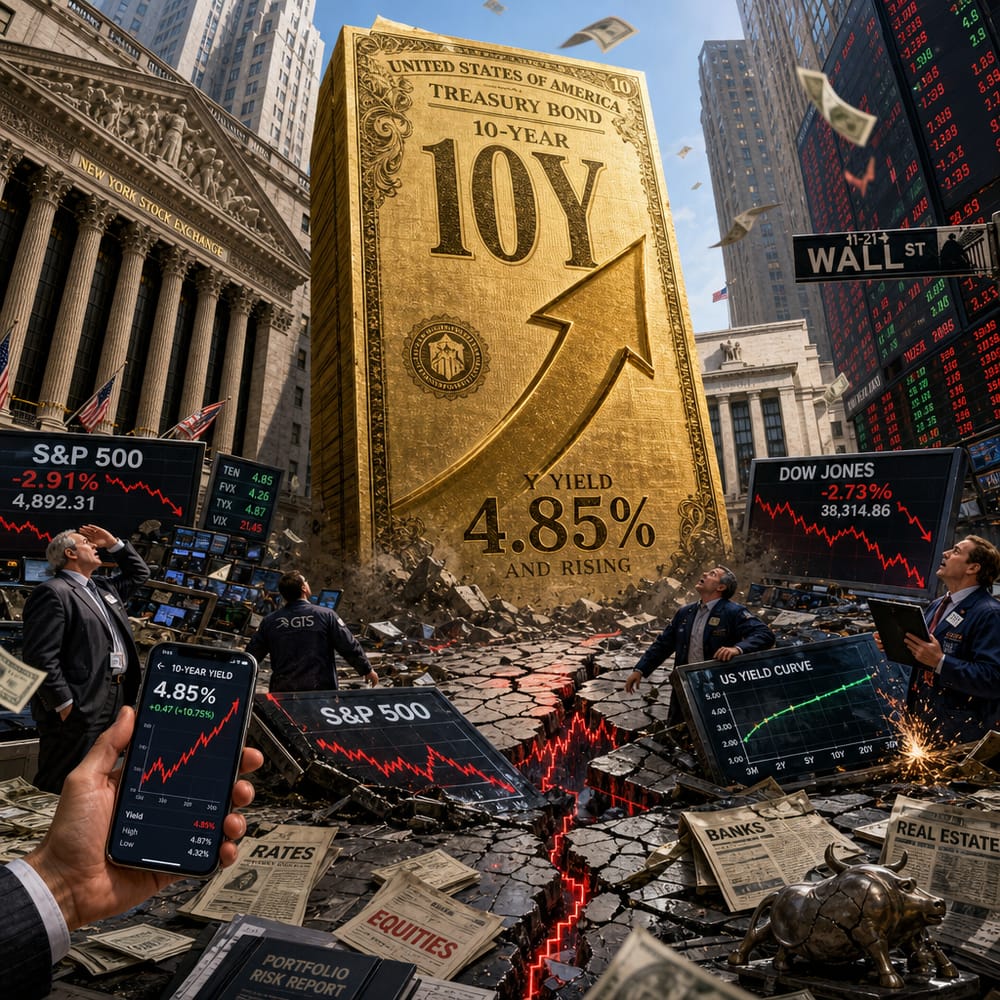
RISING TREASURY YIELDS: SHOULD YOU HIT THE PANIC BUTTON OR JUST HIT SNOOZE?
Hold onto your hats, folks—because the bond market just did something it hasn't done since Spice Girls were all the rage. The 10-year Treasury yield has skyrocketed to levels we haven't seen in over two decades. If you're wondering whether to panic about your stock portfolio or just get another cup of coffee, you're not alone.
Let's dive in.
THE BIG WHY BEHIND THE BOND SPIKE
First, what's fueling this turbo-charged rise in Treasury yields? In a word: expectations. Traders are betting that central banks are likely to raise interest rates to keep inflation in check. And let's not forget all those companies borrowing madly to build shiny new AI infrastructures. That's a lot of demand for money, which means higher yields.
David Zervos, a bigwig at the Treasury Department, says these yields are "really, really high" by historical standards and could cool down soon. But if there's anything we've learned from 2023's roller-coaster market, it's that forecasts are about as reliable as a politician's promise. So grab some popcorn because this show might not be over.
STOCK MARKET TREMORS: WHO FEELS THE HEAT?
Here's the thing: rising yields don't just hang out in the bond market. They're like that obnoxious neighbor who blasts music at 3 AM—they disturb everything around them. Higher yields mean higher borrowing costs, which is bad news for companies loaded with debt. Rate-sensitive sectors like utilities and real estate are feeling the burn, as are growth-heavy tech stocks. Not to mention, consumer loans like mortgages are getting pricier, scaring off potential homebuyers faster than a haunted house.
The S&P 500 and Dow Jones are already feeling the pinch. The tech-heavy Nasdaq took an extra hit recently, thanks to some disappointing revenue news from AI darling OpenAI. Turns out, not even the robots can save us from high interest rates.
WHAT ABOUT MONETARY POLICY?
The big question is, what does this mean for the Fed's next move? Jerome Powell and his cohorts have been doing the interest rate tango for a while now. Rising yields could take the wind out of their hawkish sails, making them less likely to hike rates aggressively at the next meeting. After all, the market's doing some of the heavy lifting for them.
But, hold your horses. If inflation remains stubborn, the Fed might still have to play the bad cop and keep raising rates. It's like trying to lose weight while working in a chocolate factory—the temptation to return to easy money is real, but those inflationary calories add up.
WHAT DOES THIS MEAN FOR YOU?
If you're an equity investor, fret not. This isn't a call to abandon ship but rather to batten down the hatches. Diversification is your best friend right now. Spread your bets across sectors that are less reliant on borrowed dough. Think consumer staples, healthcare, or dividend-paying stocks—those tortoises in a world full of investment hares.
And hey, if you're a fixed-income aficionado, you might actually be smiling. Higher yields mean better returns on new bonds, so dust off that bond portfolio and give it another look.
THE ROAD AHEAD: WHAT TO WATCH
So, should you hit the panic button? Probably not. But don’t nap through this, either. Keep an eye on inflation reports and Fed announcements—their next moves will provide crucial clues. And remember, market tides change swiftly—from bullish to bearish faster than you can say "Federal Open Market Committee."
In a world where even AI can’t predict its revenues accurately, remember to stay nimble. Stock up on knowledge (and maybe some caffeine), and keep your portfolio diversified. Because if there's one thing we know for sure, it's that the only constant is change.
So, let’s watch how this plays out, one yield at a time. And in the meantime, maybe give the Spice Girls another listen—they might just make a comeback, too.
This article is for informational purposes only and is not investment advice. Always do your own research or consult a licensed financial professional before making investment decisions.
© Copyright 2024. All Rights Reserved.
© Copyright 2024. All Rights Reserved.