

Treasury Yields Hit Multi-Decade Highs, Equity Indices on Edge
Thursday, September 24, 2026
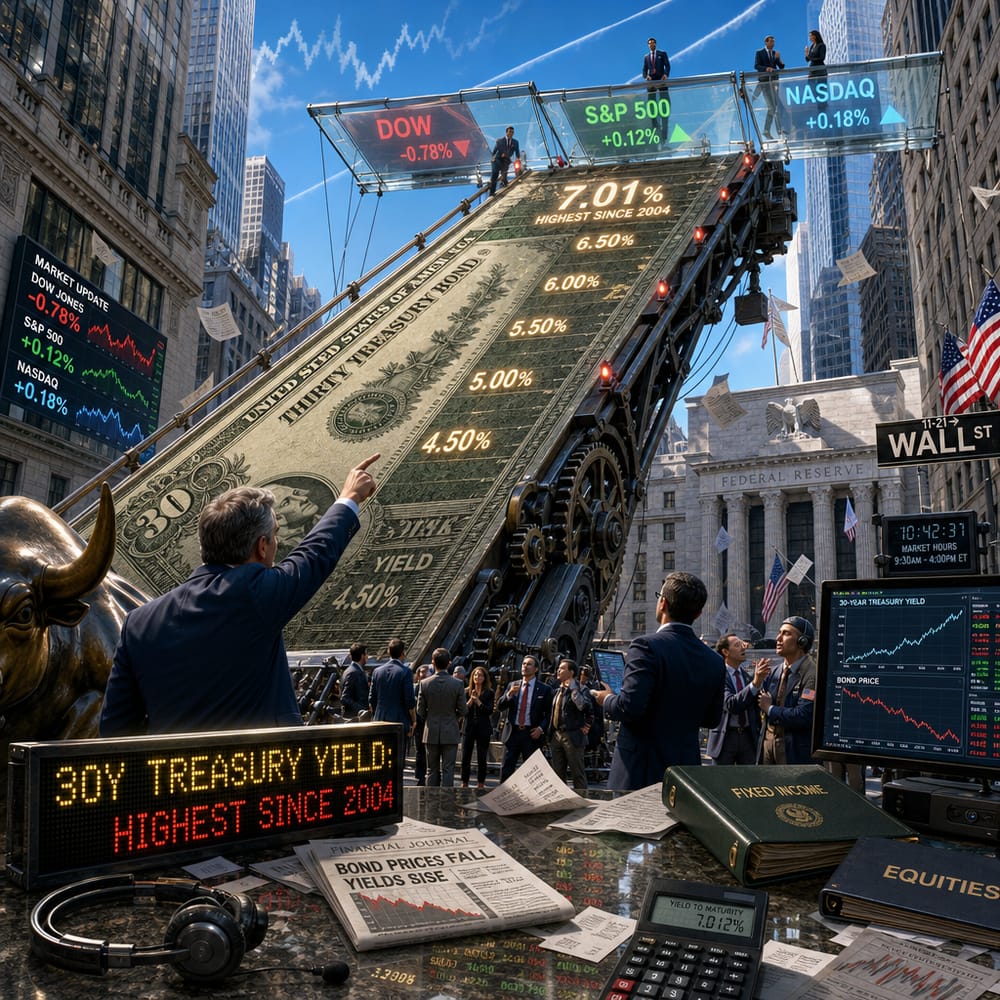
TREASURY YIELDS SOAR TO TWO-DECADE HIGHS, STOCK MARKETS WALK A TIGHTROPE
If you were hoping for a calm and uneventful week on Wall Street, you must be new here. Welcome to the financial markets' latest roller coaster ride, where U.S. Treasury yields are breaking out their best 2004 throwback outfits, and the stock market is trying to decide whether it's supposed to be thrilled or terrified. Spoiler alert: it might be both.
In what feels like a scene from a financial suspense film, the 30-year Treasury bond yield has decided it’s time to party at 5.446%, a level we haven’t seen since the early days of the Facebook era. And it's not alone. The 10-year Treasury’s also getting in on the action, climbing to 5.12%. For those of us in the land of stocks, bonds, and everything in between, these numbers are more than just digits—they’re the heartbeat that’s currently keeping the markets on edge.
So what's the big deal with these rising yields? For starters, they’re sending equity investors into a bit of a tizzy. High yields tend to lure investors away from stocks as they promise more attractive returns without the roller vibes of the stock market. It’s classic: why go for the roller coaster when you can enjoy the merry-go-round?
But let’s break it down by the numbers—or should I say sectors? The financial sector is grinning like it just got upgraded to first class. Banks love higher yields since they can charge more for loans, which means more profits. But technology, the cherished darling of the stock market, is frowning. Tech companies, with their heavy reliance on borrowing for expansion, face the prospect of rising costs, and let’s be honest, that’s not the kind of plot twist they enjoy.
The stock indices reflect this sector drama. The Dow took a slight tumble, down 84 points, while the S&P 500 and the Nasdaq are playing the “we’re fine, really” card, staying relatively stable. Behind the scenes, though, there's a lot of nail-biting happening as investors try to figure out if this is just a mild bout of turbulence or the start of something more dramatic.
As if rising yields weren’t enough, we’ve got the bond market practically shouting at Federal Reserve Chairman Kevin Warsh to don his firefighter hat. The message? Inflation is still stubbornly dancing above the Fed’s 2% goal, and high yields are the market’s way of saying, “Hey, do something!” But what’s a central bank to do? Raise interest rates even further and risk slowing down economic growth, or play it cool and hope for the best?
Speaking of economic growth, let’s not forget about the housing market. High Treasury yields usually mean climbing mortgage rates, and that could pour cold water on what has been a hot housing market. Prospective homebuyers might find themselves priced out or facing higher monthly payments, which isn’t exactly the American dream they signed up for.
On the corporate side, rising yields spell increased borrowing costs, and for companies already feeling the pinch of higher rates, it could mean rethinking expansion plans or even trimming budgets. Translation: potential risks to earnings and, subsequently, stock prices.
What’s the Fed’s next move? That’s the trillion-dollar question. Analysts are split. Some believe the Fed may have to take a breather on rate hikes to avoid pushing the economy over the cliff, while others argue it’s time to tighten the reins even more.
In the meantime, your favorite U.S. indices are keeping us on our toes. The S&P 500 and Nasdaq seem to be channeling their inner yogi, trying to remain calm and centered, but the Dow’s not quite as zen. The small caps, meanwhile, are dealing with an identity crisis, wondering if they can handle the higher rates and bond price chaos without shedding too many tears—or points.
As we strap in for another week in the financial markets, remember that while yields may rise and fall, your sense of humor (and a diversified portfolio) might just be your best investment. After all, in this market, it’s always a fine line between a thriller and a comedy.
This article is for informational purposes only and is not investment advice. Always do your own research or consult a licensed financial professional before making investment decisions.
© Copyright 2024. All Rights Reserved.
© Copyright 2024. All Rights Reserved.