

Treasury Yields: Elevated Levels and Pressures on Bond Curve, Pimco Flags Risk of 6% 10-Year
Tuesday, October 13, 2026
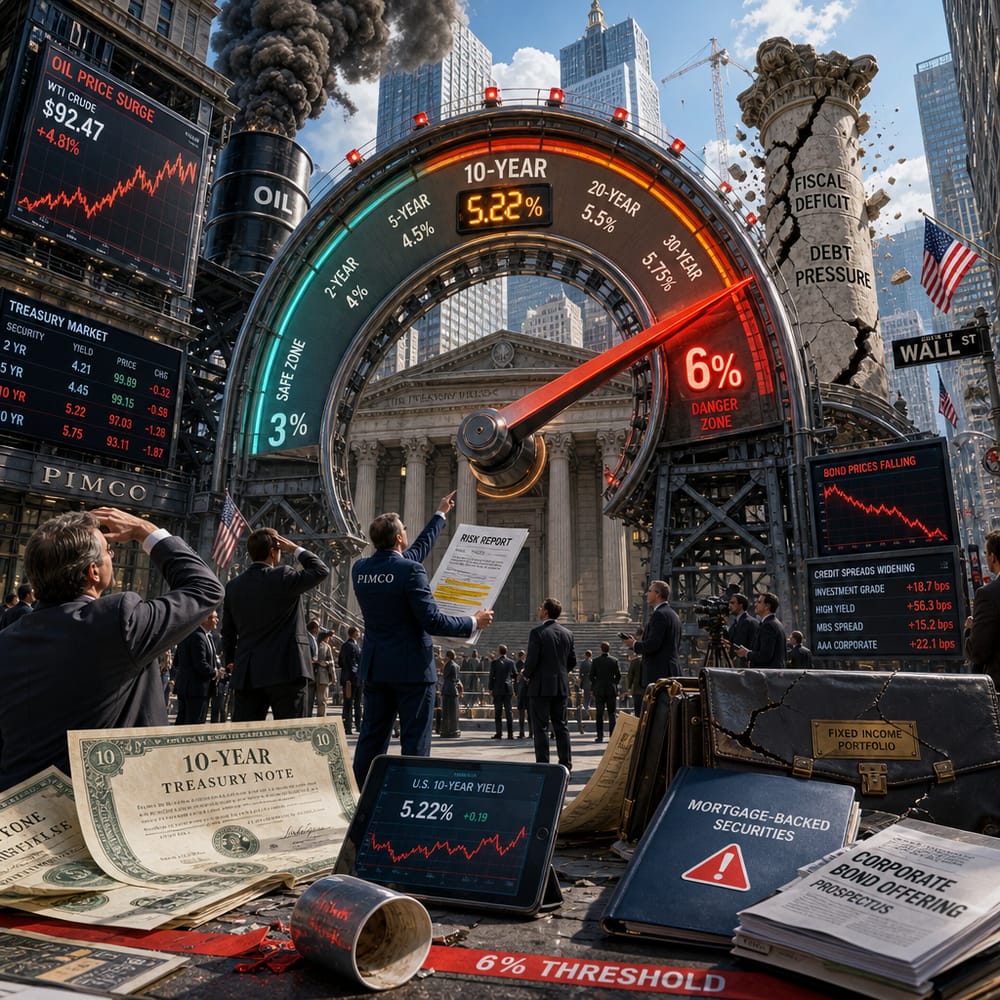
It appears that your mortgage just drank an energy drink. At least that's how it feels when the 10-year Treasury yield teeters over 5.2%, threatening to hit 6% like a caffeinated roller coaster. And while you clutch your coffee, Pimco—the bond market behemoth—warns that this yield could indeed surge to 6%. So, what's driving this spike, and why should you care? Let’s spill the beans.
First, let's paint the scene: we're talking about the 10-year Treasury, essentially the backbone of global finance. When its yield rises, borrowing costs for everything from government debt to your neighbor's new swimming pool loan tend to inch upwards. Higher yields mean higher interest rates, which means more expensive loans and higher mortgage rates. So, if you’re thinking of refinancing your home or launching a business, hold tight.
But why the sudden climb? Blame it on the trifecta of high oil prices, fiscal concerns, and market jitters. The Middle East oil drama and Russia's energy maneuverings have made oil prices dance upward, injecting uncertainty and pushing those yields higher. And as the U.S. government spends like it has a bottomless wallet without Netflix's monthly subscription reminder, the combined effect is more pressure on the bond markets.
Now, the $64,000 question—or more aptly, the $6,000,000 question: why is 6% such a big deal? Historically speaking, every time Treasury yields hit the high notes, the economy responds with a symphony of changes—some sweet, some sour. Back in the 1980s, yields above 6% coincided with high inflation and clamped-down monetary policy. Fast-forward to the 2000s, and such levels were more of a precursor to economic slowdown. In plain English, high yields can be a mixed bag, often foreshadowing expense-heavy borrowing and dampening consumer spending.
For the everyday investor, this scenario isn’t just a heads-up. It's a full-on wake-up call. Higher yields can dampen equity valuations. Stocks and bonds often play a tug-of-war game; when bonds yield high returns, stocks become less attractive, potentially leading to lower stock prices. That's enough to make any portfolio manager break a sweat.
But don't lock yourself in the financial panic room just yet. Investors, like smart squirrels, have ways to stash away value even when the winds change. Consider diversifying into assets that tend to take rising yields in stride—think of equities in sectors like technology or healthcare, which are often less sensitive to interest rate hikes. Real assets like commodities or real estate might soften the blow, offering a cushion as yields rise.
Moreover, fixed-income investors can hedge their bets by looking at bonds that adjust for inflation—our friends the TIPS (Treasury Inflation-Protected Securities). These aren't just alphabet soup; they’re designed to protect against inflation and can be a buoy in stormy water.
And let's not forget about cash, the safe-haven asset. While it doesn’t exactly earn fanfare during low-yield times, when the market looks as shaky as a leaf in a hurricane, keeping a cash reserve isn’t just prudent—it’s downright savvy.
In all this, one thing is clear: the bond market is delivering a message—pay attention. A rise to 6% in the 10-year yield isn’t just about numbers; it’s about the ripple effect on mortgages, businesses, and your rainy-day fund.
In the meantime, keep an eye on the big players. The earnings season, featuring the likes of JPMorgan and Goldman Sachs, may offer clues to how businesses are navigating calmer or choppier waters. These banks aren't just financial institutions; they're the economic barometers that could indicate whether we’re heading for clear skies or another storm.
In sum, buckle up and grab your financial umbrella. As the bond market continues to send out smoke signals, staying informed and ready means you won't just survive—you might even thrive. And who knows? Perhaps when this roller coaster stops, you'll have snagged a front-row seat to a smoother ride ahead.
This article is for informational purposes only and is not investment advice. Always do your own research or consult a licensed financial professional before making investment decisions.
© Copyright 2024. All Rights Reserved.
© Copyright 2024. All Rights Reserved.