

Treasury Yields Edge Higher Amid Inflation Concerns
Sunday, August 30, 2026
TREASURY YIELDS EDGE HIGHER AMID INFLATION CONCERNS
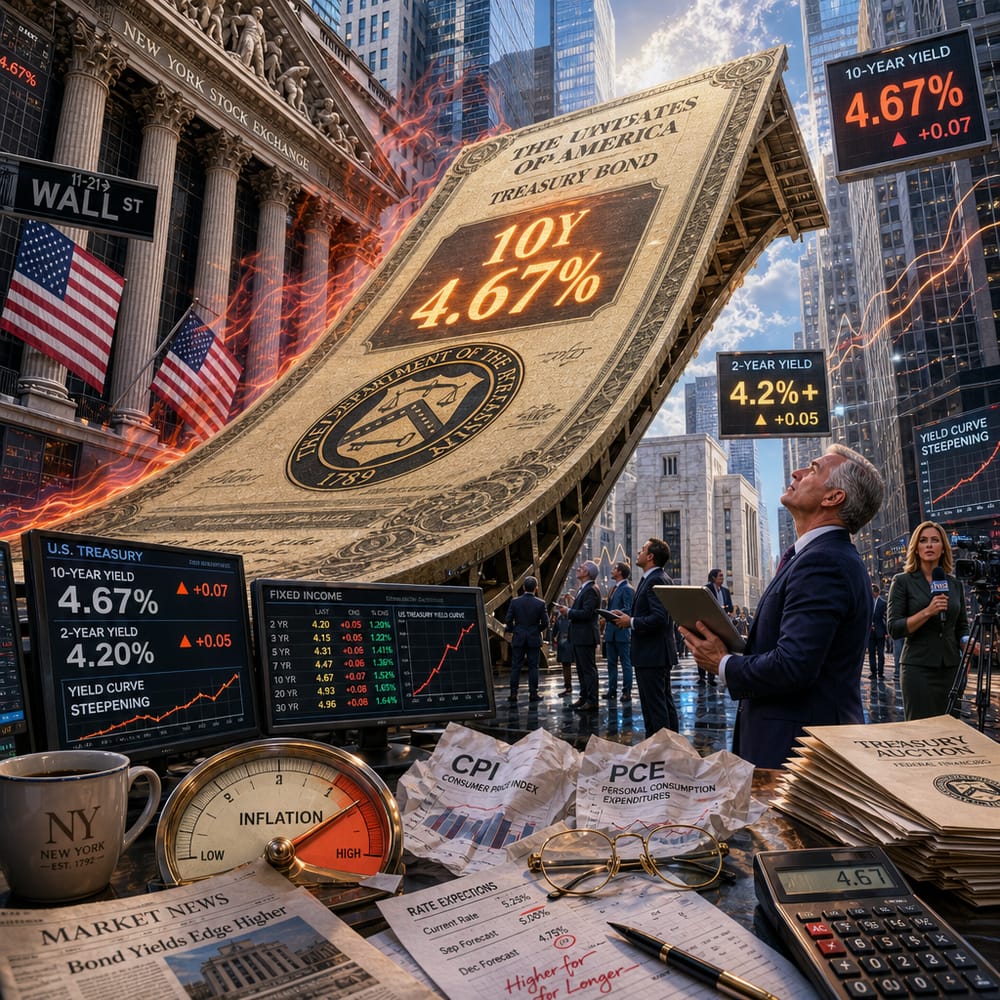
The financial world has a new darling—or villain, depending on your perspective: Treasury yields. Picture this: the 10-year Treasury yield strutting onto the scene at a cool 4.67%, while its feisty younger sibling, the 2-year yield, holds firm above 4.2%. If these percentages make your eyes glaze over, wake up! This is no boring math problem; it’s the gravitational pull that's tugging at the entire economy.
What's causing this uptick in Treasury yields? Well, it’s a cocktail mixed with a shot of inflation fears and a splash of economic speculation. The Federal Reserve's ongoing battle with inflation is like trying to hold back the tide with a broom. Despite their efforts, inflation whispers persist, and investors are starting to demand higher yields to lend Uncle Sam their money, as they brace for potential inflation eating away at returns.
But before you dismiss this as a problem for Wall Street suits, let me connect the dots for you: rising Treasury yields have a sneaky way of affecting your wallet. Higher yields can lead to increased borrowing costs. That means those plans to finance a new car, a stylish gadget, or that dream home could see interest rates inching up. Suddenly, what seemed affordable yesterday might be tomorrow’s financial headache.
Think of Treasury yields as the rudder steering the ship of consumer confidence. When yields rise, it tightens financial conditions. It’s like the economy has been out shopping with a maxed-out credit card and suddenly realizes it’s time to tighten the belt and spend more cautiously. Higher borrowing costs can act like a wet blanket on economic growth, dampening consumer spending—the very engine that keeps the American economy humming.
If this is starting to sound like a financial horror story, hold on. Let’s dive a bit deeper. Rising yields are not just a concern for individual borrowers. They also cast a long shadow over a wide range of sectors. Take the financial industry, for instance. Banks cheer at rising rates because they mean wider margins between what they pay on deposits and what they earn from loans. It's like they’ve found a few extra coins in the couch cushions. But for leveraged companies—those owing more than they own—higher rates are as welcome as a sudden rainstorm at a birthday picnic.
So, what does Wall Street think? Analysts have their magnifying glasses out and are watching sectors like hawks. A few are quick to point out dividend stocks as a safe haven, arguing that reliable dividends can be a sturdy lifeboat in the choppy waters of uncertain yields. But don't start counting your dividends before they hatch; every sector is dancing to the unpredictable tune of inflation data and global tensions, from Middle East conflicts to trade disputes.
The question on everyone’s mind is: will the Fed manage to wrangle inflation and bring it to heel without capsizing the economic boat? If inflation data continues its jittery jig, brace yourself for more fluctuations in Treasury yields. It’s like trying to walk a tightrope while juggling flaming torches—exciting, but oh so risky.
As we sail through these financial seas, remember that not every wave spells disaster. Markets have a habit of twisting and turning, and those who stay informed can ride the waves, rather than being swamped by them. Keep an eye on those Treasury yields—they're the canary in the coal mine for the broader economy. And while they might seem like a boring subplot in the grand play of finance, ignore them at your peril. After all, they’re the tease that keeps us glued to the economic soap opera, popcorn in hand, waiting to see what unfolds next.
This article is for informational purposes only and is not investment advice. Always do your own research or consult a licensed financial professional before making investment decisions.
© Copyright 2024. All Rights Reserved.
© Copyright 2024. All Rights Reserved.