

Treasury Yields Edge Higher Ahead of Fed Speeches
Saturday, November 07, 2026
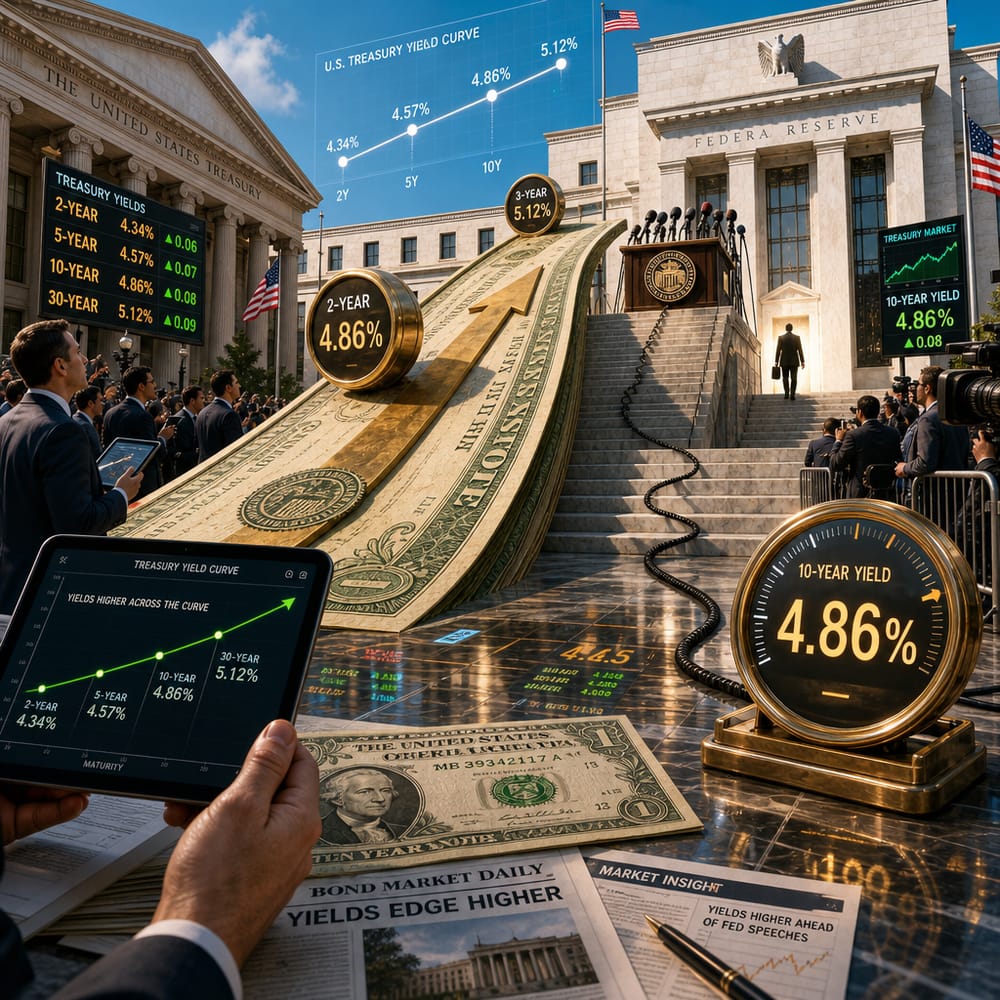
TREASURY YIELDS EDGE HIGHER: WHAT'S THE BUZZ, AND WHY SHOULD YOU CARE?
Hold onto your lattes, people. The bond market's doing its thing again, and Wall Street's abuzz like a roomful of toddlers hopped up on Halloween candy. The talk of the town? Treasury yields are on the rise, with the 10-year yield closing at a tantalizing 4.86%. But before you tune out thinking, "Why should I care about a bunch of snooze-worthy numbers?" let’s break it down and figure out what this means for your wallet, your mortgage, and that dream vacation.
WHY ARE YEILDS JUMPING?
First things first, why are these yields tiptoeing upward like they're trying to see over the tallest kid in class? In finance-speak, yields are up because bonds are down. Investors are ditching bonds, expecting the Federal Reserve might just keep interest rates parked in the "high" zone. When everyone decides bonds are yesterday's news, prices fall and yields rise. It’s like a seesaw: one end goes up, the other must come down.
Part of the rise is also due to good old-fashioned jitters. Those jitters come from the anticipation of what the Fed officials are going to spill in their upcoming speeches. Are they staying hawkish, or will they throw us a dovish curveball? The suspense is real, folks.
HOW DO RISING YIELDS IMPACT YOU?
So, yields are up. But what does that mean for you, dear reader? Well, rising yields can be like dominoes in your financial life. Let's start at home: mortgage rates. Higher yields often lead to higher mortgage rates. That dream house might just get a tad pricier. Then there’s borrowing costs. If you’re looking to take out a loan for that snazzy new car or student debt refi, brace for a slightly bigger bite out of your budget.
On the flip side, higher yields might make those savings accounts and CDs just a little more appealing with better interest rates. Finally, it's portfolio time. If you've got your toes in the stock market waters, rising yields can lead to a little turbulence. Some sectors handle it better than others; think financials flexing their muscles while interest-rate sensitive sectors like utilities might feel the pinch.
WHAT THE FED MIGHT SAY
Now, all eyes are on the Federal Reserve like they're the latest superhero movie. Everyone’s eager for hints, clues, or even a wink from the Fed about their future plans. What might they say that will send the markets into a tizzy or a tailspin?
The big question is whether Fed officials will stick with their tough talk about future rate hikes aimed at taming inflation, or if they'll chill out a bit. If they hint at a pause or even a cut in rates due to slowing economic growth, we might see yields take a little dip. On the other hand, if they double down on staying the course, brace for yields to keep climbing.
WHY SHOULD YOU CARE ABOUT FED SPEECHES?
Now, if you're thinking Fed speeches are like the financial version of counting sheep, think again. The words of Fed officials can move mountains—or at least markets. Their commentary can sway investor sentiment, alter market expectations, and in turn, affect everything from stock prices to your credit card's interest rate.
Plus, it's not just about the here and now. The Fed's plans around rates can have ripple effects on the economy's future—job growth, inflation, and overall prosperity hang in the balance. So, tuning in might just give you the edge you need to make informed decisions about your money.
THE BOTTOM LINE
At the end of the day, rising Treasury yields, upcoming Fed speeches, and the ripple effects on the economy are more than just financial headlines. They’re the pulse of the economy, hinting at where we’re heading. Whether these factors impact your next big purchase, your stock portfolio, or just your dinner table debates, they’re worth keeping an eye on.
So, keep your ear to the ground, your eyes on those yields, and your popcorn ready for the Fed's next act. Who knew bonds could be this thrilling?
This article is for informational purposes only and is not investment advice. Always do your own research or consult a licensed financial professional before making investment decisions.
© Copyright 2024. All Rights Reserved.
© Copyright 2024. All Rights Reserved.