

Treasury Yields Dip as Markets Brace for PPI Release
Thursday, August 13, 2026
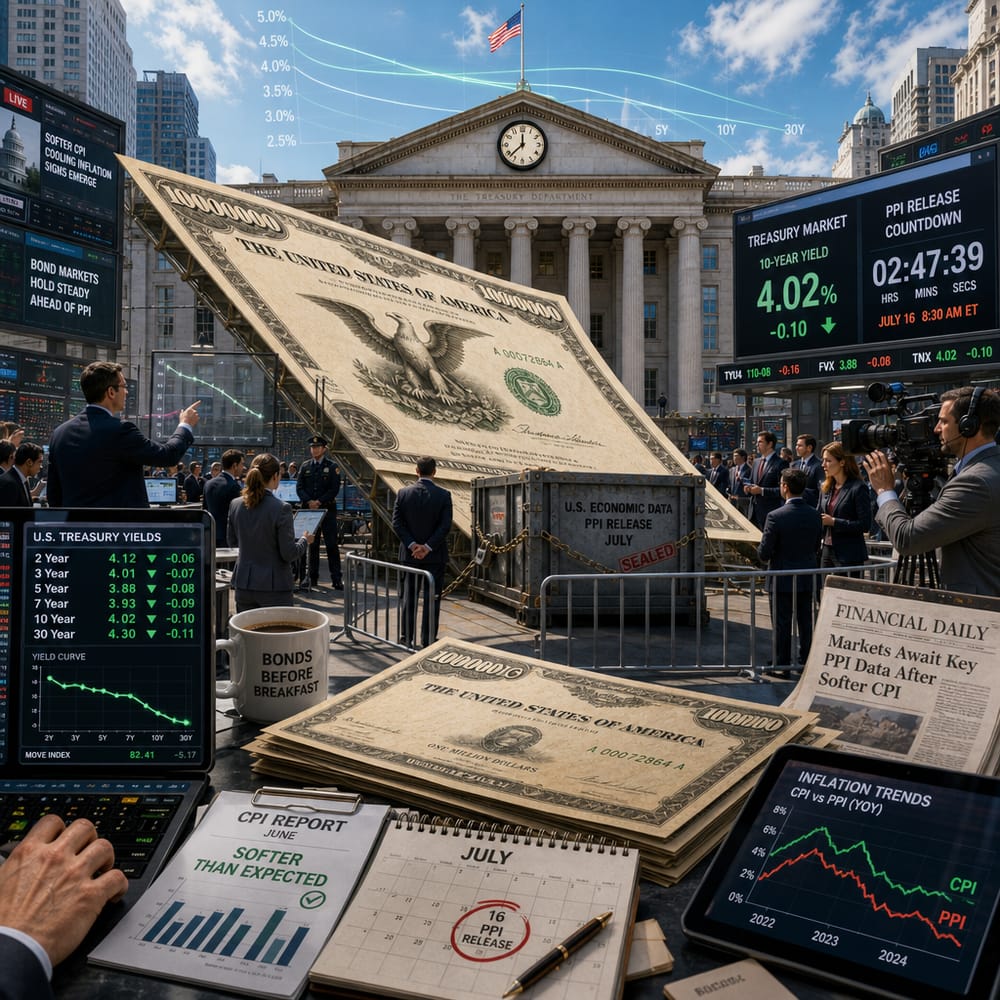
TREASURY YIELDS DIP AS MARKETS BRACE FOR PPI RELEASE
Ladies and gents, grab your popcorn because the latest episode of "As the Market Turns" just dropped, and it's filled with drama — starring Treasury yields, inflation data, and a cast of thousands waiting on that crucial July Producer Price Index (PPI) release. Will inflation finally tap out, or are we all just stuck in the world's longest boxing match? Let's dive into the juicy details.
Thursday morning, Treasury yields took a dip like a pro swimmer diving into an Olympic-sized pool. The 10-year U.S. Treasury note yield, the rock star of government bonds, ticked down by 2 basis points. For those not keeping score, that's 0.02% — tiny, but mighty in the bond world. Meanwhile, the 2-year note, which is basically the Fed's crystal ball, fell more than 2 basis points. This subtle yet significant twist in the plot line hints that the market's betting on inflation cooling its jets.
Now, why should you care about this number crunching? Because falling Treasury yields are like a financial weather vane. They're signaling that inflation might be on the down-low, which in turn eases the pressure on the Federal Reserve to slap on another interest rate hike anytime soon. Lower yields can translate to cheaper borrowing costs for everything from your dream house to that business loan you've been eyeing. Sweet relief, anyone?
But let's not pop the champagne too early. The market's holding its collective breath for the PPI numbers. Why? Because the PPI — kind of the backstage pass to CPI, the Consumer Price Index — shows what wholesalers are shelling out for raw materials. It's a key indicator of inflationary pressure in the pipeline. If the numbers come in hotter than a summer BBQ, we might find ourselves back in rate-hike territory before we've even finished our potato salad.
The bond market, in its infinite wisdom, is constantly trying to read the tea leaves on inflation. When inflation expectations head south, Treasury yields follow suit. The logic is simple: if inflation's not eating away at returns, investors are happy to accept lower yields. It's like settling for a good burger when you're used to caviar — not flashy, but it gets the job done.
This dance of the yields isn't just for Wall Street's elite. It ripples through the entire economy. Think of it as a chain reaction where lower yields can ease borrowing costs for businesses and consumers alike. You get cheaper mortgages, more affordable car loans, and maybe, just maybe, a little extra jingle in your pocket.
Of course, while we’re busy dissecting bond yields and inflation, let’s not ignore the other players in the room. Oil prices are doing their own cha-cha, dropping as investors balance declining global demand against the turbulence in the Middle East. This tangled web affects inflation, too, since lower oil prices can provide some relief at the gas pump and for industries reliant on energy.
So, what does this all mean for you, the everyday investor? The market's current vibe suggests a cautious optimism — think "glass half full" on a Tinder profile. If inflation continues its mellow retreat, the Fed might keep their interest rate trigger finger at bay, giving the economy some breathing room. This could be your green light to explore investment opportunities without the looming fear of an imminent rate hike.
In the grand tapestry of the financial markets, every thread counts. Treasury yields are a key thread woven into the fabric of economic stability. As we anticipate the PPI numbers, it's a waiting game. Will we see inflation ride off into the sunset, or is it just taking a breather before the next round?
Stay tuned, keep those notifications on, and maybe stash a little extra cash for that next investment. Because in the world of finance, the only thing constant is change — and sometimes, it pays to be ahead of the curve, whether you're a seasoned pro or just a curious soul with a smartphone.
This article is for informational purposes only and is not investment advice. Always do your own research or consult a licensed financial professional before making investment decisions.
© Copyright 2024. All Rights Reserved.
© Copyright 2024. All Rights Reserved.