

Treasury Yields Dip After Hot Inflation and Growth Data — Bond Market at a Crossroads
Wednesday, November 25, 2026
TREASURY YIELDS DIP AFTER HOT INFLATION AND GROWTH DATA — BOND MARKET AT A CROSSROADS
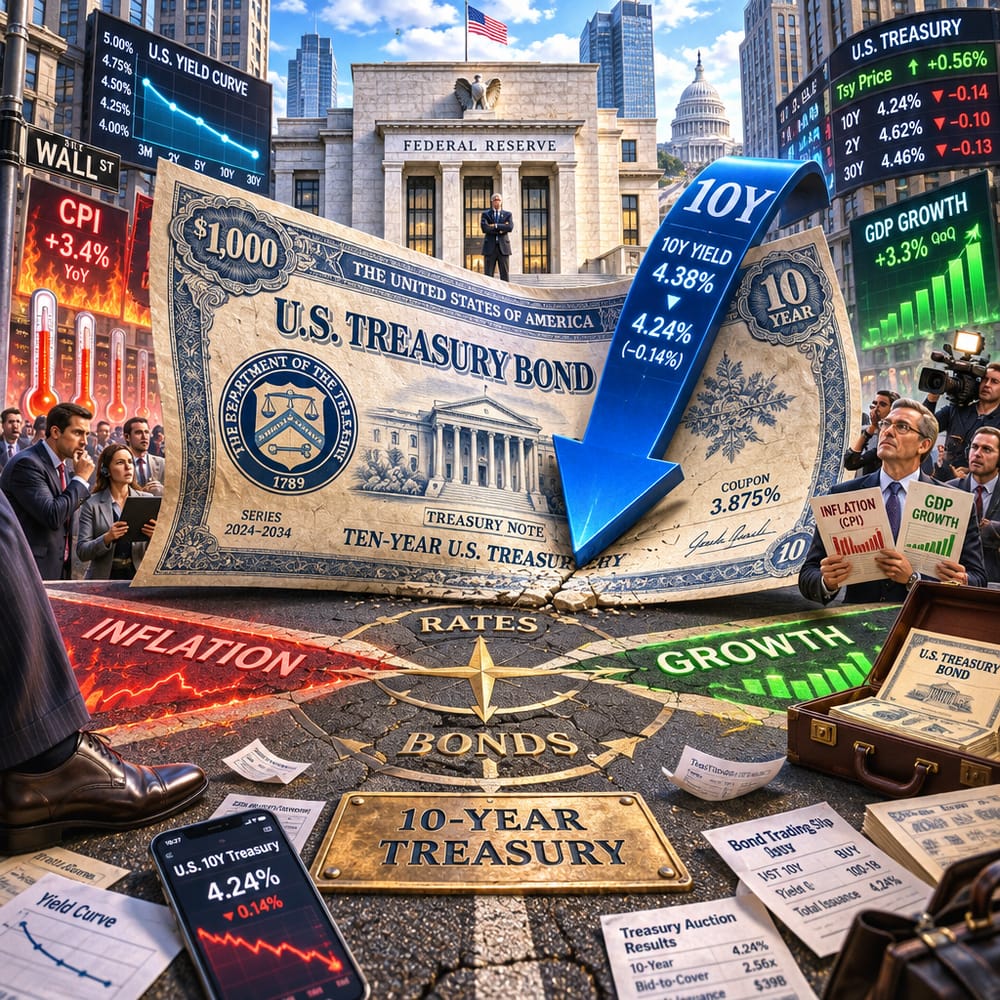
Ladies and gentlemen, get ready for the plot twist you didn't see coming in the boring old world of government bonds. Just when you thought that scorching inflation and a turbocharged economy would send Treasury yields rocketing skyward, the bond market has thrown investors a curveball. Instead of yields climbing, they've taken a nosedive. So, what's cooking in the bond market's kitchen that's got everyone scratching their heads?
First, a quick refresher on Treasury yields. When we talk about yields, we're essentially discussing how much return investors get from lending Uncle Sam some cash. High demand for these government IOUs usually pushes yields down, and vice versa. So, why are we seeing falling yields when the economic data is hotter than a jalapeño in a sauna?
Let's start with the basics. We just got a peek at the latest numbers, and guess what? The U.S. economy is like that over-caffeinated squirrel in your backyard — it's racing ahead. GDP growth is soaring, and inflation is still sticking around like that guest who refuses to leave long after the party's over. Under normal circumstances, you'd expect the bond market to react by pushing yields up, anticipating that the Fed would drop the rate-hiking hammer to cool things down.
But hold your horses. The bond market has a habit of thinking ten steps ahead. While robust growth and inflation suggest one play (higher rates), there's another subplot in the economic thriller. Investors are starting to wonder if this roaring growth is just a sugar rush from the fiscal and monetary candy we've been dishing out, destined to fizzle out. They're worried that behind this economic bravado, there might be signs of a slowdown lurking, just waiting for its cue to take center stage.
And here's where it gets intriguing: Instead of betting on the Fed to keep hiking rates, some investors are thinking the Fed might soon pivot, especially if the economy starts showing signs of fatigue or if inflation decides to be less persistent. They might be banking on the idea that the Fed will eventually have to cut rates to avoid stifling growth altogether. This expectation is what's driving yields down, as people rush to buy up bonds anticipating a future where they're worth more. It's a classic case of the bond market playing 3D chess while the rest of us are still figuring out the rules of checkers.
So, what does this mean for you, the savvy investor scrolling through your phone in search of wisdom? Well, if borrowing costs drop, it could become cheaper for businesses and consumers to borrow money. Think lower mortgage rates or maybe a more affordable car loan. But, before you start popping the bubbly, remember that a lot hinges on whether the bond market's crystal ball is accurate. If the markets are wrong and the economy keeps chugging along, the Fed might keep its foot on the interest rate gas pedal longer than expected.
Investors are riding a rollercoaster of interpretations right now. Some see the declining yields as a sign of confidence that inflation is finally going to play nice and come down. Others think it's a canary in the coal mine, warning of economic turbulence ahead. It's like a choose-your-own-adventure book with a hundred different endings, and everyone’s got their own interpretation.
In the end, the bond market is at a crossroads, teetering between two paths: one where growth takes a breather and rates fall, and another where inflation keeps the Fed on edge, ready to hike. Which will it be? Place your bets, folks, because the bond market’s next move could very well set the tone for the broader financial landscape.
But one thing's for sure: the story of Treasury yields and the bond market is anything but dull. Keep your eyes peeled, because like any good thriller, the twists and turns keep coming, and you wouldn't want to miss the next plot twist that could redefine the investment landscape as we know it.
This article is for informational purposes only and is not investment advice. Always do your own research or consult a licensed financial professional before making investment decisions.
© Copyright 2024. All Rights Reserved.
© Copyright 2024. All Rights Reserved.