

Treasury Yields Decline as Inflation Stabilizes
Thursday, August 13, 2026
TREASURY YIELDS DECLINE AS INFLATION STABILIZES
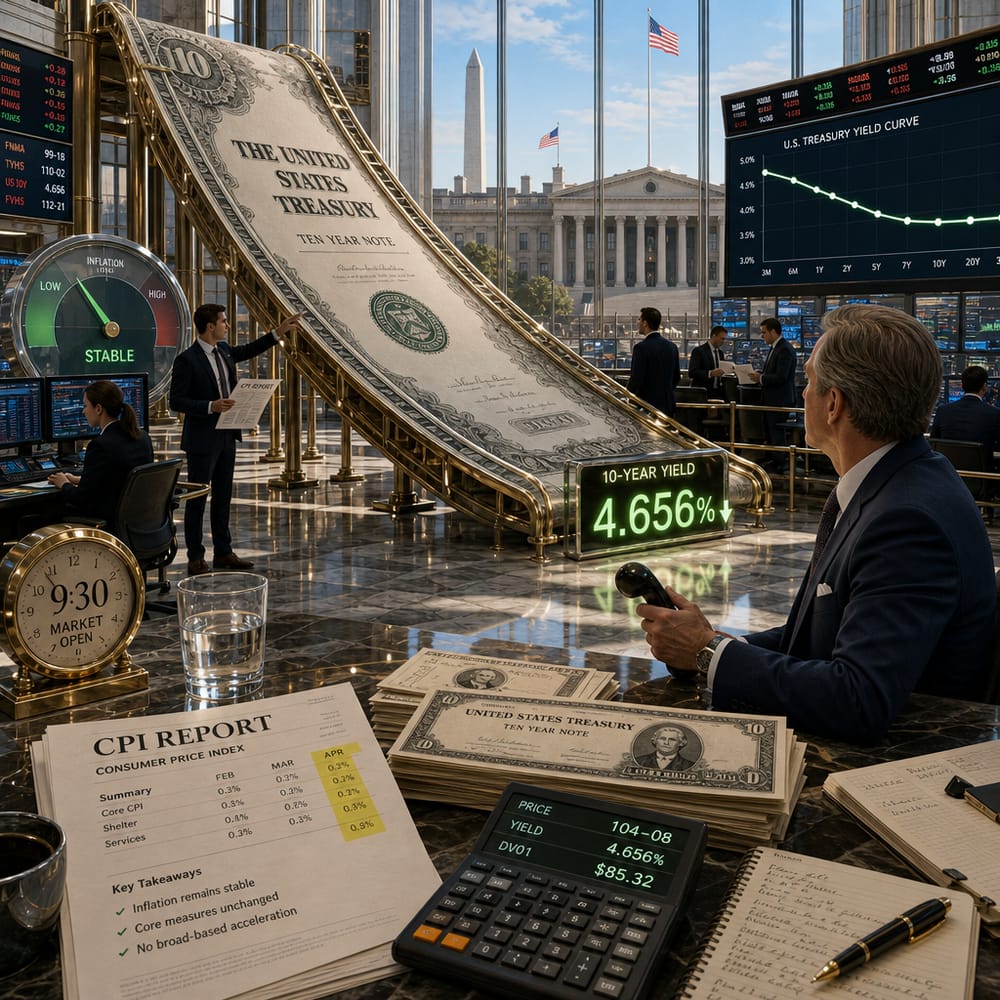
Blink and you might have missed it: while everyone was distracted by tech buyouts and fluctuating oil prices, Treasury yields quietly slipped. The 10-year Treasury yield glided down to just about 4.656%—a move that’s got more layers than a mille-feuille pastry. But what does this mean for your wallet and the financial landscape as a whole? Fear not, we're diving into the nitty-gritty, armed with wit and wisdom.
THE MAGIC NUMBER: 4.656%
Why have Treasury yields decided to take a little dip? It all pivots around inflation—one of the most spellbinding and, let’s be honest, confusing phenomena in the economy. Recent data from the Consumer Price Index (CPI) suggests inflation is not the fire-breathing dragon it was once feared to be. Instead, it’s more like a dragon on a diet, contentedly nibbling at the edges of the economy. As a result, the market is exhaling a collective sigh of relief, adjusting yields to reflect this more stable inflation scenario.
THE BOND MARKET’S BOUNCE
If you’re new to the bond market, here’s the skinny: yields and bond prices have an over-complicated relationship akin to that of an on-again, off-again celebrity couple. When yields go down, bond prices typically go up—making your existing bonds a bit more sparkly. This gentle dance means investors are betting the Fed won’t be cranking up interest rates anytime soon. In plain English, it’s a sign of confidence that inflation will behave, allowing the economy to stabilize without needing monetary shock therapy.
FED WATCH: WILL THEY OR WON’T THEY?
The Federal Reserve is like the parental figure of the economy—sometimes overbearing, sometimes absent, but always very much in control. Jay Powell and the gang have been riding the brakes on rate hikes, and declining yields suggest investors believe they might continue this chill stance. The recent yields movement hints that the Fed might hold steady rather than slam on the brakes or floor the gas pedal. It’s their way of keeping the economy from overheating without leaving it out in the cold.
A CURVE WITH CHARACTER
Don’t worry, we aren’t talking geometry. The yield curve—essentially the difference in yields across different maturities of bonds—is flattening, meaning short-term yields are inching closer to long-term yields. This may sound dull, but it’s like a neon sign flashing “Caution!” for economy watchers. A flattening or inverted yield curve often signals a recession, but this time it’s more a sign of taming expectations of rampant inflation rather than an impending economic apocalypse.
THE BIGGER PICTURE
What does all this mean for you, the intrepid retail investor? Lower yields suggest that parking your money in Treasury bonds might not promise the best returns in the short term. However, it’s not all bleak. A stable inflation outlook is good news for stocks, as steady prices can mean steadier profits. The Fed’s likely approach of not aggressively raising rates provides breathing room for businesses to grow, innovate, and hopefully pass some of that prosperity your way.
It's a time to consider diversification: look at sectors that flourish in stable inflation environments. Think stocks with robust dividends or real estate investments that can offer a hedge against inflation and potential rate shifts.
SO, WHAT'S THE BOTTOM LINE?
In this high-stakes game of economic chess, the decline in Treasury yields is a pawn move with ripple effects. Lower yields suggest confidence in inflation stability and possibly a more predictable path for Fed policy. As retail investors, your strategy should be about balance, keeping an eye on inflation, Fed movements, and the broader market’s ebbs and flows.
In the ever-evolving world of finance, these moves might feel like background noise, but they’re the soundtrack to our economic lives. So keep those ears perked and eyes peeled, because in the world of yields and bonds, every basis point counts.
This article is for informational purposes only and is not investment advice. Always do your own research or consult a licensed financial professional before making investment decisions.
© Copyright 2024. All Rights Reserved.
© Copyright 2024. All Rights Reserved.