

Treasury Yields Decline Amid Fed's Mixed Messaging
Monday, August 31, 2026
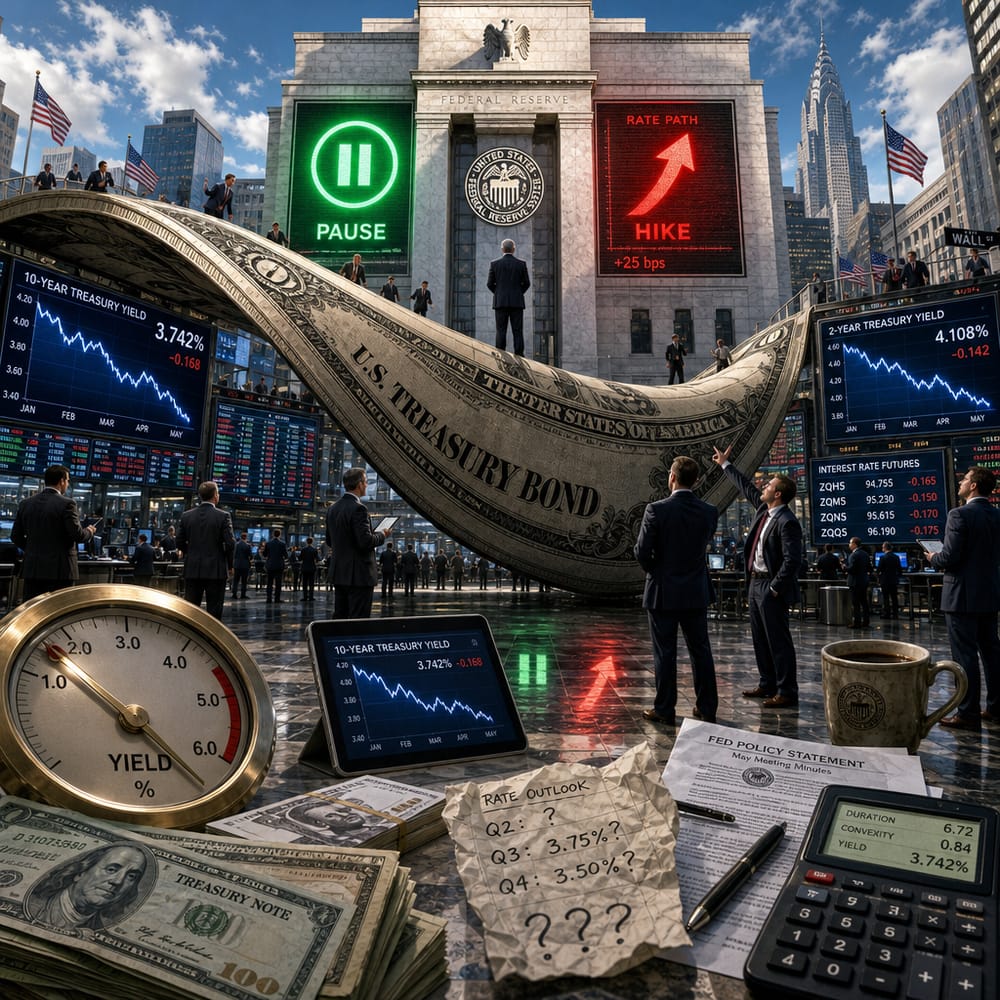
TREASURY YIELDS DECLINE AMID FED'S MIXED MESSAGING
Every financial aficionado knows the drill: when the Federal Reserve whispers, markets either hum along or hit the panic button. Right now? It's like they're trying to decipher Morse code from a Fed that can't decide if it's a hawk or a dove. The result? A decline in U.S. Treasury yields that's making waves larger than your favorite summer thriller.
Let's break it down. Treasury yields, those pulse points of economic sentiment, have taken a dive. This isn't just a neat factoid for your next cocktail party. It's like the economic equivalent of a blood pressure drop, signaling changes that ripple through borrowing costs and, ultimately, the economy's overall pace. Lower yields mean cheaper loans for anyone brave enough to consider a mortgage or a business looking to expand.
But why the nosedive? The Federal Reserve, that mysterious oracle of monetary policy, has been sending mixed signals worthy of an abstract art piece. Are rate hikes on the horizon? Should we brace for a pause? These questions are hanging in the air like a fog over Wall Street, leaving investors clinging to their economic crystal balls.
The Fed's indecision has led to a classic case of market skittishness. Investors are poring over every word from the Fed like they're studying for the SATs. The central bank's recent comments have investors scratching their heads: will they pull the trigger on more rate hikes, or are they done for now? This uncertainty is causing Treasury yields to slip as investors hedge their bets and flock to the relative safety of bonds.
And here's why you should care. When Treasury yields fall, it can pave the way for lower borrowing costs across the board. Think mortgages, car loans, student loans — basically, any time you're borrowing someone else's money to make your dreams a reality, lower Treasury yields could be your new best friend. But don't start planning your shopping spree just yet. It can also signal concerns about the economy's health, as investors might be seeking safety amid uncertainty.
This dance between the Fed's cryptic communication and Treasury yield movements reveals a fascinating dynamic. It's like watching an economic soap opera where everyone's waiting to see if the Fed will swoop in with a rate hike plot twist or if it'll leave us hanging on the edge of our seats for a while longer.
But how does Main Street, the land of everyday retail investors, interpret this drama? Mixed signals from the Fed can make investors feel like they're trapped in an economic funhouse, with distorted reflections of what the future might hold. For some, it might be time to batten down the hatches and brace for potential economic storms ahead. For others, it could mean seizing the opportunity to snag a lower interest rate on that long-desired home purchase.
Investors might also start playing the waiting game, holding off on big moves until the Fed's messages become clearer. If you're feeling a bit like you're playing financial limbo, you're not alone. It's all about positioning yourself to make the most of the situation, whether it's locking in a loan at a sweet rate or waiting for more clarity before making that next big investment decision.
Ultimately, the Fed's mixed messaging and the resultant drop in Treasury yields are more than just financial gobbledygook. They're the storyline of an economy in flux, where every investor, from Wall Street titans to casual market watchers, is trying to figure out the next move. So, while the Fed plays its game of monetary charades, savvy investors will keep a close eye on the signals, ready to pounce on opportunities and steer clear of pitfalls.
The next chapter? It's anyone's guess. The key takeaway? Stay nimble, informed, and ready to react as the economic narrative unfolds. After all, in the world of finance, being the first to decipher the plot can make all the difference.
This article is for informational purposes only and is not investment advice. Always do your own research or consult a licensed financial professional before making investment decisions.
© Copyright 2024. All Rights Reserved.
© Copyright 2024. All Rights Reserved.