

Treasury Yields Climb as Oil Surges; Bond Market Shows Inflation Nervousness
Monday, August 17, 2026
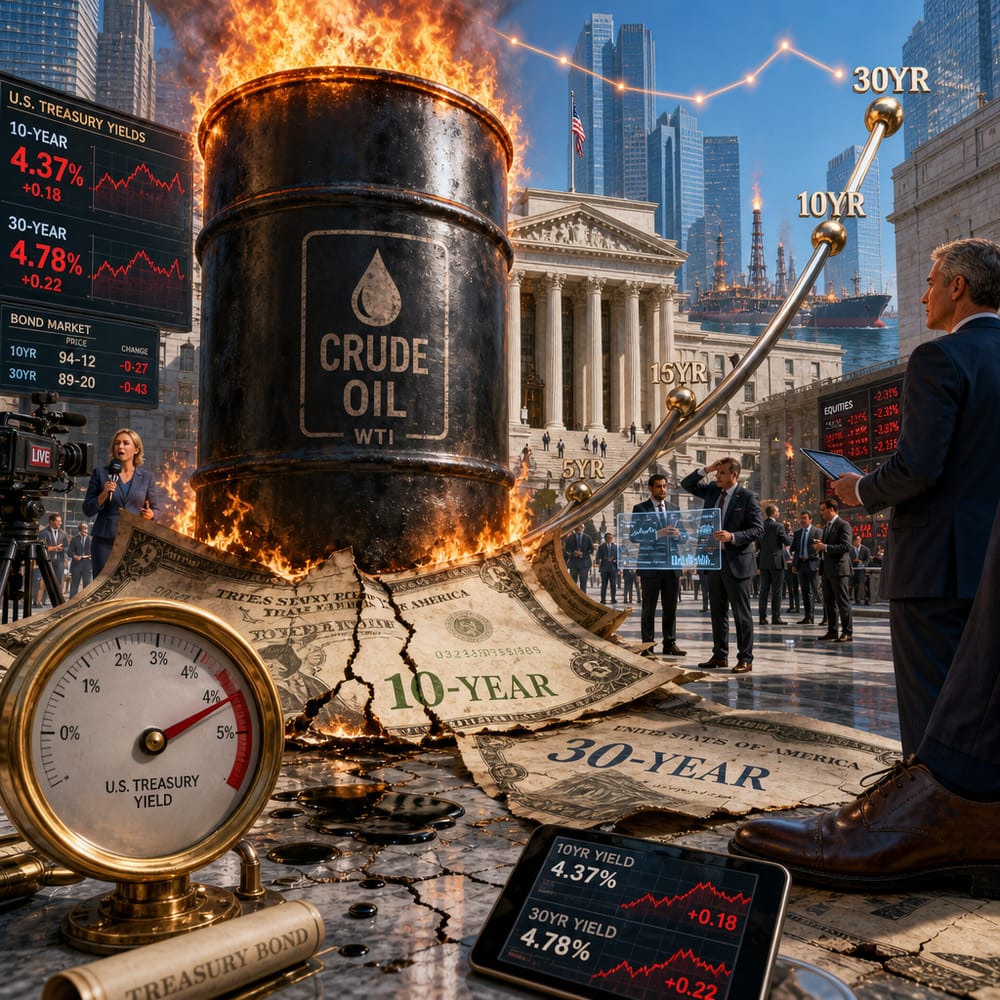
TREASURY YIELDS CLIMB AS OIL SURGES; BOND MARKET SHOWS INFLATION NERVOUSNESS
Hold onto your wallets, folks! The bond market is sending smoke signals, and they're not the cozy kind. Treasury yields are scaling new heights, with the 30-year yield hitting 5.31%—that's the highest it's been since flip phones were a thing in 2007. Add rising oil prices to the mix, and you've got a recipe for investor jitters, particularly when inflation is the ghost lurking in the economic machine.
Picture this: the 10-year Treasury yield is climbing like it's Spider-Man scaling a skyscraper, nudging 4.724%. This is the benchmark for mortgages and other loans—your auto loan, your credit card, you name it. So, when it moves, it’s a big deal. But why the spike? Well, it's partly due to oil prices behaving like they’re on a caffeine high, and partly because Uncle Sam's in debt, and he ain't shy about it.
Now, let's talk oil. Iran and the U.S. couldn't kiss and make up, and that 60-day peace deal between them just went poof. Brent crude's hovering above $90 per barrel like it's contemplating a career in high fashion. Remember, when oil gets pricey, everything else tends to get expensive too. That includes your morning coffee and possibly even your favorite burrito.
But what does this inflation cocktail mean for the stock market? It's like shaking a snow globe—everything's up in the air. Higher yields often mean investors start looking at stocks with the same skepticism as a cat at a bath. Stocks, especially those with high valuations, can start to look less appealing. After all, why risk it all in the stock market when you could get a decent return on a supposedly “safe” government bond?
Meanwhile, rising oil prices can fan the flames of inflation fears. If companies start shelling out more for energy, they’ll pass those costs onto consumers. And if consumers pay more, well, inflation stays stubbornly in the spotlight. For investors, this means reassessing portfolios and perhaps stuffing them with sectors that have more ways to handle rising costs. Tech stocks, meet the hot seat.
So, what’s the upshot for equity investors? The world of stocks might be more roller coaster than magic carpet ride for a while. With borrowing costs potentially climbing and the cost of goods threatening to follow suit, companies could see their profits squeezed tighter than a jar of pickles. Sectors like consumer staples and utilities—the sturdy old-timers of investing—might see some love since they often hold up well when the going gets tough.
Bond investors, on the other hand, need to keep an eye on the Fed like a hawk watching a mouse. If inflation gets too frisky, the Federal Reserve might hike interest rates faster than you can say "cheap student loans." That’s a recipe for bond prices to fall, since bond yields and prices have that quirky inverse relationship. If you're holding long-term bonds, you might feel the pinch more than someone with short-term ones.
In the bigger picture, this spike in Treasury yields and oil prices could signal shifts in cross-asset sentiment. If you’re juggling bonds, stocks, and commodities, it’s a bit like trying to balance three spinning plates. Treasuries have historically been the stabilizers in investors' portfolios, the trusty sidekick to the more volatile stock market. But with yields rising, they’re starting to look more like a leading actor.
At the end of the day, this bond-oil drama puts everyone on edge. Rising yields? Check. Oil prices that could incite a bidding war at the gas pump? Check. Inflation vibes reminiscent of a 1970s dance floor? Double check. For investors, it's all about making strategic decisions: evaluating risk tolerance, diversification, and maybe even looking into sectors that can brave the inflation storm.
So, if you're watching Treasury yields like a hawk—or just a cautious investor trying to navigate these choppy waters—keep your seatbelt fastened. It looks like we’re in for a bumpy ride.
This article is for informational purposes only and is not investment advice. Always do your own research or consult a licensed financial professional before making investment decisions.
© Copyright 2024. All Rights Reserved.
© Copyright 2024. All Rights Reserved.