

Treasury Yields Climb as Oil Rallies on Iran Tensions
Monday, August 17, 2026
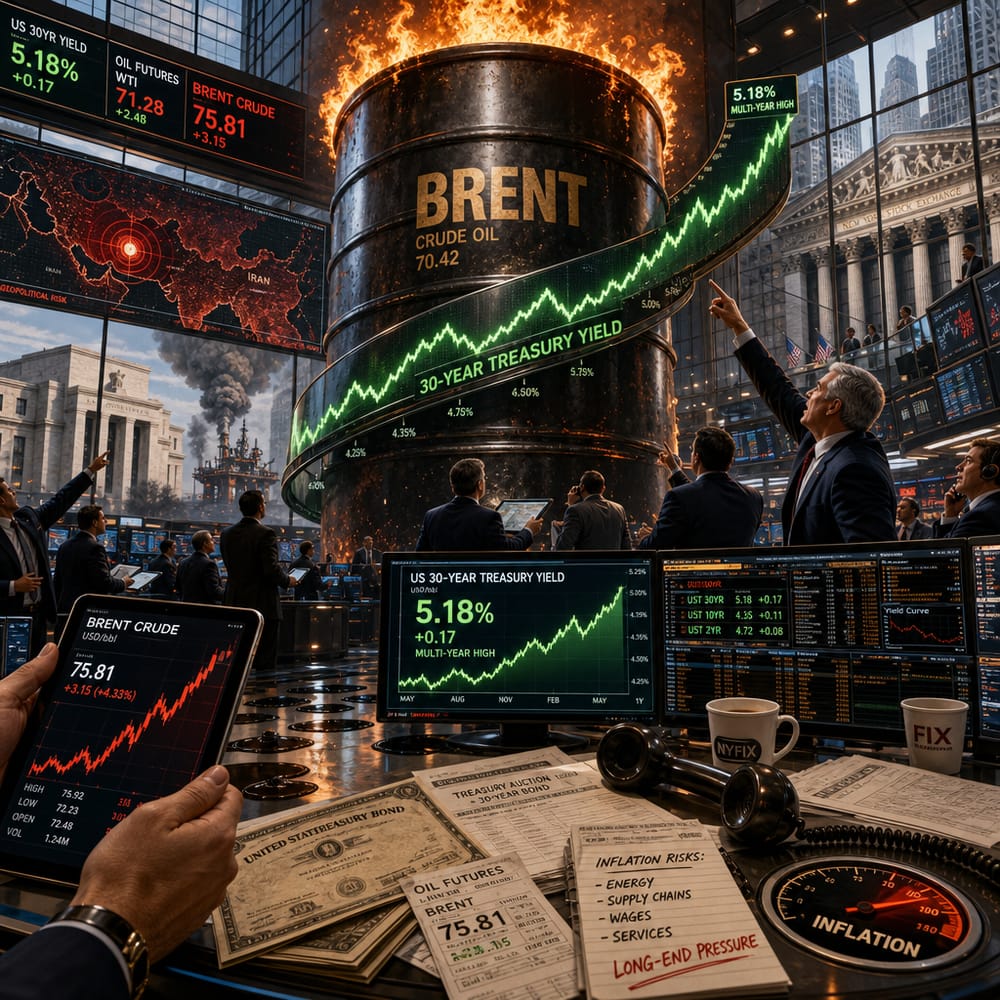
As Treasury Yields Soar and Oil Prices Surge, What’s Next for Your Wallet?
Ah, the financial markets, that ever-tumultuous playground where numbers dance and investors ride the roller coaster of economic headlines. A few days ago, two key players in this drama decided to throw a surprise party: Treasury yields and oil prices. If you're scratching your head wondering why these two are crashing the market's mood, let’s break it down — and why it matters to your wallet.
RISING TREASURY YIELDS: THE QUIET GIANT
First, let’s tackle Treasury yields. The 30-year Treasury yield has been flexing its muscles, hitting a whopping 5.31%, a level we've not seen since those carefree days of 2007. For context, a Treasury yield is like the interest rate Uncle Sam pays to borrow money. When those rates rise, it signals that investors expect higher returns due to factors like inflation expectations or increased government borrowing.
So, what’s the big deal? High Treasury yields can be a buzzkill for the stock market. For starters, they can make borrowing more expensive. Whether it’s a business looking for expansion funds or you waiting for your mortgage approval, higher borrowing costs can slow economic activity. For the stock market, it means companies' future earnings, often shaped by borrowing, don’t look as hot, potentially dragging down stock prices.
Moreover, when Treasury yields climb, they can steal the spotlight from stocks. Investors hunting for safe returns might ditch riskier assets in favor of reliable U.S. government bonds. It’s like choosing a steady, dependable date over that unpredictable rollercoaster ride.
OIL PRICES: THE SLICK SHOCK
While Treasury yields were having their moment, oil prices decided they wanted in on the action too. Brent crude oil, the global benchmark, surged past $91 a barrel. The culprit? Heightened tensions with Iran. They're playing hardball with the U.S., ruling out the extension of a peace deal. This geopolitical drama has thrown a wrench into oil supplies, as Iran’s bluster could disrupt the crucial Strait of Hormuz, a major artery for the world's oil.
High oil prices aren't just a pain at the gas pump; they ripple through the economy like a stone in a pond. Energy costs climb, leading to higher transportation and production costs, which can inflate prices on everything from groceries to gadgets. And there we have it — the dreaded I-word: inflation.
THE INFLATIONARY DOUBLE WHAMMY
Rising Treasury yields and oil prices create a one-two punch for inflation. High oil prices increase costs, while rising yields suggest that the Fed might need to keep interest rates higher for longer to tame inflation. And with inflation, you get the delightful pleasure of your dollar not stretching as far as it used to.
So, why should you care about this financial soap opera? Because it's not just about Wall Street or traders in fancy suits. Rising Treasury yields can impact your mortgage rates, car loans, and even credit card interest. And those oil prices? They can sneak into your grocery bills and make you reconsider that road trip you were planning.
WHAT DOES IT MEAN FOR THE FUTURE?
The magic eight ball of finance suggests uncertainty. If geopolitical tensions with Iran continue to simmer, expect more volatility in oil prices. On the other hand, watch out for any signals from the Federal Reserve. If they decide to keep interest rates high, the stock market might get a little grumpier.
Ultimately, the financial markets are a cocktail of interconnected elements — and right now, the mix is particularly potent. Keep an eye on these developments, and maybe think twice about that adjustable-rate mortgage or locking in a fixed rate while it's still reasonable. And as always, remember that the best financial strategy is a diversified one. While the market rides its waves, make sure your personal financial boat is steady and prepared for whatever comes next.
So, fellow market watchers, buckle up and keep your eyes on the prize — fiscal sanity amid market insanity. Who knows what next week's headlines will bring? But one thing's for sure: the market's never boring.
This article is for informational purposes only and is not investment advice. Always do your own research or consult a licensed financial professional before making investment decisions.
© Copyright 2024. All Rights Reserved.
© Copyright 2024. All Rights Reserved.