

Treasury Yields Climb as Debt Buybacks Expand—Fed and Treasury at Odds
Sunday, August 23, 2026
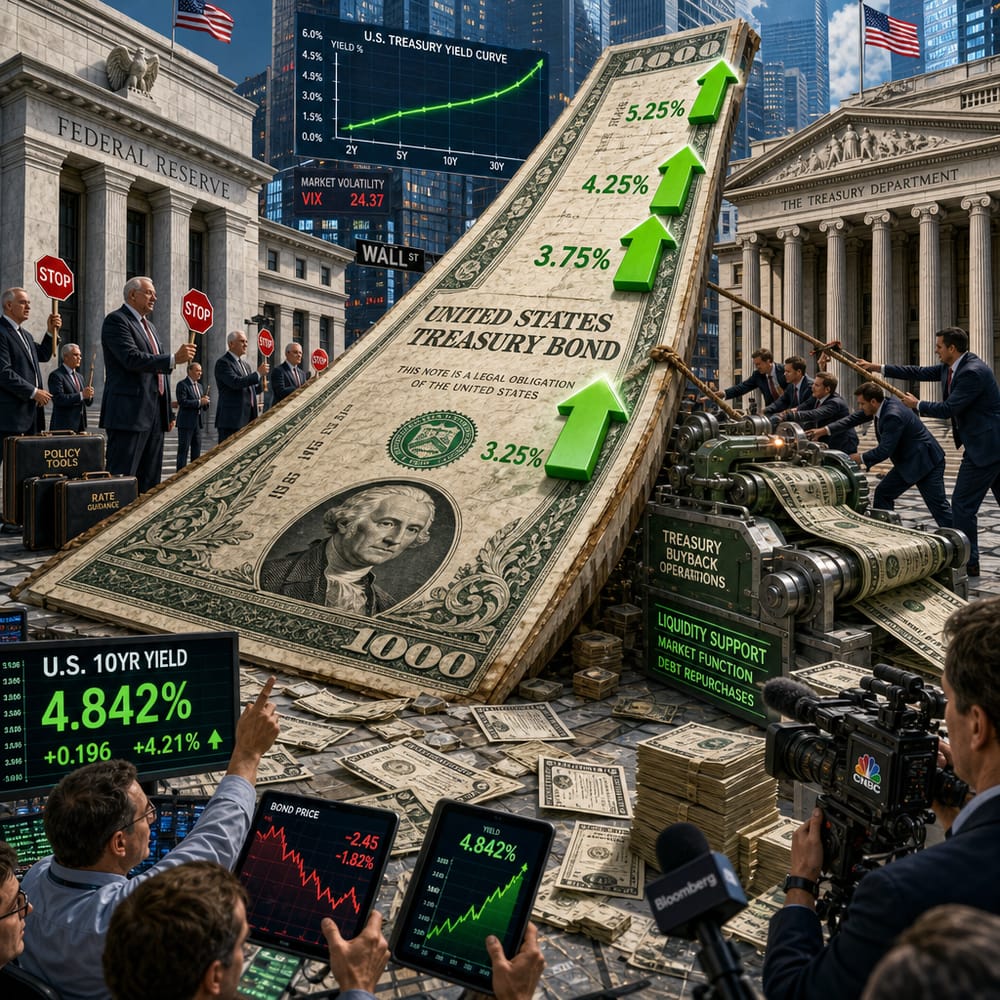
TREASURY YIELDS CLIMB AS DEBT BUYBACKS EXPAND—FED AND TREASURY AT ODDS
Picture this: The Federal Reserve and the U.S. Treasury Department are like a power couple having a very public spat about how to manage the nation’s finances. The Treasury is buying back bonds, effectively trying to give its debt a makeover, while the Fed is giving the side-eye, sticking to its script of curbing inflation. The result? Bond markets are reacting like a cat on a hot tin roof, with Treasury yields climbing as if they’ve just seen a mouse.
For investors, this is not just a soap opera to watch with popcorn; it’s a plot that could impact your wallet. Yields on government bonds have been inching up, and that’s the bond market’s way of saying, “We’re not so sure about this.” But what’s really going on here, and why should you care?
The U.S. Treasury, led by Scott Bessent, is on a mission. The department has decided to snatch back some of its existing bonds from the market. This buyback strategy is meant to manage the daunting $40 trillion national debt—yes, forty trillion, with a “T” — by reducing the pile in a way that looks tidier to investors. It’s like trying to clean your messy room by shoving everything under the bed.
But here’s where things get spicy: The Fed, under the ever-watchful eye of Chairman Kevin Warsh, is less concerned about debt aesthetics and more focused on keeping inflation under control. They’re playing the long game, slowly increasing interest rates to tame inflation. Unfortunately, this means the cost of borrowing goes up, and that’s not exactly what the Treasury wants to hear while it’s trying to tighten its belt.
So, what’s the big deal? Well, this divergence between the Fed and the Treasury is creating an economic double bind. On one hand, higher yields could mean higher borrowing costs for Uncle Sam. On the other hand, this tug-of-war could signal to investors that the U.S. government isn’t exactly singing from the same hymn book. Investor confidence doesn’t thrive on mixed messages, and uncertainty could lead to more volatility, which is the financial equivalent of turbulence on a flight.
Now, let’s talk about your portfolio. If you’re in the bond market, rising yields might cause some discomfort. Higher yields translate to lower bond prices, which isn’t ideal if you’re looking to sell. Conversely, for those looking to buy, it might spell opportunity. Higher yields can mean better returns in the long run—if you’re willing to ride the rollercoaster.
But bonds aren’t the only game in town. The ripple effect of these policies can wash up on the shores of stocks, real estate, and even the job market. Rising yields can make stocks less attractive as investors seek the safer returns of government bonds. Higher rates often lead to tighter financial conditions, impacting sectors like housing, where mortgage rates rise and affordability falls.
So, what’s next? Keep a close eye on the Fed’s upcoming decisions, especially as Warsh takes the mic at the Jackson Hole Economic Symposium. His words could either calm the markets or stoke the flames of uncertainty. Meanwhile, watch how the Treasury maneuvers its buyback strategy. It’s a delicate dance between reducing debt and not spooking the markets.
The bottom line? As an investor, understanding the dynamics between fiscal and monetary policy isn’t just for econ geeks; it’s a necessary part of navigating today’s ever-changing financial landscape. A savvy investor knows that while the headlines can be dramatic, the real story is in how you adapt your strategy in response to these macroeconomic shifts.
In a world where Treasury and Fed are playing their respective tunes, your best bet is to stay informed, stay flexible, and remember: In the game of financial chess, the winner is often the one who anticipates the next move.
This article is for informational purposes only and is not investment advice. Always do your own research or consult a licensed financial professional before making investment decisions.
© Copyright 2024. All Rights Reserved.
© Copyright 2024. All Rights Reserved.