

Treasury-Yield Reversal Sparks Relief Rally — S&P 500 Snaps Three-Day Slide
Thursday, October 01, 2026
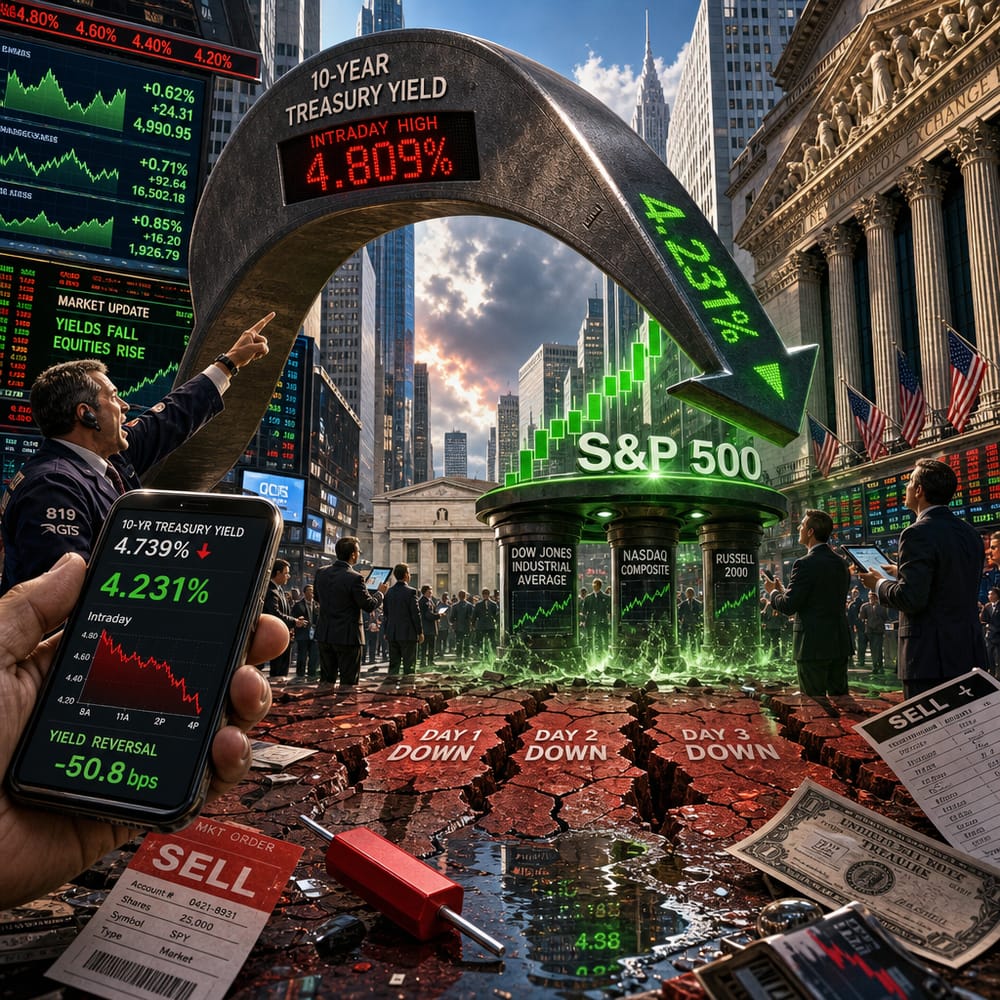
RELIEF RALLY: TREASURY YIELDS DIP, PUSHING S&P 500 UP AND OUT OF A LOSING STREAK
Here's a twist you didn't see coming: Just when the S&P 500 was getting comfortable in its losing streak, Treasury yields threw the market a curveball, deciding to retreat from their sky-high perch. And just like that, the S&P 500 shook off its three-day slump with a modest gain that had investors breathing a sigh of relief. Bond yields and stocks are like an old married couple; when one acts up, the other takes a hit. The latest chapter in this love-hate relationship unfolded with the yield on the 10-year Treasury note, which had climbed to dizzying heights not seen since 2002, finally taking a breather. Stocks, feeling the freedom, rallied just enough to remind us they're still alive and kicking.
WHAT CAUSED THE YIELD REVERSAL?
As if navigating the stock market wasn't already as predictable as a cat on a hot tin roof, Treasury yields had investors on edge after hitting multiyear highs. But why the sudden reversal in yields? It’s the classic case of "what goes up must come down." After soaring to levels that had traders biting their nails, bond yields eased off thanks to a confluence of events — a complex cocktail of economic indicators, policy speculations, and perhaps a little fatigue from climbing those dizzy heights. The anticipation of the September jobs report likely played a role, as investors sought shelter from potential market volatility in the safe harbor of government bonds.
HOW SUSTAINABLE IS THE EQUITY MARKET REBOUND?
Ah, the million-dollar question. Is this equity rally a fleeting moment of reprieve or the start of a more sustained upward trend? While the S&P 500 managed a 0.2% advance, the jury's still out on the longevity of this bounce. For one, all three major indices — the S&P 500, Dow Jones, and Nasdaq — are still poised for weekly losses, with the Dow leading the charge downwards. Fluctuations in bond yields continue to act like an unpredictable current under the market, capable of sweeping stock prices up or pulling them under. For the equity resurgence to stick, investors might need to see continued moderation in yields alongside positive economic data that doesn’t unnerve the bond markets.
WHAT ARE THE RISKS IF YIELDS RISE AGAIN?
If Treasury yields decide they're not done with their high-flying antics and resume their upward trek, it could spell trouble for the sunny skies over the stock market. Rising yields can lure investors away from stocks, promising safer returns in bonds. Higher yields also mean more expensive borrowing for companies, potentially squeezing corporate profit margins and stock valuations. So, should yields spike again, expect the market to get jittery — and fast.
The other elephant stomping around in the room is inflation. Should it rear its ugly head more aggressively, the Federal Reserve might be forced to step in with interest rate hikes, which in turn could push Treasury yields higher. This scenario is the classic recipe for an equity market hangover.
THE BIGGER PICTURE
The drama unfolding between stocks and bonds underscores just how interwoven these asset classes are. It's like a financial tango where each partner’s move impacts the other. Investors need to keep a keen eye on these developments, as they can quickly change the landscape.
In the backdrop of all this, we’ve got other market movers to watch. Oil prices are spiking with Middle Eastern tensions, and geopolitical whispers have the energy market on edge. Plus, what happens in the realm of AI, tech, and global trade could ripple through the markets faster than a viral TikTok.
For now, investors basking in the relief of a market rally should stay nimble. The winds of the financial markets can shift with little warning, and being prepared for the ups and downs is crucial. As always, stay informed, stay curious, and perhaps most importantly, stay calm — because the only constant is change, especially in the markets.
This article is for informational purposes only and is not investment advice. Always do your own research or consult a licensed financial professional before making investment decisions.
© Copyright 2024. All Rights Reserved.
© Copyright 2024. All Rights Reserved.