

Treasury Yield Drop and Bond Buybacks: A Dual Shock to Markets
Tuesday, August 25, 2026
TREASURY YIELD DROP AND BOND BUYBACKS: A DUAL SHOCK TO MARKETS
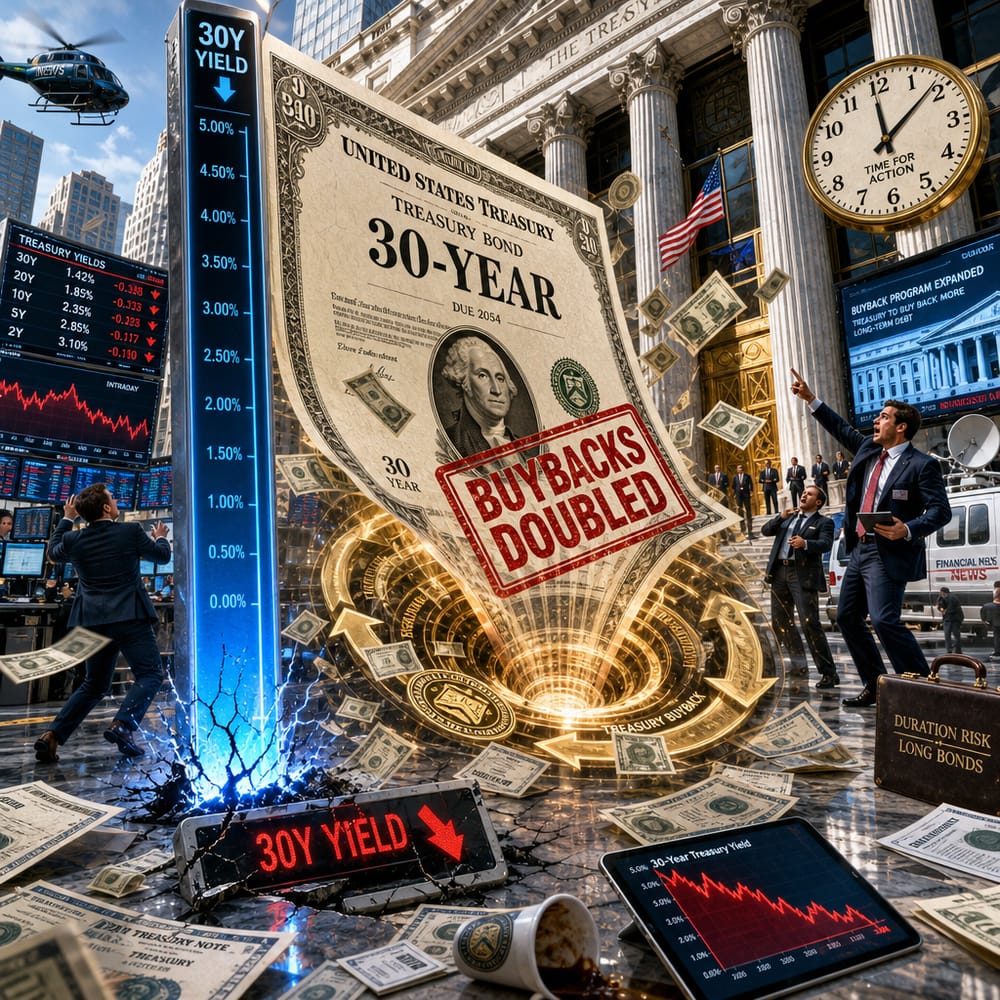
Ever seen Uncle Sam whip out his wallet, not to spend, but to buy back what he’s sold? That’s precisely what the U.S. Treasury just did, and fiscal hawks are squawking. This week, the Treasury decided to double the size of its bond buyback operations, causing long-dated Treasury yields to nosedive faster than your uncle’s opinion of your favorite cryptocurrency. Let's unpack how this bold move plays out in the financial coliseum and what it might mean for your portfolio.
First, the basics. When we talk about Treasury yields, think of them as the interest barometer for borrowing Uncle Sam’s cash. If yields drop, it costs the government less to borrow. But hold your applause — the ripple effects are a mixed bag.
Picture this: The Treasury doubling down on bond buybacks means they’re buying back their long-issued IOUs. This move sops up supply from the market, potentially pushing up bond prices and pulling yields down. And that’s precisely what’s been happening — those long-dated Treasury yields have fallen off a cliff, much to the delight of yield hunters everywhere.
But the million-dollar question is, what exactly is Uncle Sam up to here? Are we witnessing a tactical masterstroke, or is this like feeding cookies to a sugar-craving market temporarily?
THE LONG GAME: POTENTIAL IMPACTS OF BUYBACK BONANZA
The Treasury's decision to dive deep into the buyback pool raises eyebrows and questions galore. In the short run, it’s not just Wall Street that's feeling the buzz. The tech-heavy Nasdaq leapt higher with a pep in its step, bolstered by this yield drop.
However, for everyday investors who don’t moonlight as bond traders, the real intrigue lies in the long-term implications. In the grand scheme, if the Treasury's buyback binge continues, we might see an enduring spell of low yields. This could, in theory, make borrowing cheaper across the board — think lower mortgage rates, cheaper car loans, maybe even a discount on your cousin's student loans.
Yet, there’s a glaring question: Could this move cast a longer shadow over the bond market? Long-term, the specter of inflation remains. If inflation kicks in and the Treasury continues gobbling up its bonds, investors might demand higher yields to battle the inflation monster. Nobody wants to earn less tomorrow than what a dollar is worth today!
INVESTOR SENTIMENT: A ROLLERCOASTER RIDE
For fixed-income investors, this Treasury play is a double-edged sword. On one hand, the Treasury's actions might offer some relief, giving the bond market a much-needed breather from the relentless pressure of rising yields. This could coax some investors back into the bond fold, restoring a bit of love in this strained relationship.
On the flip side, the bond market, much like your Tinder profile, thrives on certainty. And right now, certainty is in short supply. If the Treasury's buyback approach feels like a Band-Aid solution, it might not be enough to buoy sentiment in the long-term. Investors could remain jittery, perpetually looking over their shoulders for the next big fiscal maneuver or inflation spike.
THE BROAD MARKET: DANCE OF THE ASSETS
So, what does this all mean for the broader market sandbox where equities play? Lower Treasury yields can be a boon for stocks, particularly those in the growth sector. Think tech companies — they thrive on lower borrowing costs which, in turn, can pump up their stock valuations faster than a Hollywood sequel.
But don't be quick to bet the farm on a stock market bonanza just yet. With yields tumbling, cautious investors might shift gears, opting to diversify back toward bonds if they sense stability ahead, which could counterbalance some of the stock market enthusiasm.
In essence, the Treasury's double-down buyback move is like a shock wave through the markets. It might jolt the bond market into a new trajectory, affecting everything from your investment portfolio to the cost of your next dream home.
Whether this strategy will provide lasting relief or merely a fleeting sense of calm remains the multi-billion-dollar question. For now, keep your eyes peeled on those yields and your ear to the ground. Uncle Sam has made his move, and the market is all ears.
This article is for informational purposes only and is not investment advice. Always do your own research or consult a licensed financial professional before making investment decisions.
© Copyright 2024. All Rights Reserved.
© Copyright 2024. All Rights Reserved.