

Treasury to Double Longer-Term Bond Buybacks—Long-Term Yields Drop Sharply
Saturday, August 29, 2026
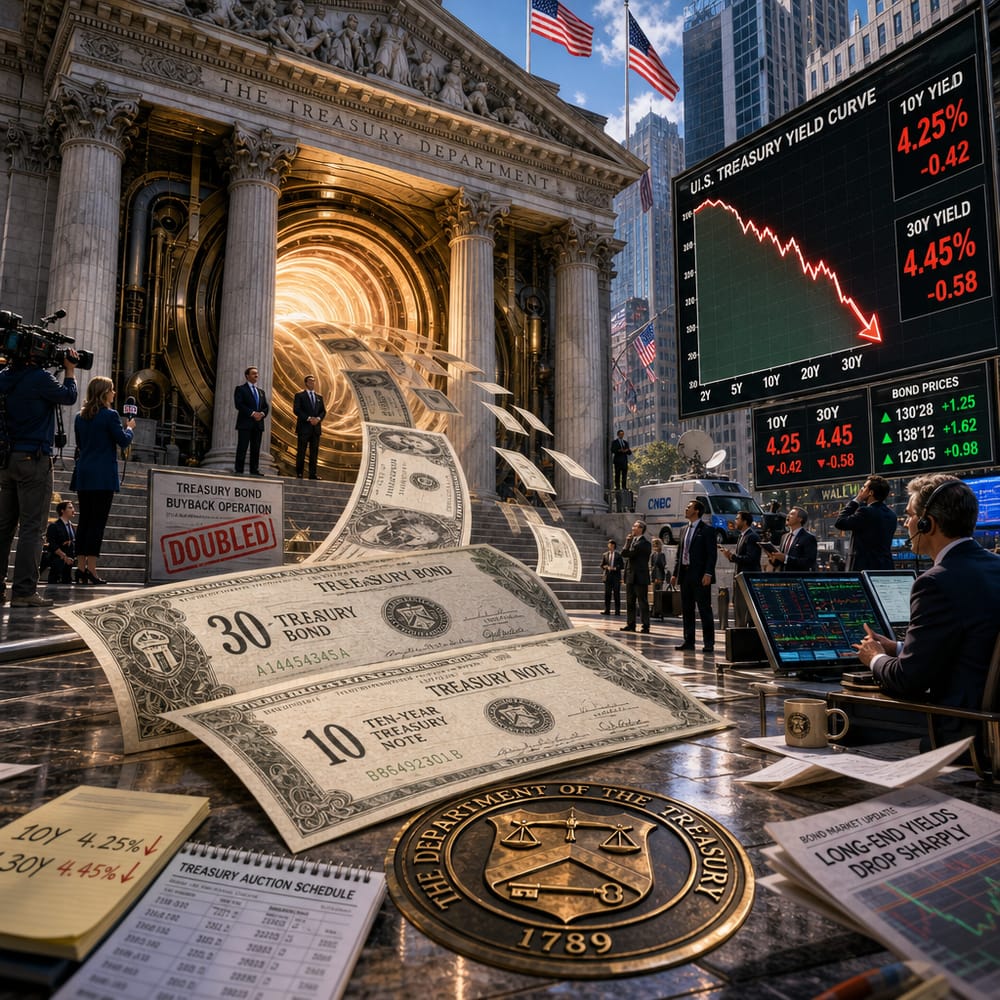
TREASURY TO DOUBLE LONGER-TERM BOND BUYBACKS—LONG-TERM YIELDS DROP SHARPLY
Hold onto your hats, folks. The U.S. Treasury just dropped a bombshell that sent shockwaves through the financial markets. They're doubling down on buybacks for longer-term bonds, and the effect is already rippling through the economy like a stone tossed into a still pond.
Now, if your eyes are glazing over at the thought of bond buybacks, hang tight. This isn’t just financial mumbo-jumbo for the Wall Street crowd. The Treasury’s move is shaking up the bond market, and it might just touch your wallet in more ways than one.
THE BUYBACK BONANZA
So, what’s the Treasury actually doing? Picture this: Uncle Sam is opening up his wallet to buy back a bunch of those long-term IOUs, known as Treasury bonds, that are floating around out there. And not just a little bit — they’re doubling their current operations. Think of it like a buy-one-get-one-free sale, except it’s for government debt.
Why the sudden shopping spree? Well, the strategy is to stir up some liquidity, which is just a fancy way of saying they want to make it easier for folks to buy and sell these bonds. By doing this, they hope to smooth out the kinks in the yield curve — that’s the graph that shows interest rates over different bond durations, which, right now, looks bumpier than a rollercoaster ride.
IMPACT ON THE BOND MARKET
For the bond market, this move is like a jolt of caffeine. Long-term bond yields, which are essentially the interest rates that the government pays on these debts, have taken a dive. In plain English, when the Treasury buys back bonds, demand goes up, which makes prices rise and yields drop.
This shift in yields isn’t just a detail for finance geeks. Lower yields on long-term bonds mean borrowing becomes cheaper. That can spur businesses to take out loans for expansion, people to snag mortgages at lower rates, and investors to rethink where they park their money.
A BREATH OF FRESH AIR FOR BORROWING COSTS?
With long-term yields dropping, borrowing costs could follow suit like a well-trained puppy. That’s good news if you’re looking to refinance your mortgage or if you're in the market for a new loan. Lower borrowing costs can mean more money back in your pocket — which, let’s face it, is music to anyone’s ears.
But this isn’t an all-you-can-eat buffet of benefits. The flip side is that if borrowing gets too breezy, it might push more people to load up on debt, potentially leading to riskier financial behavior. And while lower rates can be a boon for borrowers, they’re not as hot for savers, whose returns on savings accounts might not keep pace with inflation.
THE ECONOMY ON A TEETER-TOTTER
Zooming out, this move by the Treasury could be the nudge that the economy needs to keep its balance. Imagine the economy as a teeter-totter — too much weight on one side, things get wobbly. By tinkering with bond buybacks, the Treasury is trying to level things out, particularly when it comes to interest rate expectations.
If the Federal Reserve is the referee of our financial game, the Treasury’s latest play might just ease some pressure off the Fed’s inflation fight. With inflation being the dragon everyone’s trying to slay, having a bit of help from the bond market can make a significant difference.
THE ROAD AHEAD
So, where does all this leave us? For investors, this latest twist in the bond saga means keeping a keen eye on how these buyback operations unfold. Will this be the secret sauce that calms the jittery bond markets and spurs economic growth, or will it stoke the flames of inflation down the line?
As for everyday folks, this is a moment to watch how changes in the bond market trickle down to your day-to-day finances. Whether it prompts a shift in your savings strategy or influences bigger financial decisions, staying informed is your best ally.
Remember, the financial world is like a chess game where every move has a ripple effect — and the Treasury just moved a major piece. So, keep your wits sharp and your eyes peeled, because in the world of finance, the only constant is change.
This article is for informational purposes only and is not investment advice. Always do your own research or consult a licensed financial professional before making investment decisions.
© Copyright 2024. All Rights Reserved.
© Copyright 2024. All Rights Reserved.