

Treasury Secretary’s Bond Market Support Falters as Yields Rise
Sunday, August 23, 2026
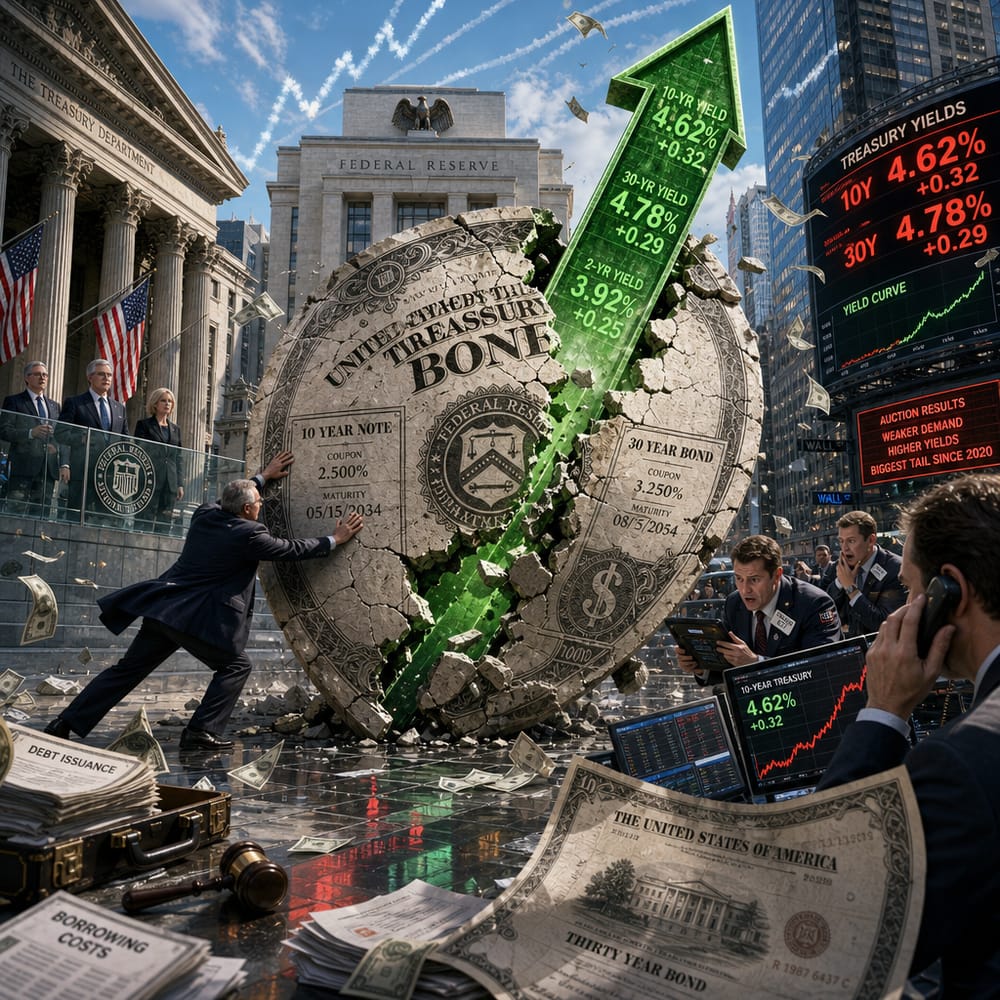
THE TREASURY’S BOND MARKET WRESTLE: WHEN INTERVENTION FAILS
Spoiler alert: The bond market doesn’t care about your plans. In an unexpected twist of fate, despite the Treasury Secretary’s best attempts to keep a lid on borrowing costs, bond yields are doing a rebellious little jig up the charts. So, what's the scoop? Why are yields rising faster than the number of zeroes on a billionaire's tax return, and what does it mean for us regular folks? Let's dive in.
THE ELEPHANT IN THE ROOM: RISING YIELDS
First things first — what’s a bond yield, and why should you care? Simply put, a bond yield is the return an investor expects from holding a bond. When yields go up, it means the price of bonds goes down. Yields are the bond market’s way of screaming its opinion about everything from inflation to government debt levels.
Now, the Treasury Secretary, bless their heart, has tried to keep these yields from climbing like it's a stairway to heaven. But alas, the market is not convinced. Despite constant efforts to rein in borrowing costs, yields are on the rise. Think of it like trying to hold down a beach ball underwater — the more you push, the harder it pops up.
THE WHY: MARKET SKEPTICISM AND INFLATION FEARS
So, what’s behind this bond market mutiny? For starters, there’s a hefty dose of skepticism about the U.S. government’s debt situation. With the nation’s whopping $40 trillion debt making headlines, investors are understandably jittery. They’re demanding higher returns to compensate for the perceived risk of lending money to a free-spending Uncle Sam.
Then, there's inflation – that sneaky thief that quietly erodes the value of your money while you’re not looking. Investors suspect that inflation might stick around longer than a houseguest who just won’t take a hint. And when inflation expectations climb, so do bond yields.
THE RIPPLE EFFECT: MORE THAN JUST NUMBERS
But hold on — rising yields aren’t just Wall Street’s headache. They can trickle down to the everyday economy in ways that might make us all wince a little. Higher yields mean higher borrowing costs. That’s right, everything from your mortgage to your car loan could become a little more expensive. It’s the financial domino effect you didn’t ask for.
For the government, it translates to more expensive debt servicing, which could force some tough decisions about spending cuts or tax hikes. Either way, it’s not a pretty picture for economic growth when more cash is funneled towards paying off debt rather than being invested in growth-stimulating projects.
ENTER THE FED: WHAT WILL THEY DO?
This brings us to the Federal Reserve, the knight in shining armor (or perhaps a jester in a chaotic court, depending on your perspective). The Fed has been closely watching the rise in yields, and their response is crucial. They might consider tweaking interest rates or adjusting their bond-buying habits to calm the market waters.
But here’s the rub: the Fed’s options aren’t limitless. They’re walking a tightrope between taming inflation and supporting economic growth. If they get too aggressive in pushing back on yields, they risk stalling the recovery. If they’re too timid, inflation could get out of hand, leaving us all with thinner wallets.
SO, WHAT NOW?
As a retail investor, this bond market brouhaha might seem like just another Wall Street soap opera. But these developments have real-world implications. Keep an eye on how the Fed maneuvers these choppy waters. They’re the flame to the bond market’s gasoline; one misstep, and things could get fiery.
In the meantime, consider how rising yields might impact your investments and loans. Talk to your financial advisor about adjusting your strategy to better weather the bond market’s whims.
And don't forget, in the wacky world of finance, it’s all about staying informed. Because when the bond market decides to throw a rager, you’ll want to be ready with a plan — or at least a good seat to watch the fireworks.
This article is for informational purposes only and is not investment advice. Always do your own research or consult a licensed financial professional before making investment decisions.
© Copyright 2024. All Rights Reserved.
© Copyright 2024. All Rights Reserved.