

Treasury Secretary Bessent’s Bond Buyback Spree and the “Treasury Twist” Impact
Tuesday, August 25, 2026
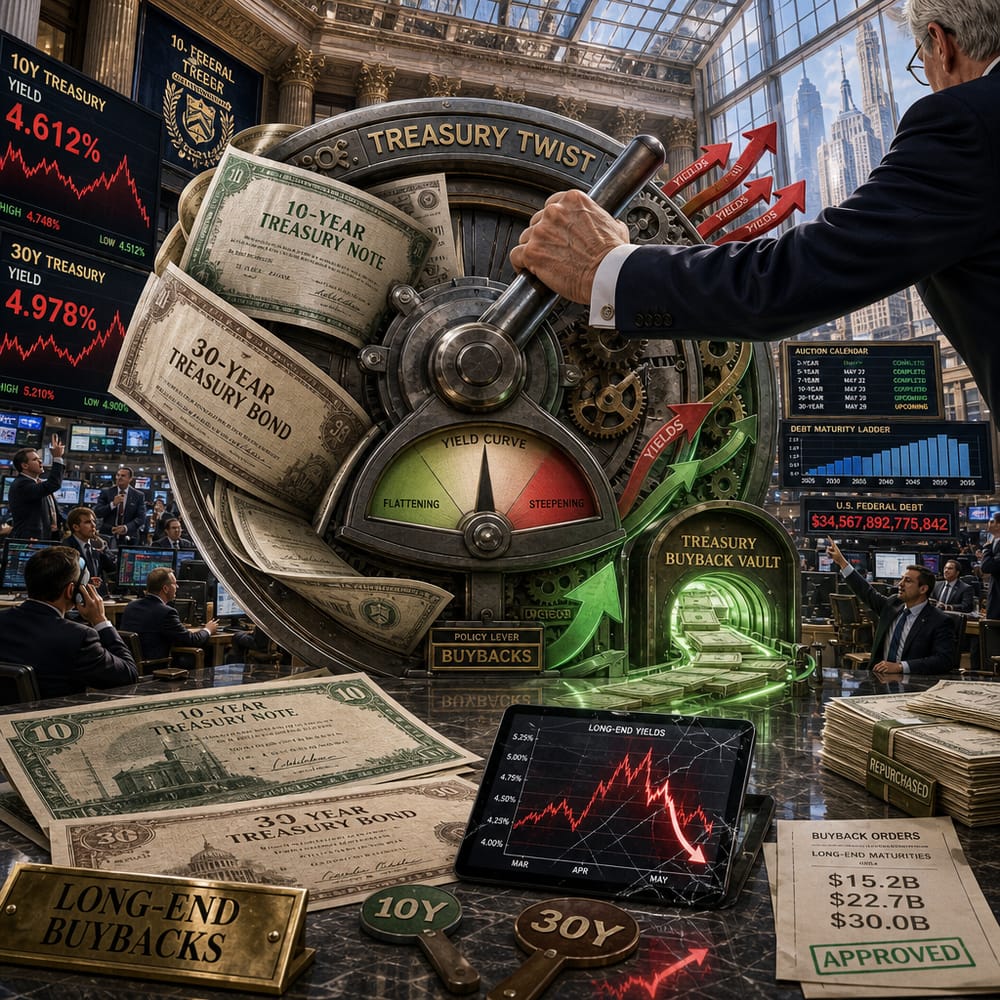
The Treasury's New "Twist": Is Scott Bessent Playing Bond Games or Calming Nerves?
Scott Bessent, the U.S. Treasury Secretary with all the subtlety of a bull in a china shop, has decided to double down on bond buybacks. Picture this: your uncle Scott waving a magic wand over long-term Treasury bonds like they’re stale Halloween candy, hoping to tame the relentless bond-market beast. Why, you ask? To stop the market from panicking like a cat in a room full of rocking chairs and keep borrowing costs from spiraling into the stratosphere.
Here’s the scoop: Bessent’s team is pulling a strategic move reminiscent of Operation Twist from the early '60s, a quaint little dance where short-term securities are swapped out for long-term ones to ease financial tension. This updated version? Let's call it "The Treasury Twist: 2026 Edition." By buying back longer-term bonds, the Treasury aims to inject some calm into the chaotic bond market, driving down yields that have been climbing like a cat up a tree.
But is Bessent’s maneuver more of a Hail Mary or a calculated strategy? Grab your popcorn, because this oscillates between a high-stakes financial thriller and a nerve-wracking soap opera.
LONG-TERM IMPLICATIONS: CALM OR CHAOS?
The Treasury’s bond buyback is a little like using duct tape on a leaky pipe. It might hold for now, but what about the long-term implications? By stepping in so aggressively, the Treasury could face scrutiny over fiscal credibility. Essentially, if they keep spending like they’re in Vegas, it might end up testing Uncle Sam’s credit limits. Running up the tab on national debt could rile up those hawks in the Federal Reserve, whispering words of caution like “reckoning” and “sustainability,” just as Richmond’s Fed President Tom Barkin hinted at recently.
This bond buyback strategy isn’t just a one-off party trick. If successful, it sets a hefty precedent, suggesting the government might swoop in like a superhero whenever the bond market so much as sneezes. A comforting thought, perhaps, but are we fostering a financial ecosystem that’s too reliant on Uncle Sam’s intervention?
MARKET STABILITY: A SLIPPERY SLOPE
For investors, this intervention might be the equivalent of a life raft in choppy waters, promising temporary stability. But here's the catch: relying too heavily on government action could make markets as skittish as a cat in a thunderstorm. Investors may develop an itchy trigger finger, ready to panic at the first sign of government withdrawal, making future market stability as elusive as a unicorn.
On the flip side, if the buybacks are successful, they could soothe nervous investors, strengthening confidence and potentially lowering the risk premium. This could make boring old Treasury bonds—those faithful rainy-day investments—more attractive than a free cocktail in first class.
PRECEDENT FOR FUTURE POLICIES: THE NEW NORMAL?
This intervention could herald a new normal, a world where fiscal policies are as flexible as a yoga instructor, bending as needed to tame tumultuous markets. While that might sound reassuring, it could also mean that the responsibility for market stability falls squarely on the shoulders of fiscal policymakers, making them the default market firefighters.
And what happens if this Treasury Twist becomes a recurring feature in the financial playbook? Well, it could pave the way for reactive policies—though whether that’s a blessing or a curse depends on whether you see the glass as half full or shattered on the floor.
INVESTORS' TAKEAWAY: RIDE THE WAVE OR RUN FOR THE HILLS?
For retail investors, those unsung heroes who brave the financial markets armed with apps and instincts, this is the time for strategic thinking. Treasure hunting in the bond market could yield gems—or landmines—depending on how the Treasury’s gambit plays out.
Here’s the distilled wisdom: keep an eye on those long-term yields and stay informed. While the government plays its hand, you stay smart. Monitor how these moves shape fiscal policy's future role in financial markets. Will it become the safety net investors can count on or the crutch that weakens market resilience?
As the Treasury’s buyback blitz continues, watch this space. It’s a live-action version of “Bond: No Time to Die”—except the stakes are real, and the villains are unpredictability and volatility. Fasten your seatbelt, because it’s going to be a wild ride through the financial jungle.
This article is for informational purposes only and is not investment advice. Always do your own research or consult a licensed financial professional before making investment decisions.
© Copyright 2024. All Rights Reserved.
© Copyright 2024. All Rights Reserved.