

Treasury's Stablecoin Issuance NPRM Under GENIUS Act
Monday, August 24, 2026
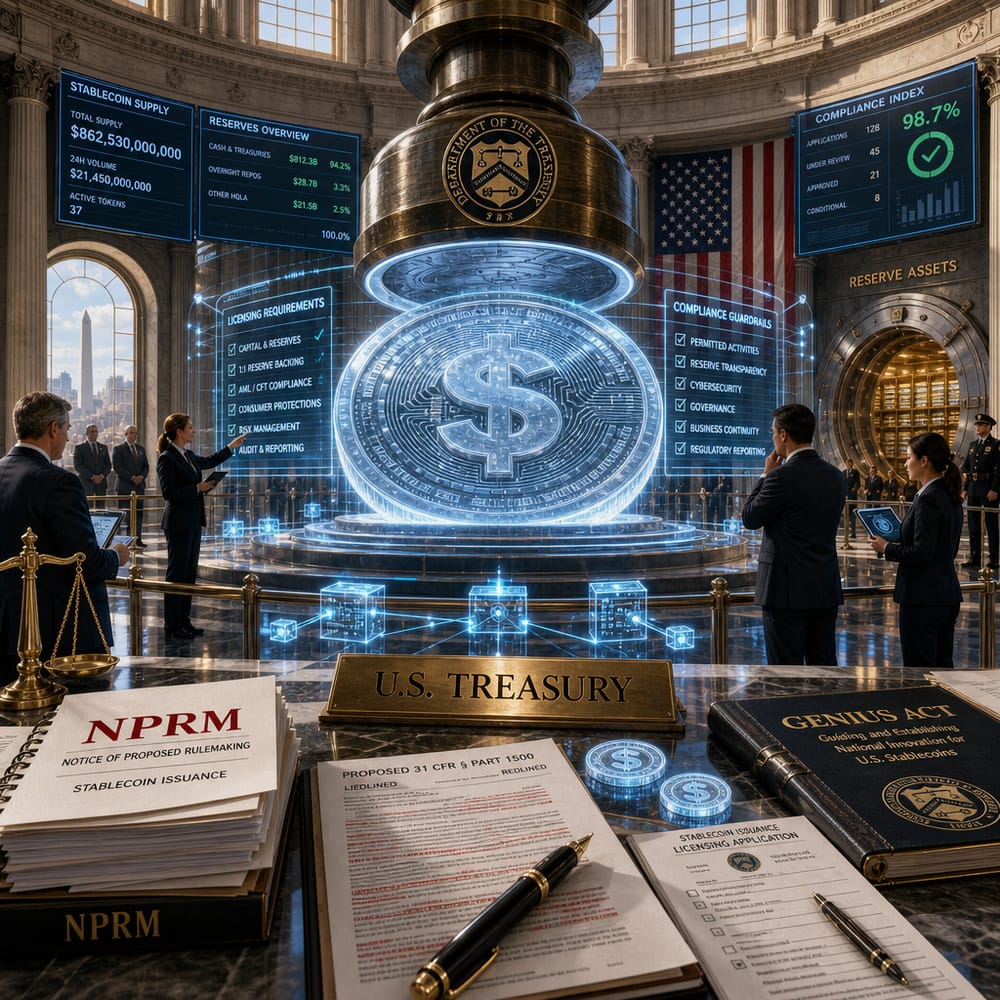
WHEN A STABLECOIN ISN'T SO STABLE: THE NEW U.S. TREASURY RULES
In the fast-paced world of cryptocurrency, there's a new sheriff in town, and it's none other than the U.S. Treasury. They've just dropped a Notice of Proposed Rulemaking (NPRM) that aims to wrangle stablecoins—those digital currencies that promise to keep their value tethered to a more, well, stable asset like the U.S. dollar. And if you're in the stablecoin game, whether as an issuer or an eager crypto trader, this is your new bedtime reading.
At the heart of this NPRM is the GENIUS Act—a name as bold as its intentions. This act seeks to bring some order to the wild west of stablecoin issuance by defining key industry terms and setting licensing requirements. Think of it as the government's way of saying, "We’re not against your digital dollar, but we’re not leaving it unmonitored either."
KEY COMPONENTS OF THE PROPOSED REGULATIONS
So, what’s hiding under the hood of these new regulations? First, the Treasury wants to ensure that stablecoin issuers have a rock-solid foundation. We're talking liquidity and capital requirements, meaning issuers will need to have enough real-world assets to back up their digital promises. No more operating on a wing and a prayer.
Next up is transparency. Issuers will be expected to disclose information about their reserve assets regularly. In plain English, we’ll get to see if they truly have those crisp Benjamins stockpiled somewhere safe, as they claim. The hope here is to prevent any Tether-like controversies, where doubts about backing assets have historically made investors queasy.
But the real show-stopper? Licensing requirements. If you're an issuer, you'll need a license to operate, much like a traditional financial institution. This means more oversight and compliance hoops to jump through, which could deter smaller players from entering the market. Consider it a crypto version of a driving test—no license, no stablecoin.
IMPACT ON ISSUERS AND USERS
Now, what do these looming regulations mean for the folks issuing and trading stablecoins? For issuers, it's time to step up their game. The regulatory burden could thin the herd, leaving only the most prepared and well-resourced companies to dominate the space. This could stifle innovation temporarily, but also, perhaps, sanitize the market, making it safer for investors.
For the everyday user, this could be a mixed bag. On one hand, more regulation could mean that stablecoins become less volatile and more trustworthy—no more waking up to find your digital stash worth half of yesterday’s value. On the other hand, increased compliance costs for issuers might trickle down to users in the form of fees, and those transactions you love might become slightly more expensive.
IMPLICATIONS FOR THE CRYPTO MARKET
What does all this bureaucratic buzz mean for the broader crypto market? For one, expect some tension. Crypto purists, who value decentralization and minimal government interference, might see this as a crackdown on their utopian visions. Yet, for retail investors, this development could be a confidence booster, potentially encouraging more people to dip their toes into the digital currency pool.
Also, don't underestimate the ripple effect on global issuers. While the NPRM targets U.S. operations, companies elsewhere with American users need to take notice. Failing to comply could mean being shut out from one of the largest financial markets on the planet.
As the Treasury ropes in stablecoins with a regulatory lasso, the wild ride isn't over yet. The NPRM will go through a public comment period, allowing stakeholders to weigh in before any rules are finalized. So, there's still room for twists and turns in this crypto caper.
FINAL THOUGHTS
For now, all eyes will be on the crypto market's reaction. Will stablecoin issuers rise to the occasion, or will we see a new wave of consolidation as only the most fortified companies survive? And will the added oversight make stablecoins more appealing to the average Joe and Jane, or drive them to seek out less regulated pastures?
One thing's for sure: the cryptosphere loves a good drama, and this one is just heating up. So stay tuned—because with these rules on the horizon, stablecoins might be anything but!
This article is for informational purposes only and is not investment advice. Always do your own research or consult a licensed financial professional before making investment decisions.
© Copyright 2024. All Rights Reserved.
© Copyright 2024. All Rights Reserved.