

Treasury's Long-Term Debt Buybacks and Yield Curve Dynamics
Friday, August 21, 2026
TREASURY'S LONG-TERM DEBT BUYBACKS AND YIELD CURVE DYNAMICS
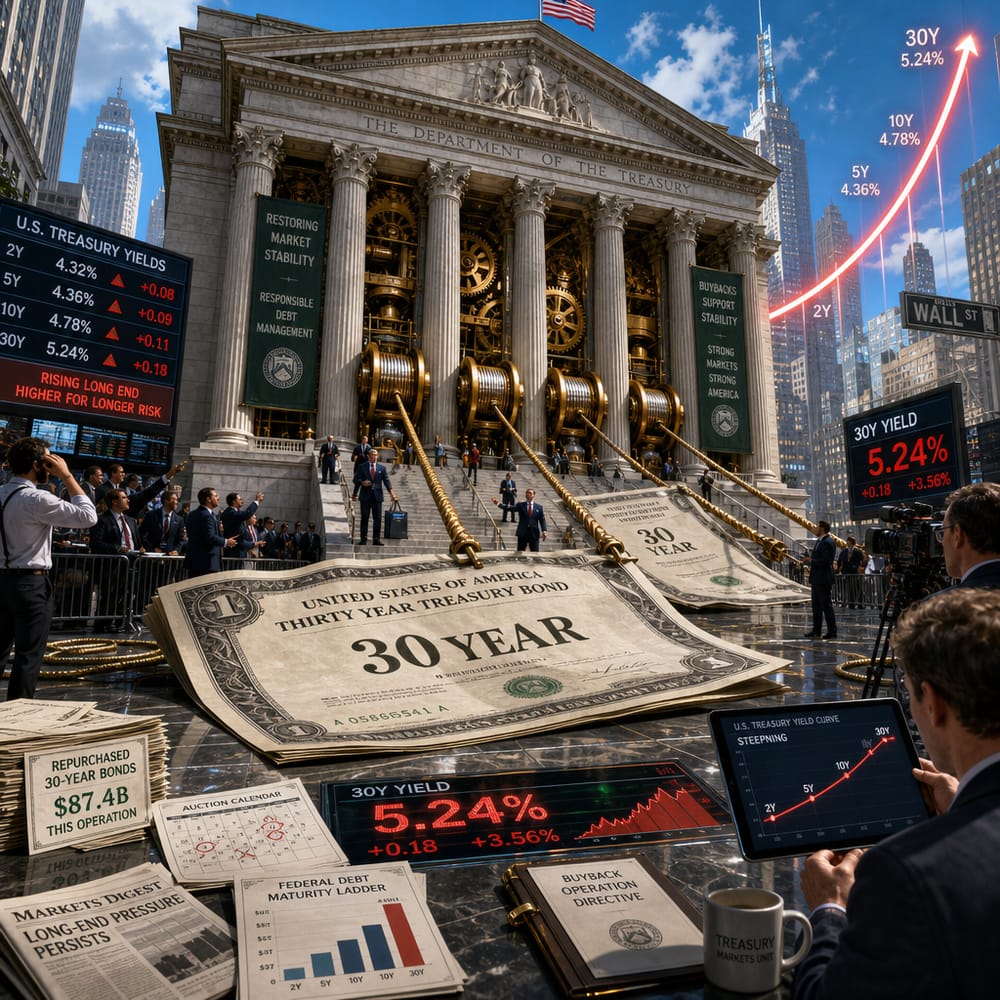
When the U.S. Treasury makes a move, it’s like watching a chess grandmaster plot their next attack. Recently, it seems they're not just shifting pawns; they're doubling down on long-term debt buybacks. The spotlight is now on the bond market, where 30-year yields have been spiking like a fever, and the Treasury is ready to play doctor.
Imagine you're at a party, and the 30-year Treasury yield walks in, towering over everyone else in the room. It's the tallest guest, commanding attention because it's a key indicator of long-term interest rates. But lately, it's been swaggering a bit too much, raising eyebrows and whispers of rising inflation and long-term borrowing costs.
Enter the Treasury Department, with a plan to cool things down. They've announced a ramp-up in long-term debt buybacks. That's right, they're essentially saying, "We'll take those bonds off your hands," like a savvy collector swooping in during an art auction. But why does this matter, and should you care? Absolutely.
Let’s start with the potential benefits of this strategy. By buying back long-term debt, the Treasury aims to stabilize the bond market. It’s like adding a bit of oil to a squeaky wheel. When they buy back these bonds, it can reduce supply in the market, potentially lowering those towering 30-year yields. This move could be a balm for jittery investors concerned about rising long-term borrowing costs.
But hold on, there’s a flip side. This intervention might seem like a beacon of hope, but it also shines a light on a bigger issue: the delicate dance between fiscal and monetary policy. It’s like watching two strong-willed partners trying to waltz without stepping on each other's toes. The Treasury’s move could inadvertently clash with the Federal Reserve's own objectives. The Fed, which has its eyes on managing inflation and economic stability, may find its carefully laid plans slightly disrupted by this unexpected chess move.
When the Treasury steps in to buy long-term debt, it can impact how and when the Fed decides to adjust interest rates. If yields drop too low, the Fed might hold off on rate cuts it had been considering, which could ripple through every corner of the financial world, affecting everything from mortgages to corporate borrowing.
So, what’s the takeaway for us, the everyday investors? Well, it’s a landscape in flux. For those holding U.S. Treasury bonds, this buyback initiative could mean increased prices and lower yields—good news if you're planning to sell. Yet, if you're looking to buy bonds, you might find slightly less appealing returns.
The broader picture also means keeping an eye on sectors sensitive to interest rates. Real estate and financials, especially, could feel the tremors of these moves. And let’s not forget, this kind of intervention might signal to seasoned investors a potential storm on the horizon—an echo of Ray Dalio’s warning about a creeping debt crisis. His advice? Consider hedging your bets with assets like gold and cryptocurrencies, which have been known to sparkle when traditional markets get stormy.
In essence, the Treasury’s bold maneuver is both a stabilizing force and a catalyst for change. It’s a reminder that the financial markets are a complex web, where each move sends ripples through the economic fabric. As investors, it’s crucial to stay informed, keep a keen eye on the yield curve, and perhaps even re-evaluate your strategy based on how this game of policy chess unfolds.
In the end, whether the Treasury's move will be a masterstroke or a misstep is yet to be seen. But for those of us watching from the sidelines, it’s a fascinating, high-stakes game that could redefine the bond market landscape in the months to come. So keep your eyes peeled, stay sharp, and maybe, just maybe, grab some popcorn. This is one financial drama you won't want to miss.
This article is for informational purposes only and is not investment advice. Always do your own research or consult a licensed financial professional before making investment decisions.
© Copyright 2024. All Rights Reserved.
© Copyright 2024. All Rights Reserved.