

Treasury's Expanded Buyback Program Aims to Stabilize Bond Market
Wednesday, August 19, 2026
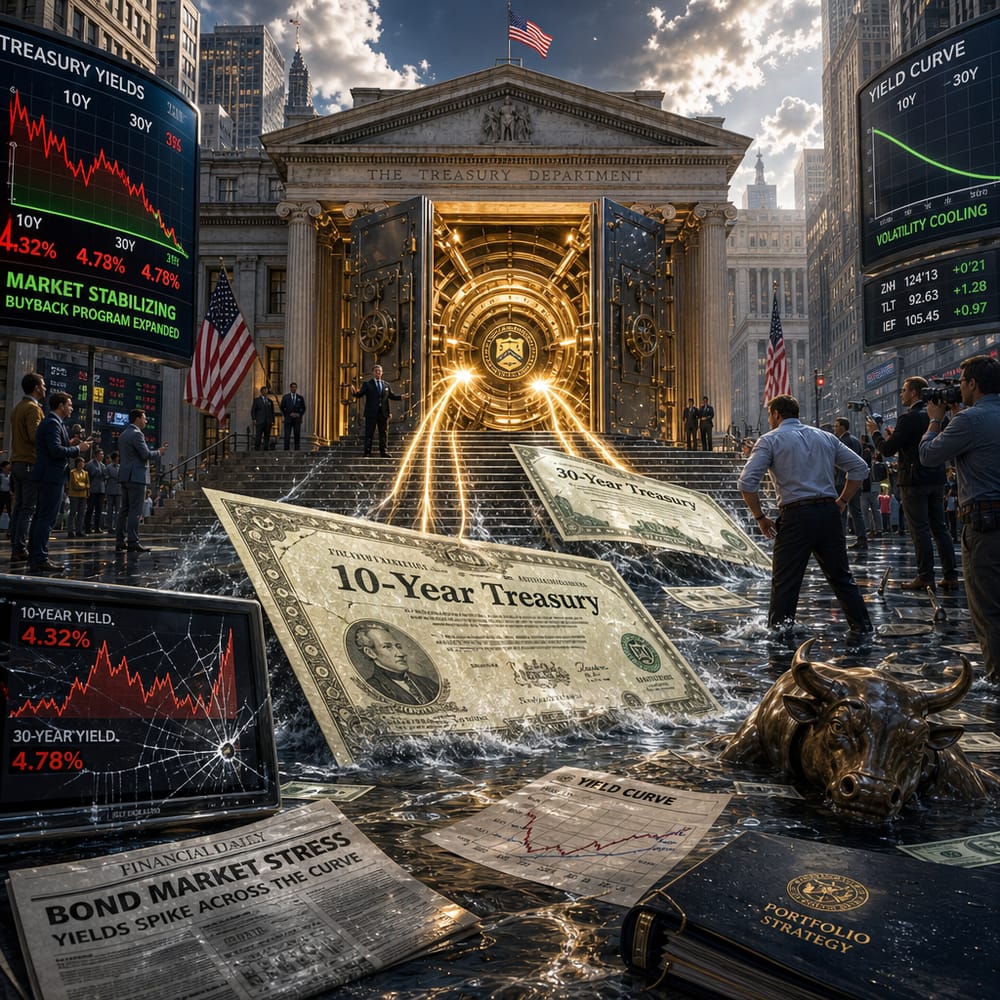
TREASURY'S EXPANDED BUYBACK PROGRAM AIMS TO STABILIZE BOND MARKET
Hold onto your hats, folks, because Uncle Sam's Treasury Department has pulled a rabbit out of its hat that could make Houdini jealous. Just when we thought bond yields were set to bust through the ceiling, the Treasury swooped in with a plan to double its buyback operations for longer-term bonds, a strategy that echoes a little blast from the past known as "Operation Twist." But before you dismiss this as just another government antic, let's break down why this matters to you, your wallet, and the broader economy.
To truly grasp the gravitas of this moment, let's rewind to the events that led here. Recently, 30-year Treasury bond yields flirted with levels we haven't seen since the iPhone 1 was a hot-ticket item. We're talking June 2007 territory, folks. Inflation, that pesky economic gremlin, was partly to blame. Higher bond yields mean investors are demanding more bang for their buck, making life more expensive for anyone looking to borrow.
Enter the Treasury Department, stage left. By announcing plans to turbocharge its buyback program, they're essentially saying, "Let's pump the brakes on these runaway yields." Think of it like a financial defibrillator: jolt the system just enough to stabilize it without sending it into overdrive.
Now, why is this reminiscent of Operation Twist? For the uninitiated, Operation Twist was the Federal Reserve's funky strategy in 2011 to lower long-term interest rates by buying longer-term bonds while selling shorter-term ones. While the current buyback isn't a carbon copy, the family resemblance is striking enough to make bond market veterans do a double-take.
So, what's the immediate impact? For starters, bond yields have already taken a tumble, offering a sigh of relief for everything from mortgage rates to corporate loans. Lower yields mean Uncle Sam, and businesses alike, won't have to fork over as much interest to fund their endeavors. Good news if you're in the market for a mortgage or thinking about expanding your business.
But beyond the immediate effects, could this buyback bonanza be a template for future Treasury moves? Potentially. If the strategy manages to soothe jittery markets and keeps borrowing costs from ballooning, it could serve as a playbook for navigating future economic turbulence. Remember, in the world of finance, nothing says "I'm serious" like putting your money where your mouth is, and doubling down on buybacks certainly sends a message.
There's also the matter of investor sentiment. Let's face it: the bond market can be a moody beast, and any sign of stability is bound to appease skittish investors. The trick will be maintaining that warm, fuzzy feeling long enough to prevent a relapse into yield-induced panic.
Naturally, not everyone's convinced this is a silver bullet. Some analysts warn that while the allure of lower yields is tempting, it might not fundamentally shift longer-term outlooks. After all, this buyback strategy is a Band-Aid, not a cure-all.
Still, don't underestimate the ripple effects. Lower yields can act as a catalyst for economic activity. If businesses find it cheaper to borrow, they're more likely to invest. More investments mean more jobs, and more jobs mean more people with money to spend. It's a virtuous cycle, and one the Treasury seems keen to kickstart.
In the grand scheme, this move raises a tantalizing question: could this be the new norm for steering the economy in an era where surprises (both good and bad) seem to be the order of the day? Only time will tell, but for now, the Treasury's bold step has injected a dose of optimism into a market that was teetering towards the edge.
As you scroll through your newsfeed, remember this isn't just about numbers and percentages. It's about how the Treasury's moves reverberate through your life, from the interest rate on your next loan to the broader health of the economy. So let's tip our hats to the financial wizards behind the curtain—may they keep pulling rabbits out of hats when we need them most.
This article is for informational purposes only and is not investment advice. Always do your own research or consult a licensed financial professional before making investment decisions.
© Copyright 2024. All Rights Reserved.
© Copyright 2024. All Rights Reserved.