

Treasury's Doubling of Long-Term Buybacks Sends Yields Plummeting, Fuels Stock Futures
Wednesday, August 19, 2026
TREASURY'S DOUBLING OF LONG-TERM BUYBACKS SENDS YIELDS PLUMMETING, FUELS STOCK FUTURES
When the U.S. Treasury sneezes, Wall Street catches its breath. This week, Treasury Secretary Scott Bessent did more than make markets inhale sharply; he pressed a market-defibrillator button labeled "double the buybacks" and watched as long-term Treasury yields nosedived. Like a plot twist nobody saw coming, this move has investors scrambling to reassess their game plans.
Let's break it down. With the debt buyback scheme doubling from $2 billion to a svelte $4 billion, the Treasury is zooming in on the long-tenured bonds—those 10- to 30-year stalwarts of portfolios everywhere. In financial terms, that's like the government blowing a kiss to the part of the market that's been feeling a little neglected and unloved.
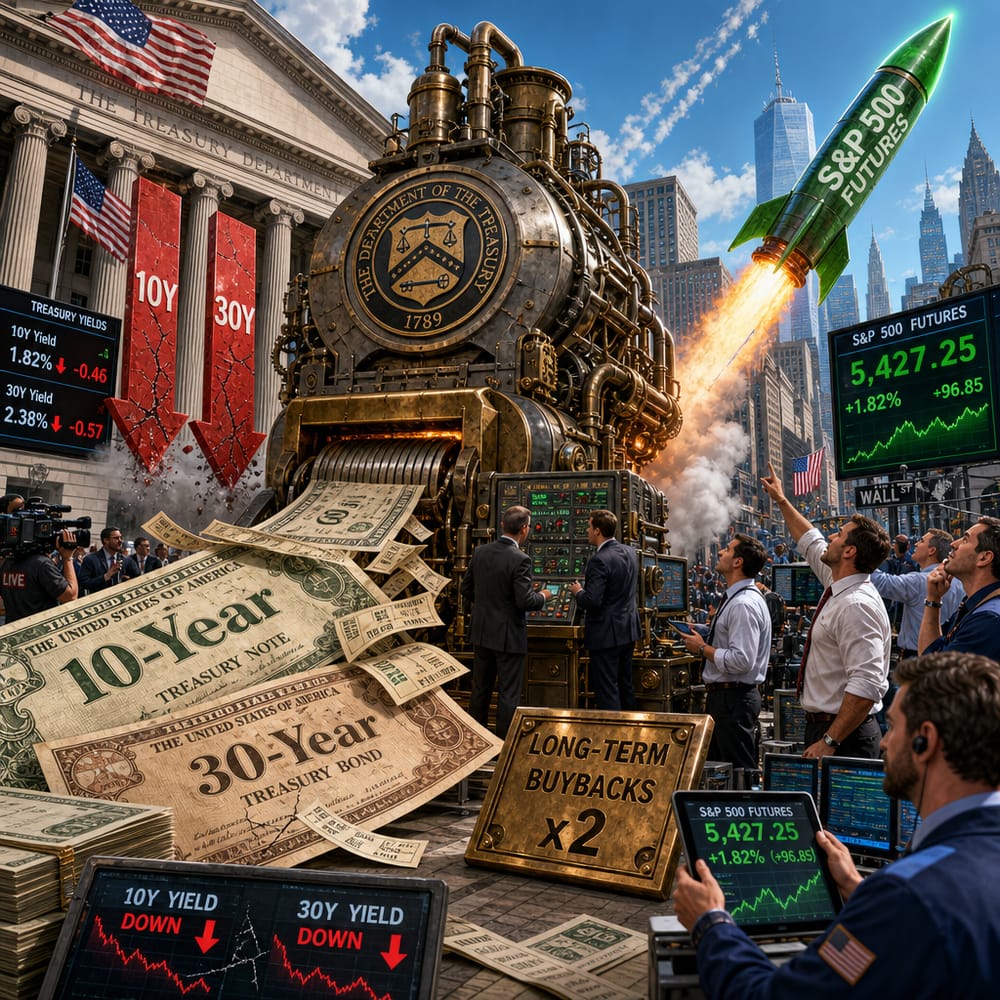
So, what happens when the Treasury decides to put its money where its mouth is? Yields on these long-term bonds took a swift dive. The 10-year note took a 6-basis-point plunge to 4.647%, and the 30-year bond wasn’t far behind, dropping 9 basis points to 5.196%. In case you’re not a bond market whiz, remember: when bond prices go up, yields go down faster than a lead balloon. It’s Economics 101.
But how does this ripple through the market waters? For starters, stock futures didn't just get a boost—they got a rocket strapped to their backs. The S&P 500 futures surged, showing that investors are keen on anything that makes borrowing cheaper and equities more attractive. Lower yields mean corporations can finance their operations at a bargain, which typically translates to healthier balance sheets and potentially tastier profits. And who doesn't love a good profit story?
Amidst this market choreography, the Federal Reserve is the conductor who might need to rethink its next move. With long-term yields taking a tumble, the Fed's calculus on rate hikes might just have gotten a bit more complex. If borrowing costs are organically retreating, does the Fed still need to press its foot on the rate-hike pedal with the same vigor? Or do they ease back, letting the natural market forces take the wheel a little more?
For equity valuations, this adjustment in interest rates could be a windfall. Lower yields often mean higher valuations because future corporate cash flows are discounted back to the present at a lower rate. In English? Stocks might just start looking more enticing, especially those in the tech-heavy or growth sectors which notoriously thrive on low interest rates.
But let’s not get too carried away on a cloud of optimism. While this maneuver by the Treasury has temporarily settled the stormy seas of the bond market, it’s not a magic bullet. The specter of inflation and global economic pressures are still lurking, waiting to rear their heads. And let's not ignore the fact that what the Treasury is doing is more of a maturity makeover than a full-blown debt diet. It’s rearranging the furniture rather than doing a full renovation, but sometimes a little feng shui is all you need to change the mood.
As investors bask in the afterglow of this market intervention, they should also keep an eye on the Fed's upcoming meeting minutes. Clues about how the central bank interprets these market moves, and its subsequent reaction, could spell out the next chapter in this ongoing saga.
For now, it's all about soaking in the current market vibes while keeping one eye peeled for the next headline. Will this Treasury move usher in a new era of market stability, or is it just a temporary balm on a persistent wound? Investors are waiting, watching, and ready to react, as the bond-buyback drama continues to unfold in this high-stakes theater of finance. Grab your popcorn, because this show is far from over.
This article is for informational purposes only and is not investment advice. Always do your own research or consult a licensed financial professional before making investment decisions.
© Copyright 2024. All Rights Reserved.
© Copyright 2024. All Rights Reserved.