

Treasury's Debt Buyback Spurs Bond Rally, Lifts Equities
Wednesday, August 19, 2026
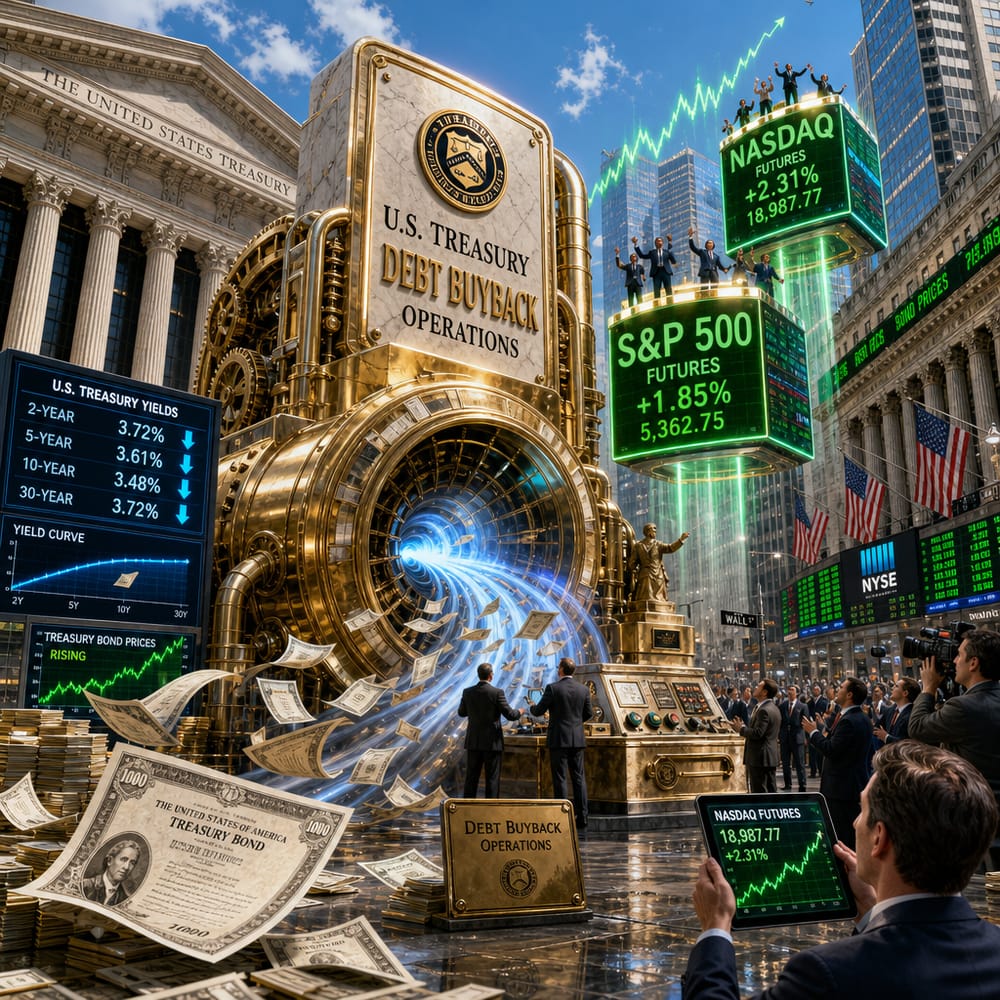
Buckle up, folks, because the U.S. Treasury just threw a financial curveball, and Wall Street is loving it. Imagine a blockbuster movie where a hero comes in to save the day. In our financial drama, that hero is the Treasury Department, announcing it’s doubling down on debt buybacks in a muscular move to calm the stormy bond seas. Now, if you’re scratching your head wondering why this matters, let me break it down for you in layman’s terms.
So, what does a debt buyback even mean, and why should you care? In simple terms, imagine if you had a mountain of IOUs and you decided to buy some of them back early. That’s pretty much what the Treasury is up to. By buying back some of its own bonds, the government is effectively taking them out of circulation, which, surprise, surprise, makes the remaining bonds more valuable.
As the news broke, bonds were already dancing to a different tune. Yields on the 10-year Treasury note took a nosedive, shaving off a cool 6 basis points to land at 4.647%. And the 30-year bonds weren’t left out of the party either, sliding down by 9 basis points. Why does this matter? Because lower yields mean cheaper borrowing costs, and that’s music to the ears of both consumers and businesses alike.
But there’s more. This strategic move isn’t just about stabilizing the bond market; it’s also throwing a lifeline to equities. Picture this: with bonds less attractive because of lower yields, money has to go somewhere, right? Enter the stock market. Futures for the S&P 500 and Nasdaq are already bobbing up, buoyed by this fresh wave of optimism. It's like watching a classic relay race where the baton gets passed smoothly, keeping the momentum going.
Now, before we start popping champagne, let’s talk risks. Doubling buybacks could be a double-edged sword. On one hand, it props up the bond market and encourages spending and investment; on the other, it might inflate asset bubbles, setting the stage for future financial headaches. Plus, too much government intervention, while soothing in the short term, can sometimes muddy the waters for free-market enthusiasts.
The big question lurking behind all this financial theater is how these buybacks will jostle long-term yields. Think of yields as the interest rate you get for loaning your money to Uncle Sam. In the long term, if the buyback strategy works its magic and investors regain confidence, yields might stabilize at friendlier levels, which is good news for everyone from mortgage seekers to corporate giants planning to expand.
Speaking of confidence, let’s chat about what this means for investor sentiment. Wall Street is a lot like your jittery cat during a thunderstorm—skittish, unpredictable, and in desperate need of comfort. The Treasury’s bold strategy could be the cozy blanket investors need. If traders start believing the government has the situation under control, that trust could spill over into the stock market.
In case you're wondering if you should be making any moves, consider this: The buybacks signal an active policy stance from the Treasury, aiming to stabilize not just bonds but potentially the broader market. If you’re sitting on equities or thinking about diving into the market, this might just tip the scales towards confidence rather than caution.
But, as with any rollercoaster, buckle up—markets can be as unpredictable as a cat on a hot tin roof. Keep your eyes peeled for any changes in the Treasury’s strategy and how they ripple through bonds and stocks.
In the end, the Treasury’s decision to double its debt buybacks is one to watch closely. It’s a gamble with high stakes, but if executed well, it could mean smoother sailing for both the bond market and equities. Whether you’re a seasoned investor or a curious newcomer, these are the kind of moves that shape the landscape of your portfolio. So keep your ear to the ground and your investment strategy flexible, because the financial world is buzzing—and it’s all thanks to a little buyback bravado.
This article is for informational purposes only and is not investment advice. Always do your own research or consult a licensed financial professional before making investment decisions.
© Copyright 2024. All Rights Reserved.
© Copyright 2024. All Rights Reserved.