

Treasury's Bond-Market Intervention Pauses Stock Slide
Sunday, August 23, 2026
THE TREASURY'S LATEST TRICK: STOPPING THE STOCK SLIDE
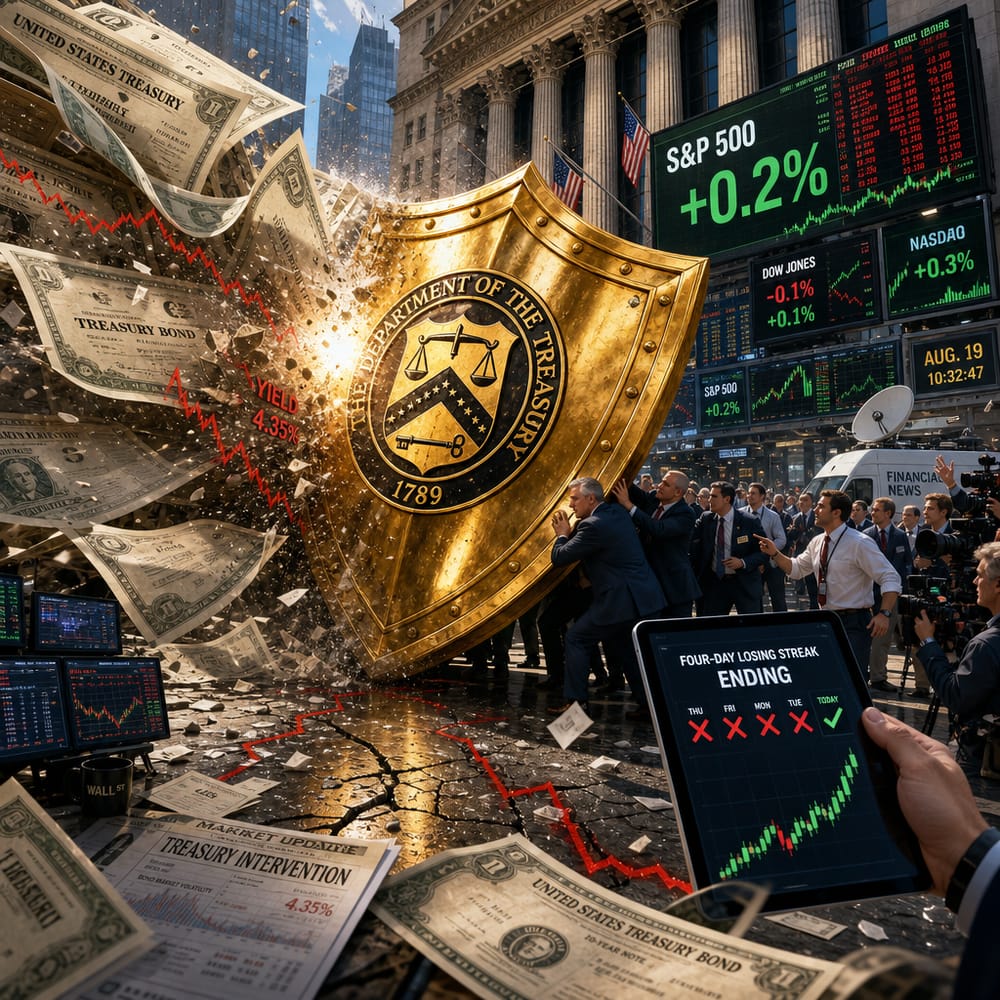
Picture this: The stock market is like a roller coaster, and lately, it’s been a ride that’s all scream and no fun. The S&P 500 had been on a losing streak, and jittery investors were starting to wonder if they should strap in for yet another plunge. But then, like a caped superhero clutching a calculator, the Treasury Department swooped in and pulled the emergency brake. What followed was a modest 0.2% rise on August 19, a sign that fiscal policy can sometimes be more effective than even the mightiest market forces.
So, what exactly did the Treasury do to lift the spirits of the S&P 500 and, by extension, the Dow and Nasdaq? Well, let’s dive into the delicious details.
UNPACKING THE TREASURY'S INTERVENTION
To begin with, the Treasury stepped in to calm the bond markets. They weren't just tinkering at the edges; they delivered a full-on intervention. The specifics: They engaged in what’s known as a bond buyback operation, purchasing government bonds from the market. This maneuver is like giving bond prices a bear hug, causing yields to fall. Without getting too wonky, when bond yields fall, it makes borrowing cheaper and can boost stock valuations—hence, that little bump we saw in the S&P 500.
Now, if you’re wondering why the bond market was causing such a commotion, consider this: Rising bond yields can spell trouble for stocks. High yields often imply higher borrowing costs and can suck investment away from equities. So, when yields climb too high, the stock market tends to get the jitters.
THE RIPPLE EFFECT: BONDS AND STOCKS
Let’s talk about how this impacts the long game. Short-term, sure, it looks like the Treasury played the perfect hand. But how about down the road? Well, managing the delicate dance between bonds and stocks is no small feat. Interventions like these might calm the seas temporarily, but they also bring up mega questions about what happens next.
If interventions become a habit, will markets stop believing in the fundamentals and start relying on Uncle Sam’s magic wand? It’s like letting your toddler play with the remote—real fun until you realize they think pressing buttons will always turn on cartoons, regardless of the time of day.
FUTURE SHOCK: WHAT DOES THIS MEAN FOR POLICY?
We’ve seen this story unfold before. When authorities step in during times of market stress, it’s often a Band-Aid on a bigger wound. The challenge? Making sure this doesn’t become an expectation. A market that relies too heavily on interventions can end up like a house of cards—one little breeze and the whole thing collapses.
Looking ahead, investors should keep an eye on how the Treasury and other policymakers finesse these moves and whether they’ll keep the party going. Will they need to continue interventions to stave off a market slump, or will fiscal policies stabilize things for longer? It’s a delicate balance, and even the most seasoned economists can only speculate.
THE TAKEAWAY
If there’s one thing that’s clear, it’s that markets are anything but boring. Whether you’re a day trader or someone who checks their portfolio between reruns of your favorite show, this Treasury move is a prime example of how fiscal policy can halt a losing streak in its tracks—at least for now.
In the end, the Treasury’s intervention was a momentary win for stocks, but it also served as a reminder of the complex dance between fiscal policy and market forces. As for that roller coaster ride? It’s far from over. Keep your seatbelt fastened, and maybe stock up on some popcorn. This show is just getting started.
This article is for informational purposes only and is not investment advice. Always do your own research or consult a licensed financial professional before making investment decisions.
© Copyright 2024. All Rights Reserved.
© Copyright 2024. All Rights Reserved.