

Treasury's Bond Market Intervention Calms Markets, Eases Yields Pressure
Saturday, August 22, 2026
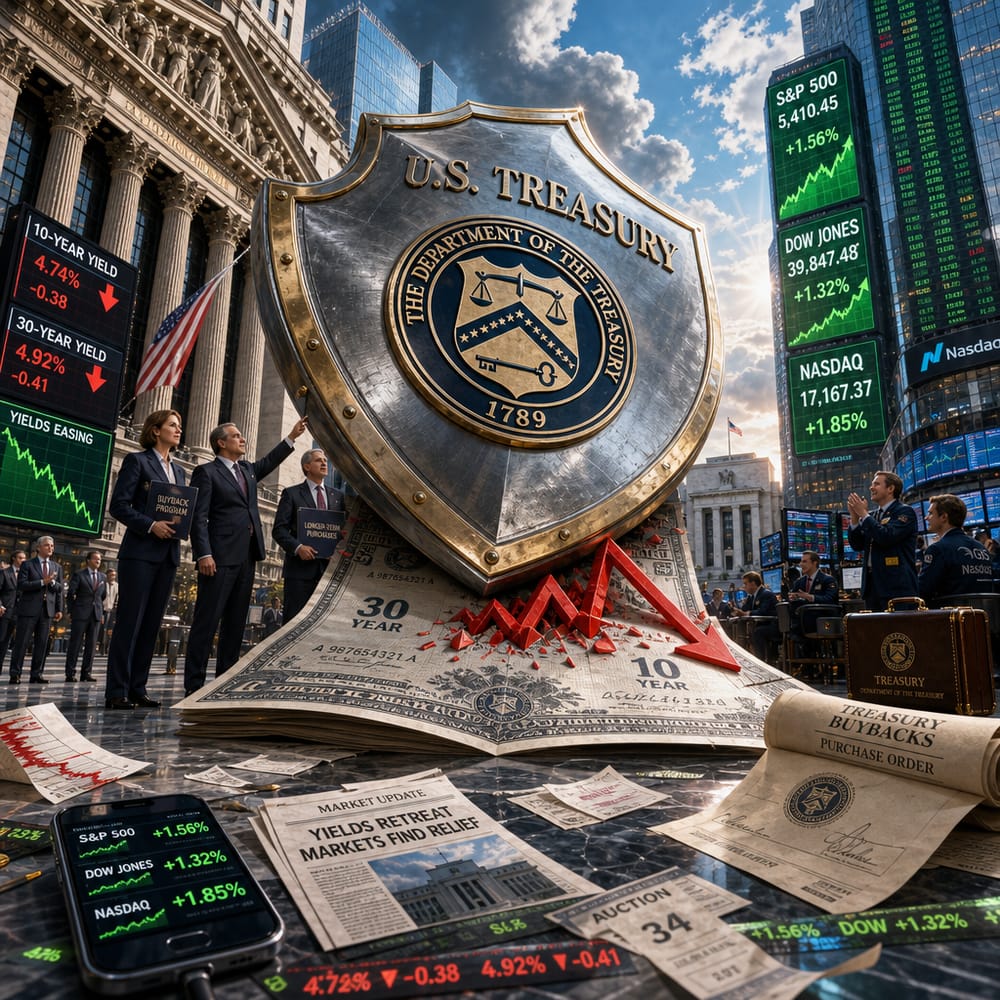
TREASURY TAKES A PAGE FROM THE FED'S PLAYBOOK: WHAT IT MEANS FOR YOU
When the U.S. Treasury steps onto the stage with the swagger of a central bank, you know the plot has thickened. In a move that’s turned a few heads and soothed even more frayed nerves, the Treasury has doubled its planned purchases of longer-term Treasuries. And why should you care? Because when Uncle Sam starts playing with bond yields, it’s not just an insider affair—it ripples through every corner of the market, from your 401(k) to the price of that iced latte.
To say the bond market was having a moment would be an understatement. Yields were behaving like a caffeinated squirrel, bouncing to their highest in two decades. It was a classic case of too much debt, not enough buyers. The news cycle was dominated by U.S. credit downgrades and foreign banks ghosting Treasuries like a bad Tinder date. Enter the Treasury with its intervention, and suddenly, the markets got the equivalent of a chill pill.
But what does this mean in plain English? For starters, bond yields have a close relationship with interest rates. When yields rise, borrowing costs do too. That can slow down business spending and, ultimately, consumer spending. By stepping in, the Treasury is essentially saying, "Chill out, we’ve got this." As yields eased, equity markets like the S&P 500, Dow, and Nasdaq heaved a sigh of relief, rallying in celebration. Lower yields often mean cheaper borrowing costs for companies, which translates to better profits and higher stock prices. Cheers to that!
Now, you might be wondering: why is the Treasury playing monetary matchmaker? Isn’t that the Fed’s job? Usually, yes. But desperate times call for desperate measures. The Treasury’s move underscores just how critical stabilizing these yields has become. It’s like when you spill coffee on your laptop and use dry rice to save it—unconventional, but necessary. This maneuver reflects the growing concern over the debt mountain that’s overshadowing even the AI boom on Wall Street. When debt starts moonlighting as the main character, you know there’s drama.
So, what are the long-term implications of this? For one, it could lead to debates about monetary policy becoming as lively as a political Twitter thread. As the Treasury gets cozier with such interventions, it might embolden future administrations to take similar actions. This could lead to a change in the traditional relationship between the Treasury and the Fed. Some might argue it sets a precedent for government intervention when the market sneezes. It’s a delicate dance—intervene too much, and you risk undermining the Fed’s independence; intervene too little, and you let yields wreak havoc on the economy.
And what about future monetary policy decisions? Here’s where the crystal ball gets a bit foggy. The Fed might feel pressured to adjust interest rates more cautiously, knowing that the Treasury is willing to step in with its own toolkit. This could mean a shift in how monetary and fiscal policies interact, potentially leading to more coordinated efforts to tackle the big baddies—debt and inflation.
For now, though, the markets are loving this Treasury move. The S&P 500 got its groove back, the Nasdaq is strutting like it’s on a runway, and the Dow’s got a new spring in its step. But as retail investors, it’s crucial to keep an eye on how these interventions might shape the economic landscape. After all, in the world of finance, today’s hero can easily become tomorrow’s villain.
And as you sip that latte, remember: when the bond market starts acting like a drama queen, it’s always wise to watch what the Treasury and the Fed are up to. Because, in the end, their actions will ripple across your portfolio faster than you can say "interest rate hikes."
This article is for informational purposes only and is not investment advice. Always do your own research or consult a licensed financial professional before making investment decisions.
© Copyright 2024. All Rights Reserved.
© Copyright 2024. All Rights Reserved.