

Treasury’s Bond Buyback Surge Sparks Dollar Weakness
Saturday, August 22, 2026
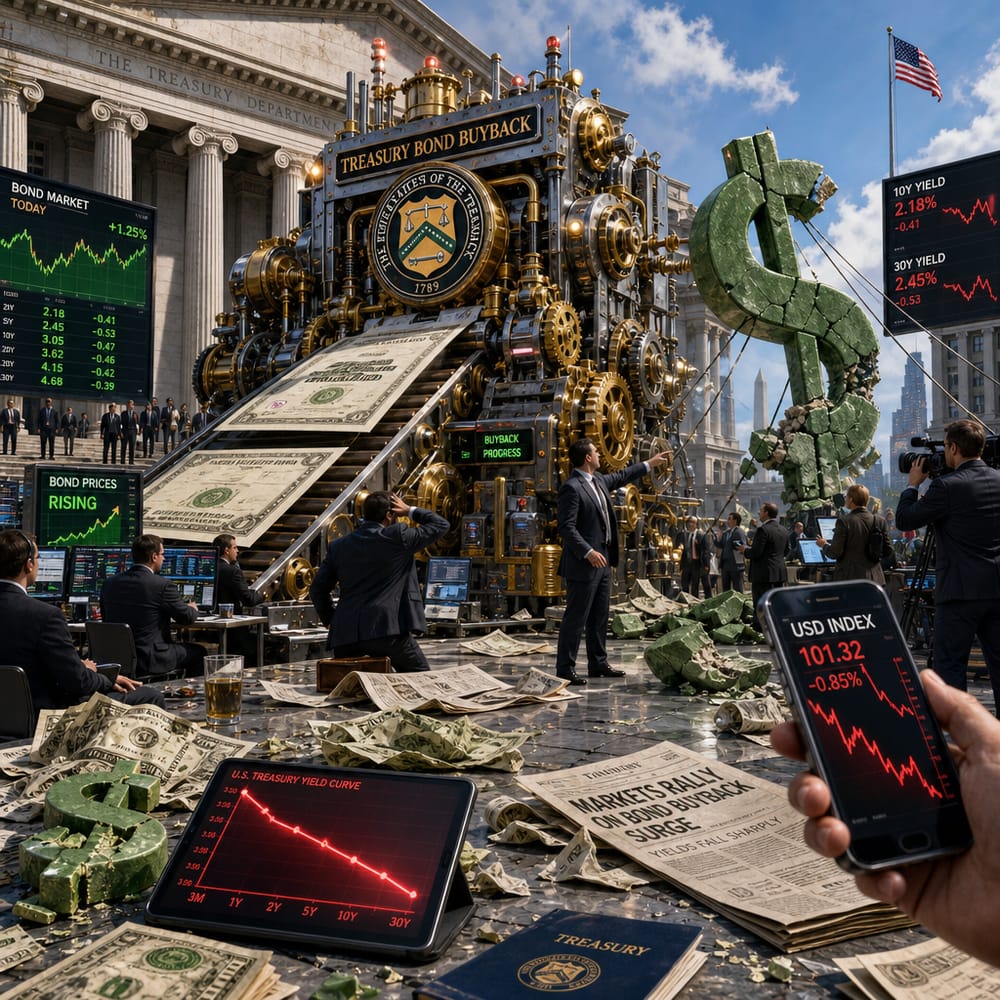
TREASURY'S BOND BUYBACK SURGE SPARKS DOLLAR WEAKNESS
Imagine waking up to find your wallet a little lighter and your favorite safe investment acting more like a wild roller coaster than a steady Ferris wheel. That’s the kind of week it’s been for retail investors, thanks to Uncle Sam’s latest financial fireworks show. The U.S. Treasury surprised everyone by splurging on a bond buyback spree, and it’s sent ripples through the markets, lowering long-term yields and giving the almighty dollar a backseat on its usual power trip.
Now, before you start panic-selling your piggy bank, let’s break down what this means for you, the everyday investor.
THE BOND MARKET MAGIC TRICK
The Treasury’s unexpected decision to increase bond buybacks is akin to a magician doubling down on his disappearing act. By buying back bonds, they’re reducing the supply of these financial instruments, which tends to lower yields—or the returns investors demand. Sounds straightforward, right? But here’s where the plot thickens: when yields drop, bond prices tend to rise, making existing bonds more attractive.
So why is the Treasury doing this? It’s all part of their grand scheme to keep the economy humming along smoothly. Lowering long-term yields can encourage borrowing and spending, giving the economy a little caffeine jolt. But here’s a plot twist—the dollar’s nosedive was an unintended side effect.
DOLLAR IN DUTCH
With the Treasury yanking on the bond market’s reins, the dollar found itself slipping down the currency pecking order. As yields on U.S. bonds fell, the dollar lost some of its shine. Investors, always on the lookout for juicy returns, started eyeing other currencies for better gains. This isn’t just a currency exchange-rate tiff; it affects everything from the cost of your European vacation to the price of imported goods on the shelf.
This weaker dollar might make U.S. exports more competitive (hooray for American-made goods!), but it also means you might be paying more at the pump or for that imported cheese you love.
SIGNALS TO THE FED AND FOREIGN EXCHANGE MARKETS
The Treasury’s bond antics are sending signals faster than a teenager texting on a Friday night. For one, the Federal Reserve is watching closely. If the Treasury keeps this up, the Fed might think twice about hiking interest rates, since the buybacks are already doing part of the job of easing financial conditions. Remember, the Treasury and the Fed are like dance partners in the intricate waltz of economic policy—they have to be in sync or risk stepping on each other’s toes.
Over in the Forex markets, currency traders are recalculating their strategies. The weaker dollar is more than just a minor headache; it’s a migraine for anyone whose portfolio relies heavily on foreign investments.
WHAT'S NEXT?
You might be asking, “What does this mean for my portfolio?” and that’s the million-dollar question. If this bond buyback trend continues, we could see a flatter yield curve—meaning the difference between short and long-term interest rates could shrink. This is important because a flattening yield curve can sometimes signal economic uncertainty ahead. Cue the dramatic music.
With the Fed potentially taking cues from the Treasury’s playbook, investors could start to see a more stable, if not slightly confusing, interest rate environment. This might not be the best news for savers hoping for higher interest on their bank accounts, but it could be a sweet deal for borrowers looking to lock in low rates on loans.
Investors should keep their eyes peeled for further Treasury announcements and be ready to pivot strategies if the bond buyback bonanza continues. Diversification will be key—consider balancing your portfolio with a mix of domestic and international holdings to hedge against the dollar’s weakness.
In this financial landscape, being nimble is the name of the game. It’s less about predicting the future and more about preparing for it. So tighten your seatbelt; it looks like the Treasury is keeping us on our toes for a little while longer.
This article is for informational purposes only and is not investment advice. Always do your own research or consult a licensed financial professional before making investment decisions.
© Copyright 2024. All Rights Reserved.
© Copyright 2024. All Rights Reserved.