

Treasury's Bond Buyback Fails to Tame Rising Yields
Thursday, August 20, 2026
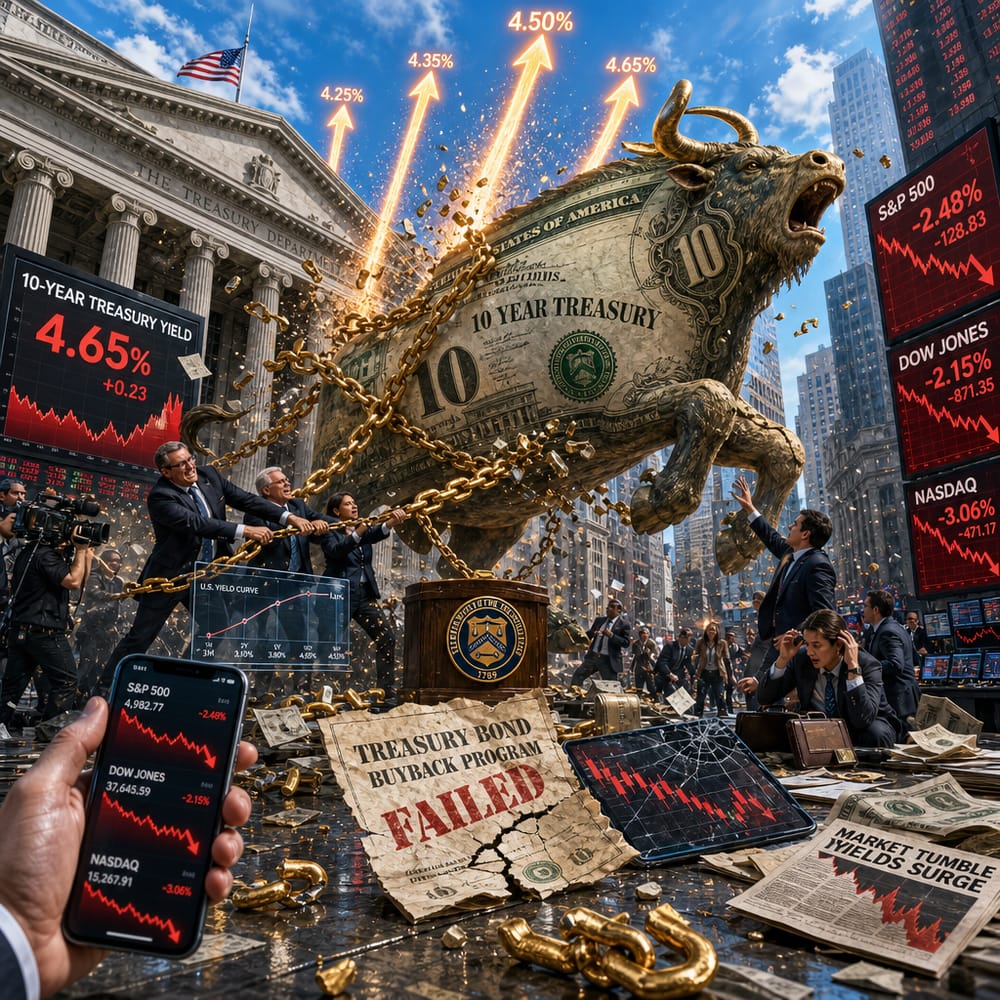
Grab your popcorn, folks, because the latest Treasury spectacle is turning into quite the nail-biter. The U.S. Treasury's plan to pull a Houdini on stubbornly high bond yields by doubling its bond buybacks is tanking harder than a Netflix flop. Spoiler alert: it didn't work. Yields just aren't playing along, and the stock market's feeling the pinch, with major indices taking a nosedive like it's a synchronized swim.
You might be wondering why the Treasury's grand plan to ease market pressure by snatching back its own IOUs isn't doing the trick. The idea was simple: buy back 10-, 20-, and 30-year Treasury bonds to coax down the yields. But here's the kicker—yields are still rising. Think of it like trying to calm a wild bull by offering it a handful of oats. The bull's not impressed, and neither is Wall Street.
So why are the yields acting like rebellious teenagers, defying authority? For starters, investors are jittery about inflation potentially lurking around the corner like a plot twist in a thriller. Add to that a federal debt that's ballooning at an alarming rate. The Treasury Secretary, Scott Bessent, might have thought the buyback would soothe the nerves, but investors are still seeing red flags. In fact, the yield on the 10-year Treasury note has climbed back to pre-announcement levels, hitting 4.706%. That's a bit like having a surprise party and your guest of honor didn't even show up.
The stock market is definitely feeling the heat. With yields climbing, borrowing gets more expensive, and let's be honest, that's like kryptonite for the stock market. The Dow Jones Industrial Average tumbled 637 points, with big names like Walmart taking a hefty 9% hit. Meanwhile, the S&P 500 and Nasdaq are also scrambling to find their footing, both dropping about 1%. Rising yields are casting a long shadow over stock valuations, making investors wary of what could happen next.
Let's break it down for the retail investor trying to make sense of this storm. Rising yields mean higher costs for companies to borrow money. Imagine running a business and suddenly your loan interest rate doubles. Yikes! That means less cash for growth, innovation, or those comfy office bean bags. When companies struggle, so do their stock prices, and that spreads like wildfire through the market. It's like dominoes—one falls, and the rest can't help but follow.
But what does this mean for the long haul? Well, if yields keep rising, we could be in for a rocky ride. Higher borrowing costs could smother economic growth like a wet blanket. And if stock prices keep dipping, retail investors might start feeling the pinch in their portfolios. Market sentiment, which is as fickle as a cat, might take a turn for the worse, creating a vicious cycle of fear and selling.
So, what's a savvy investor supposed to do in these turbulent times? Keep your eyes peeled for opportunities in sectors less vulnerable to borrowing costs. Think of utilities or consumer staples—the kind of stuff people buy even when they're tightening the purse strings. Alternatively, commodities like gold might glitter as safe havens when the market gets stormy.
In the end, the Treasury's attempt at financial wizardry might not have conjured the desired spell, but that doesn't mean investors are out of options. By staying informed and nimble, retail investors can navigate these choppy waters with aplomb. And remember, like any good thriller, the market has its ups and downs, but the plot always keeps us on the edge of our seats.
This article is for informational purposes only and is not investment advice. Always do your own research or consult a licensed financial professional before making investment decisions.
© Copyright 2024. All Rights Reserved.
© Copyright 2024. All Rights Reserved.