

Treasury Proposes New Rules for Foreign Stablecoin Issuers
Wednesday, August 19, 2026
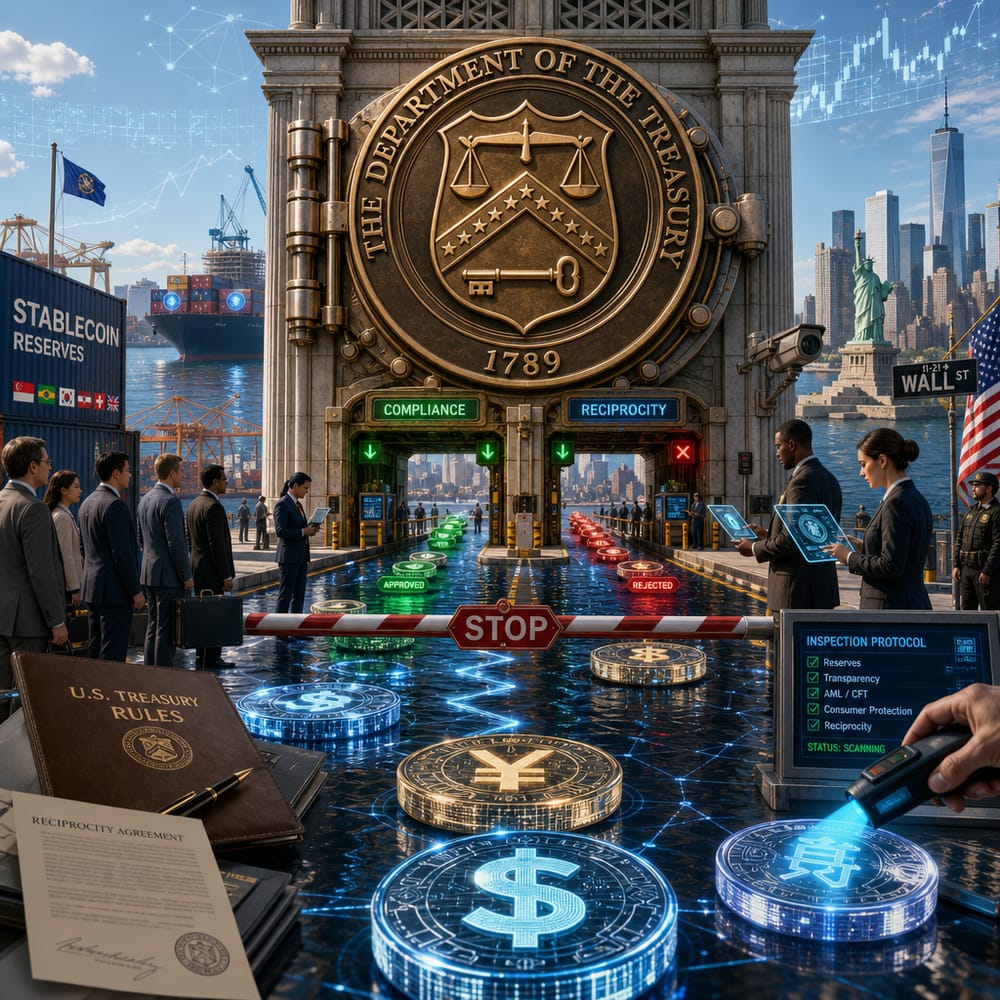
READY, SET, STABLECOIN: THE U.S. TREASURY'S NEW RULES COULD SHAKE UP CRYPTO
Imagine trying to sell your famous homemade apple pie at a local fair, only to find out that you've got to jump through a dozen flaming hoops just to get a booth. That's kind of what foreign stablecoin issuers might be feeling right now with the U.S. Treasury's latest proposal. In a move that’s shaking up the crypto sphere, the Treasury wants these global players to comply with U.S. rules or, in simpler terms, make friends with mutual agreements. No free rides in the land of the free.
Stablecoins, the relatively stable cousins in the chaotic cryptocurrency family, are digital currencies tethered to stable assets like the U.S. dollar. They're the go-to option for traders who want less volatility than Bitcoin’s rollercoaster. But here’s the catch: the U.S. Treasury has just tossed a grenade into the stablecoin playground.
INTERNATIONAL PLAYERS, MEET THE NEW RULES
Foreign stablecoin issuers, who’ve so far operated with the freedom of an eagle in flight, now face the prospect of becoming U.S. compliant or forging reciprocity agreements. Think of it like a digital handshake deal that allows them to operate within American borders. Otherwise, it’s "adios" to a market that’s crucial for anyone wanting to play big.
For these issuers, it's time to break out the calculators. Compliance means a potential mountain of paperwork and operational overhauls. It's like suddenly being told you need a university degree to keep doing a job you've done since high school. The cost? Yet to be fully calculated, but it's safe to say that it's more than pocket change.
SMILING AMERICANS: WHAT IT MEANS FOR U.S. ISSUERS
Now, what about the homegrown stablecoin champs? Well, they might be grinning like the cat that got the cream. U.S.-based stablecoin issuers are already playing by the rules, and watching their foreign competitors scramble could feel like an early Christmas gift. With one less international headache, they could tighten their grip on the domestic market, making it harder for foreign players to gatecrash their party.
But let’s not pop the champagne just yet. This could also lead to less competition overall, which leads to fewer choices and potentially higher costs for users. Competition, after all, is the spice that keeps markets fresh and innovative.
A GLOBAL STABLECOIN SHOWDOWN?
Naturally, other countries are watching the U.S. with hawk eyes. This proposal could spark a chain reaction, encouraging similar moves elsewhere. It's like the U.S. just sparked an international game of follow-the-leader. If other countries demand reciprocity agreements, we could see a global maze of crypto diplomacy, the likes of which we haven't seen before.
This might push some issuers into regulatory arbitrage – a fancy way of saying they'll shop around for countries with the friendliest rules. They'll be like digital nomads, hopping borders in search of the best regulatory weather.
THE BILL, PLEASE
All this shuffling around and compliance chasing? It’s going to cost. For stablecoin issuers, it's a choice between burning more money on regulatory hurdles or potentially losing out on a key market. That’s a lot like deciding between being stuck in traffic or taking the longer scenic route – neither option is exactly thrilling.
AS THE DUST SETTLES
For retail investors itching for a piece of the stablecoin pie, this might be a moment to pause and think. Will your favorite stablecoin pivot or perish under the new rules? Will the U.S. firms seize this chance to monopolize the market? And how will this regulatory shake-up affect the value of stablecoins in your digital wallet?
While the Treasury's latest move has certainly added a splash of drama to the stablecoin stage, it's still unclear who'll come out on top. But one thing's for sure: the journey will be anything but stable. Buckle up, because this ride is just getting started.
This article is for informational purposes only and is not investment advice. Always do your own research or consult a licensed financial professional before making investment decisions.
© Copyright 2024. All Rights Reserved.
© Copyright 2024. All Rights Reserved.